As we move through 2025 into 2026, knowing what home decor trends are currently popular helps you shape a home that feels modern, comfortable and resilient to changing tastes.
This short introduction explains why the latest interior design trends matter for UK homes. Rising energy costs, a push for sustainability and a move to smaller urban spaces are driving choices in materials, lighting and furniture.
Industry signals from the London Design Festival, Decorex and reports by Elle Decoration UK and Homes & Gardens show a clear appetite for authenticity and craft. Retailers such as John Lewis & Partners, Habitat and Made.com are also shaping what appears in living rooms and flats across the country.
The piece that follows is useful whether you own a house, rent a flat or need flexible solutions for compact rooms. Expect practical ideas on colour, furniture, lighting and styling that map to the popular decor styles UK readers search for.
Use the next sections to dive into warm, sustainable materials and neutral palettes with bold accents, then explore colour and pattern trends, furniture and lighting choices, and final styling tips for quick, high-impact updates aligned with 2026 home trends.
What home decor trends are currently popular?
Contemporary UK interiors favour comfort, practicality and a softer environmental footprint. Homeowners are choosing materials and pieces that look good and last, while colour schemes move toward calm foundations with occasional bold notes. Smaller living spaces make clever, adaptable furniture a necessity rather than a luxury.
Warm, sustainable materials
There is a clear move from purely decorative choices to sustainable materials home decor that deliver durability and low environmental impact. Reclaimed timber, FSC-certified oak, bamboo, cork and natural stone are popular for flooring and joinery. Textiles such as responsibly sourced wool and linen and GOTS-certified fabrics appear in upholstery and soft furnishings.
Tactile finishes matter as much as provenance. Brushed oak, hand-finished ceramics, boucle upholstery and textured weaves create a sense of warmth and longevity. These finishes feel comforting after extended periods spent at home and add depth to simple schemes.
Look for British makers who champion repairable designs and local production. Labels such as Neptune offer accessible ranges while independent craft studios supply reclaimed or upcycled pieces. Practical approaches include buying second-hand, upcycling existing furniture and choosing natural oil or wax finishes over high-VOC lacquers.
Neutral palettes with bold accents
Warm neutrals set the stage in most rooms. Beiges, greys with brown undertones and soft taupes form calm backdrops that suit daily life. These foundations support varied styling and age well as tastes change.
Accent colours are introduced sparingly to create focal points. Deep terracotta, navy, petrol blue and muted olive work well when used in upholstery, rugs, cushions or a single painted wall. Use a 60:30:10 rule to layer neutrals with accent tones for balanced depth.
UK paint houses remain good resources when testing palettes. Farrow & Ball and Little Greene provide muted greens and warm beiges that complement tactile materials. Try sample pots and removable wallpaper to preview bold accents without long-term commitment.
Multifunctional furniture for smaller homes
Urban pressures and rising housing costs make multifunctional furniture UK a practical priority. Pieces that serve multiple roles stretch usable space and reduce clutter in flats and compact houses.
Key items include fold-away dining tables, extendable sofas, ottomans with storage, Murphy beds and nested tables. Modular shelving and sofas offer flexible layouts that adapt to changing needs. Brands such as IKEA offer modular systems while other retailers supply stylish variants.
Choose multifunctional pieces with simple silhouettes and neutral finishes so they integrate into varying schemes. Prioritise mechanisms that feel sturdy, upholstery that hides wear and concealed storage to keep rooms tidy. Measure carefully and favour quality for items used daily to ensure longevity.
Colour and pattern trends shaping UK interiors
Colour and pattern are steering British homes towards calm, character and craft. Designers blend heritage shades with bold motifs to create rooms that feel lived in and considered. Below are practical ways to introduce three leading looks into your home.
Earthy palettes and muted greens
Provenance-led choices such as ochre, clay and terracotta sit alongside mushroom and sage to reflect a biophilic shift. These tones work well on feature walls, kitchen cabinetry and tiles.
Pair muted green interiors with natural oak, rattan and linen to form a cohesive backdrop. Brands like Fired Earth show how muted green cabinetry and terracotta tiles can sit with aged brass fittings for warmth.
Introduce easy-care plants to enhance the scheme. Sansevieria, Pilea and pothos suit UK light levels and add a living layer that complements earthy tones interior design.
Maximalist patterns and vintage revival
Patterned wallpapers, bold florals and art deco geometrics are having a revival. Retro 1970s motifs mix with older styles to create an eclectic, curated look.
Sources include antique markets, Etsy and specialist dealers, while Liberty and Sanderson produce reproduction fabrics that fuel the trend. Buy genuine vintage or responsibly made reproductions to reduce waste and retain authenticity.
Use maximalist patterns UK sparingly: one statement wall or a single upholstered piece anchors a room. Match one or two hues from the pattern across cushions and throws to tie the scheme together.
Monochrome and textural contrasts
Monochrome interiors remain timeless when enlivened by varied surfaces. Black, white and grey become rich through matte paints, textured plaster, embossed papers and woven weaves.
Contrast smooth lacquer or glass with boucle, chunky knits and stone for tactile interest without extra colour. Kitchens with matte black cabinetry and warm wood worktops show this well.
Choose finishes that hide wear and textiles that launder easily to extend longevity. Thoughtful material choices boost resale appeal while delivering striking textural contrasts home.
Furniture and lighting trends to consider
Curved silhouettes and considered lighting change how a room feels. The curved furniture trend brings rounded sofas, crescent chairs and soft-edged tables that soften corners and invite conversation. Pair these forms with layered lighting ideas to craft rooms that feel both relaxed and purposeful.
Curved furniture and statement seating
Rounded sofas and sculptural accent chairs make an immediate impact. Statement seating in velvet or bouclé becomes a focal point in living rooms and bedrooms while echoing mid-century modern influences.
When buying, check seat depth and overall scale. Test comfort where possible and choose stain-resistant finishes or removable covers for longevity. Many high-street retailers and independent British upholsterers now offer curved ranges with custom fabric options and realistic lead times.
Artisan craftsmanship and bespoke pieces
Handmade pieces add personality and support local makers. Choosing artisan furniture UK or bespoke furniture often means better materials, repairable joins and a longer lifespan than many mass-produced items.
Source commissions from UK maker collectives, craft fairs and platforms that list independent studios. Prepare a clear brief, ask for material samples and agree delivery and assembly terms. Over time, the cost-per-use of a bespoke piece can make it a sound investment.
Layered lighting and sustainable fixtures
Good lighting uses three layers: ambient, task and accent. Layered lighting ideas help you set mood and improve function in kitchens, reading nooks and living spaces.
Choose sustainable lighting fixtures such as LED fittings with dimmable drivers, recycled metal pendants or smart systems like Philips Hue that cut energy use. Opt for warm colour temperatures (2700–3000K) for a cosy feel and place task lights where daily tasks happen.
- Fit oversized pendants in natural materials for a crafted look.
- Use slim-profile track lighting for flexible layouts.
- Select brass or patinated finishes for timeless warmth.
Decor accessories, styling tips and practical updates
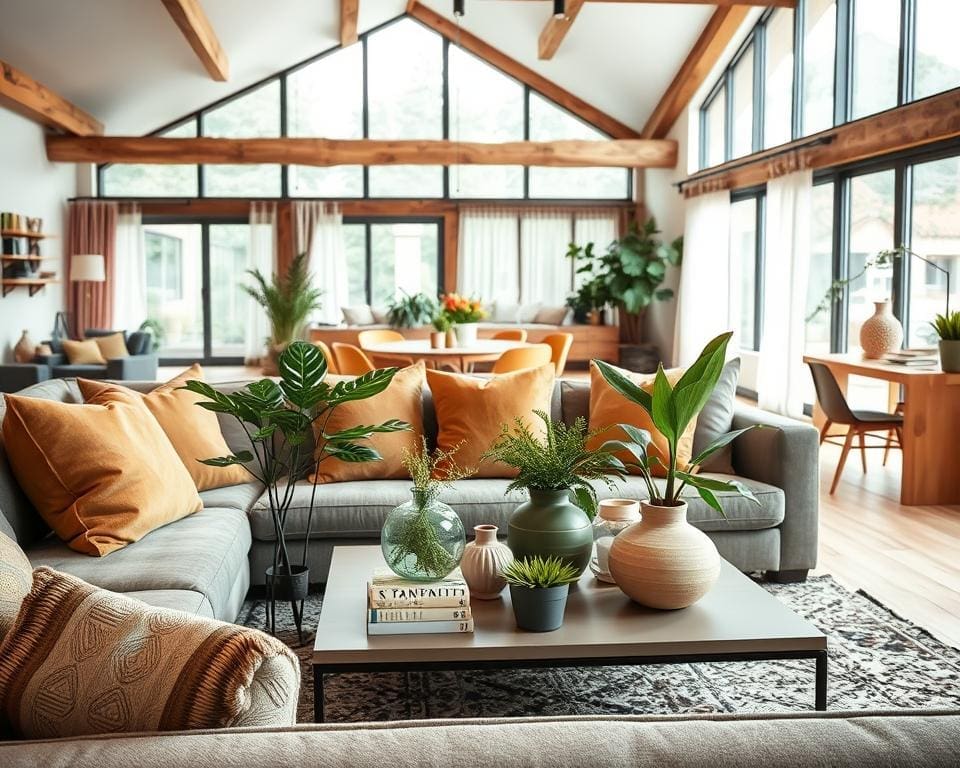
Layered rugs remain a top decor accessories trend: use a jute base with a patterned top rug to define seating zones and add texture. Introduce artisan ceramics, sculptural vases and tactile throws in mixed textiles to bring warmth and personality. For sustainable choices, explore second‑hand markets, Swedish re‑commerce platforms and ethically made ceramics from UK potteries when sourcing pieces.
When considering how to style a living room, edit with restraint. Group objects in odd-numbered arrangements and vary heights for visual rhythm. Start with a neutral base and introduce one or two accent motifs across cushions, artwork and small accessories to tie a scheme together. Small investments such as a statement mirror, a quality rug or a well-chosen piece of artwork can lift a room instantly.
Practical home updates give quick wins: repainting with a trending neutral, replacing lighting to improve ambience and installing shelving for storage and display. Use seasonal decor ideas UK to rotate cushions and throws—lighter linens in summer, heavier textiles in winter—to keep rooms feeling fresh. Simple DIY changes like painting skirting boards or swapping cabinet handles are low-cost ways to refresh a space.
Plan improvements in phases: begin with high-impact, low-cost changes, then budget for key furniture and bespoke pieces. Choose durable finishes and neutral foundational items to protect resale value while using decor accessories trends to show personality. Experiment in small steps, prioritise sustainability and quality, and use trends as inspiration rather than rules for a home that feels contemporary, personal and built to last.