A Heat Interface Unit (HIU) links a district or communal heat network to an individual flat or house. Danfoss-manufactured HIUs regulate heat to radiators and manage the domestic hot water circuit, making them central to reliable heat metering and delivery in modern UK buildings.
This article sets out the full scope of Danfoss HIU service and maintenance. It explains routine inspections, cleaning, fault diagnosis, repairs and longer-term optimisation so building managers, landlords, engineers and residents know what to expect from a professional Danfoss HIU service.
Facilities managers, social housing providers, freehold and leasehold managers, maintenance contractors and residents in properties with centralised heat metering all benefit from clear guidance on HIU servicing for heating and hot water systems. Regular attention is especially important in communal and multi‑occupancy buildings to maintain comfort and fairness of billing.
Danfoss HIU servicing should follow manufacturer guidance, British Standards and local regulations for safety, water treatment and metering. Using accredited staff and keeping documented service records protects warranties and helps demonstrate compliance during audits.
Proactive Danfoss HIU service by R&B London HIU Engineers and other professional Danfoss HIU engineers in London and across the UK delivers reliable warmth, lower energy bills, longer equipment life and fewer emergency call-outs. The sections that follow explain how that is achieved in practice.
Danfoss HIU service: scope, benefits and who should book it
Regular care of heat interface units keeps communal systems working well and saves money over time. Danfoss HIU service and maintenance covers checks that protect performance, safety and billing accuracy. Booking the right team ensures your building enjoys reliable heating and hot water all year round.
What the service covers for heating and hot water systems
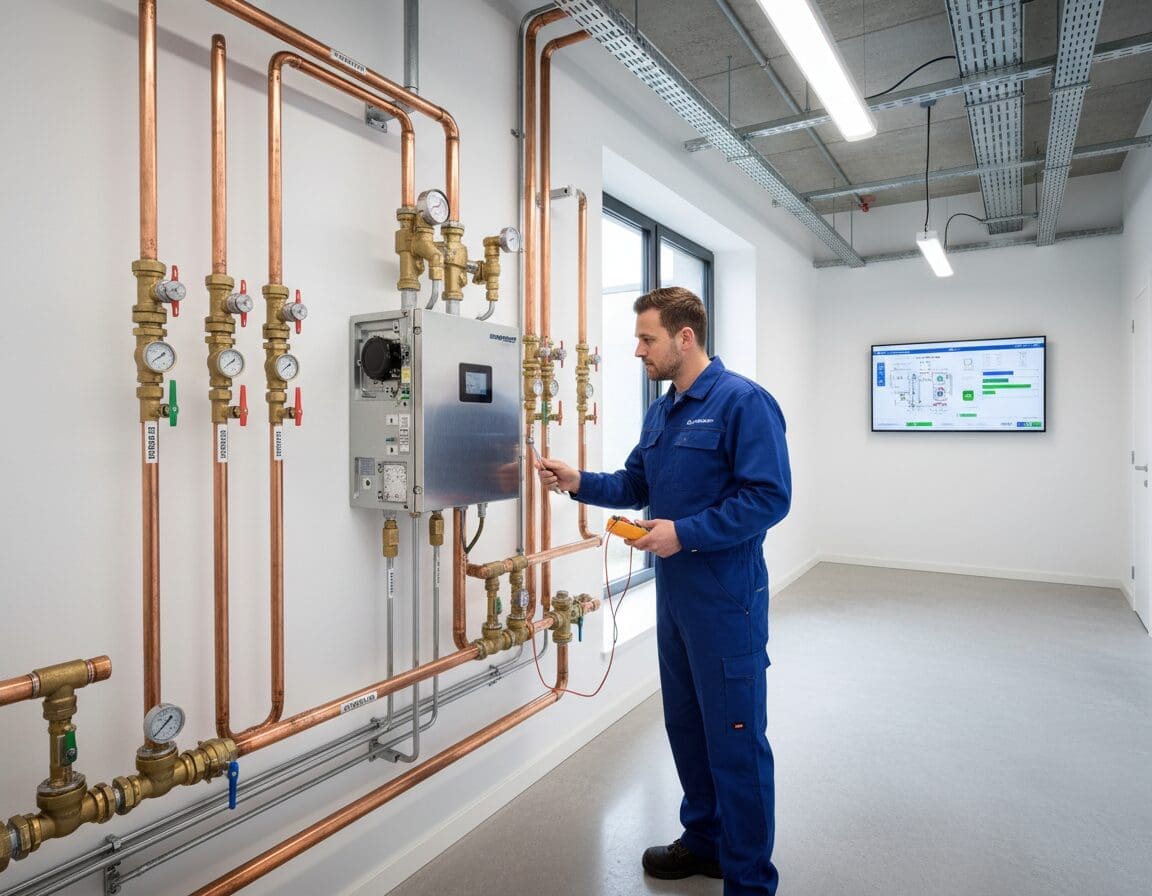
Technicians inspect the HIU casing, pipework, connections, strainers and isolation valves. They run functional checks on Danfoss control modules, thermostatic devices, flow sensors and meters.
Heat exchangers are assessed for thermal performance, fouling and leaks. Domestic hot water delivery temperatures are tested to confirm comfort and compliance.
Safety items such as pressure relief, expansion arrangements and pump operation receive attention. A service report records findings, recommendations and any metering or billing compliance checks required.
Key benefits: reliability, efficiency and cost savings
Early fault detection reduces unplanned downtime and tenant complaints. Regular attention keeps systems reliable and easier to manage.
Optimised heat exchange and correctly set controls lower fuel use. Maintaining flow rates and cleaning strainers delivers real efficiency gains and cost savings.
Replacing worn seals and preserving pump health extends asset life. Accurate metering and sensor performance support fair tenant billing and fewer disputes.
Which properties and communal systems need regular HIU servicing
Purpose-built apartment blocks with a central plant and individual HIUs require routine checks. District heating networks that serve multiple buildings benefit from regular HIU maintenance for communal heating systems.
Sheltered housing, student accommodation and mixed‑use developments often demand higher service frequency. Systems in hard‑water areas or high‑use communal settings need closer attention for water quality and legionella risk.
Why professional Danfoss HIU engineers in London and the UK matter
Danfoss-trained teams follow manufacturer diagnostic procedures and use genuine spares for valves, actuators and heat exchangers. That expertise reduces repair times and avoids unnecessary replacements.
Local knowledge gives faster response and better understanding of common layouts and regulations across the UK. The presence of professional Danfoss HIU engineers in London supports rapid support for city properties.
For London locations, Danfoss HIU service by R&B London HIU Engineers provides a traceable record of work, trained staff and clear recommendations. Choosing specialist providers helps keep systems compliant and performing well.
Inspection and routine maintenance tasks for Danfoss HIUs
Regular checks keep communal heating reliable and efficient. A short, structured inspection regime lets engineers spot wear early and plan repairs without disrupting residents. This section outlines practical tasks that form part of Danfoss HIU service and maintenance and supports improving HIU efficiency and system performance.
Danfoss HIU component inspection and cleaning
Begin with a visual tour of the unit. Check casing, labelling, mounting and pipework for damage or loose fittings.
Inspect condensate paths and leak routes. Clean mesh strainers and filters to restore flow and reduce pump strain.
Carry out electrical checks on wiring, connectors and control panels. Test battery-backed modules and any metering or communication interfaces used for remote management.
HIU heat exchanger and valve checks
Measure delta-T and flow to confirm heat exchanger performance. Look for corrosion, pin-holing or reduced thermal transfer that signals fouling.
Cycle control valves and observe actuator response times. Verify thermostatic and safety valves hold setpoints and that sealing options stop persistent leaks.
Note when brazed joints or gasketed connections need attention and record leak-detection results for follow-up work.
Flushing, scale prevention and water quality assessment
Use targeted local flushing for small blockages and powerflushing for stubborn sludge, magnetite or widespread debris in primary and secondary circuits.
Recommend water treatment in hard-water areas. Fit magnetic filters or dose inhibitors where needed after assessing hardness and conductivity.
Include temperature checks and thermal disinfection measures for domestic hot water where Legionella risk is present. Keep clear records of actions taken.
Periodic replacement schedules and service intervals
Plan annual planned service visits for most communal HIUs. Increase checks to six-monthly or quarterly for high‑use or vulnerable installations.
Replace seals and gaskets every one to three years depending on condition. Change strainers and filters as required. Consider actuators and sensors on a three to seven year cycle.
Assess plate heat exchangers by performance rather than calendar alone. Condition-based maintenance reduces waste and supports improving HIU efficiency and system performance.
- Keep clear records of Danfoss HIU component inspection and cleaning tasks completed.
- Log any HIU heat exchanger and valve replacement decisions with measured performance data.
- Document flushing and scale prevention treatments and water quality results.
Danfoss HIU repairs and fault diagnosis
Rapid diagnosis and careful repair keep communal heating reliable. Skilled engineers use a clear fault-finding workflow to identify causes of outages or leaks. This section outlines typical faults, step-by-step checks and when to choose immediate action over planned work.
Common Danfoss HIU problems and solutions
Blocked heat exchangers, faulty sensors and airlocks often cause low hot water temperatures. Clearing or replacing the exchanger, fitting a new sensor and purging the system usually restores performance. Loss of central heating can result from pump failure, stuck valves or failed actuators. Pump testing, valve servicing and control module checks fix most faults.
Leaks tend to come from worn gaskets, loose connections or corroded plates. Isolate the unit, renew seals or exchanger plates and pressure test after repair. Communications or metering errors require flow meter checks, wiring inspection and gateway diagnostics to re-establish reliable readings and billing data.
Diagnostic steps for loss of heating or hot water
Begin with user settings and timers to rule out simple causes. Check primary supply pressure and temperature, then measure flow and return temperatures. Inspect control panels for error codes on Danfoss modules and look for airlocks in the primary loop.
Use diagnostic tools such as clamp meters for pump current, infrared thermometers for surface temperatures and differential pressure gauges to verify flow. Water quality tests for conductivity and hardness reveal scale risk that can reduce heat transfer and cause repeated faults.
Valve replacement, actuator repairs and seal renewals
Always fit genuine Danfoss spares to maintain compatibility and preserve warranties. Safe isolation is essential before removing control valves, motorised actuators or mechanical seals. Follow correct lifting and handling for exchangers and note torque settings for flanges.
Recommissioning must include bleed and purge routines, set point calibration and a full function test. Record the work and log results in the service report so future Danfoss HIU repairs and fault diagnosis run faster and with more confidence.
Emergency repairs versus planned maintenance
Major leaks, severe pressure loss or loss of heating for vulnerable residents are true emergencies that need immediate response. Non-critical wear and reduced efficiency suit scheduled intervention as part of HIU servicing for heating and hot water systems.
Planned regimes reduce total cost and disruption. They allow time to source correct parts and book experienced teams, such as Danfoss HIU service by R&B London HIU Engineers, which cuts the need for costly reactive call-outs and improves long-term reliability.
HIU performance optimisation and long‑term efficiency improvements
Optimising HIU performance starts with tuning flow rates and delta-T to match each dwelling’s demand. Aim for a sensible delta-T that balances comfort with efficiency; this reduces pumping energy and stabilises indoor temperatures. Combining correct thermostat setpoints with adaptive control algorithms and building management integration helps keep systems responsive without wasting fuel.
Upgrading to variable‑speed pumps and smarter controls cuts electrical use and improves thermal comfort. Retrofitting higher‑efficiency pumps, low‑loss headers and modern plate heat exchangers, together with better insulation around HIUs and pipework, reduces standing losses and extends service intervals. Regular Danfoss HIU component inspection and cleaning preserves heat transfer and prevents performance drift.
Water‑treatment programmes to limit scale and corrosion protect components and sustain efficiency. Accurate metering and data‑driven optimisation identify underperforming units, reveal billing or balancing issues and prioritise targeted repairs. These measures make improving HIU efficiency and system performance measurable and repeatable across communal estates.
Build an asset management plan that uses predictive maintenance and staged replacements to lower lifecycle costs. Quantify savings from reduced fuel use, fewer breakdowns and longer equipment life to support investment decisions. Partnering with established UK teams such as R&B London HIU Engineers ensures reliable Danfoss HIU service and maintenance, and provides documented HIU maintenance for communal heating systems so occupants enjoy fair billing, stable comfort and sustainable energy use.