The question what does a raven mean invites both curiosity and quiet reflection across the United Kingdom. This short introduction sets the tone: ravens are striking birds whose raven meaning shifts with place and story. For many, raven symbolism evokes omen and prophecy; for others, it suggests intelligence, companionship and transformation.
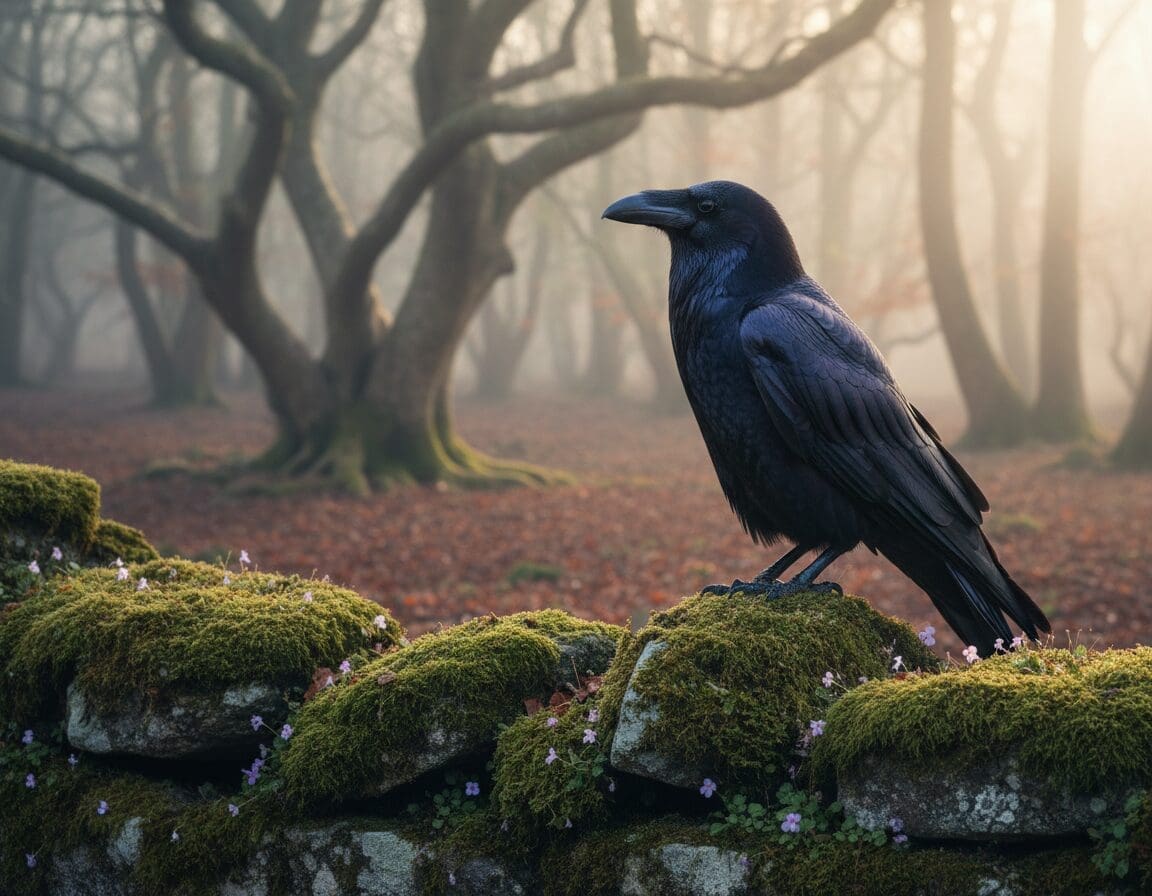
On the British moors and coastal cliffs the bird known to science as Corvus corax has long shared the landscape with people. Its glossy black plumage, deep call and scavenging habits gave rise to powerful tales in villages and abbeys. Natural history — from problem‑solving to complex social behaviour — underpins how communities interpreted raven symbolism in British folklore.
This article proceeds in three parts. First we explore the origins and core themes of raven symbolism: death, prophecy, cleverness and change. Next we survey mythology, literature and modern culture, from Celtic and Norse roots to poems and film. Finally, we offer practical guidance on interpreting a raven sighting in your life, whether in a dream, on the cliff or in a work of art.
Written for readers in the UK curious about meaning and context, this piece balances folklore scholarship, literary examples and observable corvid behaviour. If you seek spiritual insight, cultural history or creative inspiration, the following sections will ground raven symbolism in reliable sources and clear explanation.
what does a raven mean
The raven carries a long, layered voice in British culture. Short accounts in antiquarian collections and oral tradition show birds linked to battlefields and burial mounds. Place-names like Raven’s Craig and coastal tors preserve these echoes, which feed the study of raven symbolism origins across England, Scotland, Wales and Ireland.
Origins of raven symbolism in British folklore
Antiquaries recorded ravens at ancient sites where the birds scavenged carrion. That presence fostered strong associations with death and liminal ground. Ecclesiastical writers later reframed some tales, casting ravens as unclean omens while older Celtic stories remembered them as companions of goddesses and battle-masters.
Ethnographic notes from rural estates add practical detail. Farmers spoke of a raven’s cry as a warning and kept tame ravens to watch the land. Superstitions linked certain behaviours to weather or misfortune, which strengthened the patchwork of British raven myths.
Common symbolic themes: death, prophecy, intelligence and transformation
Ravens are liminal creatures that bridge life and death. Their scavenging at funerary sites made them symbols of endings and necessary clearing before renewal. This aspect shapes many local tales and funeral lore.
Traditions often cast ravens as messengers between worlds. Stories present them as bearers of prophecy or knowledge from gods and ancestors, which fuels beliefs about raven meanings death prophecy intelligence transformation.
Scientific study of Corvus corax shows remarkable problem-solving and social learning. Ethology supports symbolic readings of cunning and sapience that appear in proverb and myth. That intelligence underpins interpretations of craftiness and guidance.
Ravens also appear in shapeshifting and rebirth stories. In such narratives they guide humans through transition and regeneration, acting as agents of spiritual change as well as omens.
How context changes the meaning: sightings, dreams and art
Sightings carry varied weight. A lone raven near the home may be read as a personal message or warning. Flocks on a battlefield or cliffside tend to suggest collective change or broader omens. Location alters the reading: churchyard, shore or hill each bring different resonances.
Dream accounts offer another layer. In many frameworks a raven in dreams signals processing of loss, the arrival of vital information or a prompt to apply intelligence to a problem. The dreamer’s feelings—fear, curiosity or reverence—shape the meaning.
Art and heraldry shape public perception through chosen imagery. Majestic portrayals highlight mystery and nobility, while grotesque depictions stress doom. Poets and painters, from Romantic verse to modern sculpture, have amplified strands such as prophecy and transformation, shaping how British raven myths endure.
Raven symbolism in mythology, literature and culture
The raven appears across time as a striking symbol that joins myth, verse and popular culture. Stories and poems give weight to the bird’s black plumage and keen gaze, while modern artists and filmmakers borrow those traits to shape mood and meaning. This section traces key traditions and shows how cultural symbolism raven moves from battlefield omens to subtle psychological signposts.
Ravens in Celtic and Norse myth
In Irish lore the Morrígan often appears as a raven or rides with ravens to signal battle, sovereignty and fate. Welsh and Cornish tales echo this, with ravens marking victory or doom at crucial moments. These images form the basis for raven in Celtic myth as a martial and prophetic presence.
In Norse tradition Odin keeps two ravens, Huginn and Muninn, who fly the realms and report back on what they have seen. That bond makes the raven in Norse myth an emblem of thought and memory. The birds act as scouts, messengers and links between gods and world.
Read together, Celtic and Norse material balances the raven’s battlefield role with its cognitive side. The result is a layered raven mythology where the bird is both omen and informer, messenger and marker of destiny.
Famous literary ravens: Poe and British poets
Edgar Allan Poe’s poem cast a long shadow over English-language perceptions of the bird. The Edgar Allan Poe raven becomes a voice of relentless memory, a presence that refuses to be forgotten and forces a speaker to face grief.
British poets from William Wordsworth to Victorian writers used raven imagery to probe the sublime and the uncanny. Romantic verse often treated natural signs as moral or spiritual prompts. Later poets placed ravens in moral and national frames, exploring fear, loss and the strange beauty of night.
Across centuries, writers reused the motif to explore inner states and social themes. The raven in British poetry frequently stands in for memory, warning or the darker side of imagination.
Modern cultural references: film, music and art
Filmmakers use ravens to set tone, from Gothic horror to fantasy television. Directors combine silhouette, caw and slow camera moves to suggest mystery, forewarning or wisdom. Those choices keep ravens in film and music as potent visual and auditory cues.
Musicians and bands draw on raven imagery in lyrics and cover art to express loss, rebellion or cunning. Folk ballads have long sung of carrion and omens, while alternative acts place the raven icon on album sleeves to signal mood and intent.
Visual artists, designers and tattooists continue to reinterpret the bird, shifting emphasis between beauty and menace. Public institutions such as the British Trust for Ornithology help balance myth with fact, reminding creators and audiences of the living bird behind the legend.
- Raven mythology links battlefield omen and mental clarity.
- Raven in Celtic myth and raven in Norse myth give the bird both fate and knowledge roles.
- Edgar Allan Poe raven and raven in British poetry shaped modern literary meaning.
- Ravens in film and music and wider cultural symbolism raven keep the image alive today.
Interpreting a raven sighting in your life
Seeing a raven meaning often depends on your situation. Take a moment to note your emotional state, recent life changes and cultural background. If the sighting comes during a decision, a bereavement or a turning point, treat it as a meaningful prompt rather than a fixed verdict. Asking yourself what felt true in that moment helps shape a personal meaning.
For clear raven sighting interpretation, record observable details. How many birds were there? Was the raven perched high, scavenging at dusk, calling loudly or interacting with other birds? A lone raven on a ridge may suggest counsel or oversight; a bird scavenging at twilight can speak to an ending and the need for closure. These concrete clues anchor symbolism to real events.
Use reflective practices to deepen insight. Keep a brief journal, try quiet meditation or read folklore and literature to see which threads resonate—consider raven dream meaning as part of that pattern. If you hold spiritual beliefs, you might work with the raven as a guide or offer gratitude; if you prefer a secular route, treat the sighting as a prompt for introspection and practical planning.
Know when to seek expert input. For unusual behaviour or potential injury, consult ornithological sources such as the RSPB or the British Trust for Ornithology to learn about raven ecology and lawful care. For intense emotional responses, seek support from a therapist or speak with a cultural historian or storyteller to place the experience in context. Applying the raven as omen personal meaning constructively can inspire action: gather information before decisions, accept necessary endings, nurture adaptability and strengthen social bonds.
Finally, turn insight into practice. Write a short poem, make a small piece of art or create a private ritual to mark transition. Share the sighting with family, local folklore groups or online communities to gain fresh perspectives, while respecting wildlife and conservation. These steps make any raven sighting interpretation both grounded and generative.