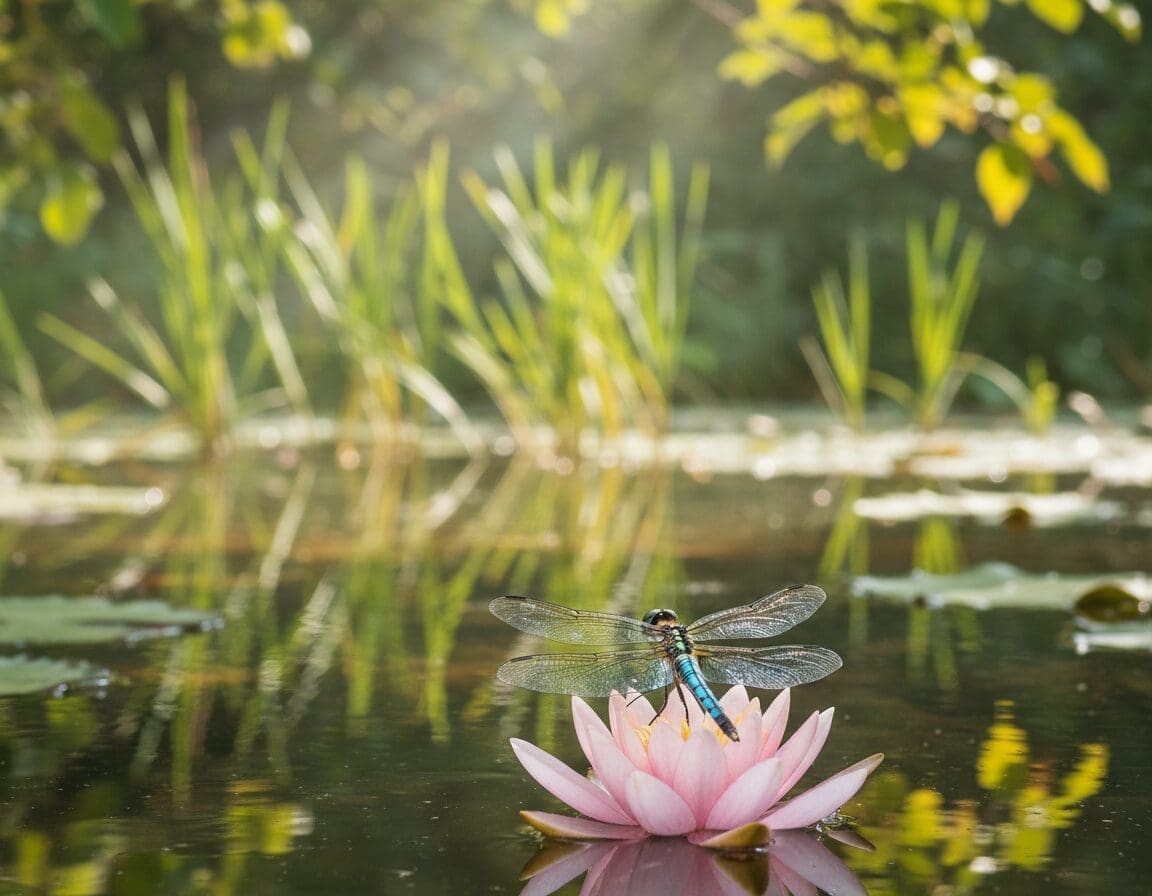
When a dragonfly appears beside a pond, on a bracelet or in a dream, many of us pause and ask: what does a dragonfly mean? In the UK, the dragonfly has become a potent symbol that blends transformation, adaptability and emotional maturity.
Biologically, dragonflies belong to the order Odonata. Their life begins under water as nymphs before they undergo a striking metamorphosis to become winged adults. That real-life shift from aquatic nymph to airborne insect underpins much of the dragonfly meaning people cite — rebirth, change and the courage to emerge anew.
Noticing dragonfly symbolism can prompt reflection about life direction, relationships and inner growth. Whether seen in nature, art, jewellery or a dream, these encounters invite questions about illusion versus truth and the balance between feeling and thought.
This article will explore dragonfly spiritual meaning, cultural and mythological readings, dream and psychological interpretation, and practical ways to weave dragonfly interpretation UK into everyday wellbeing and personal development.
what does a dragonfly mean in symbolism and spirituality
The dragonfly often appears at moments of quiet reflection. People sense its presence as a prompt to look inward and to notice change. This section explores how that small, swift creature carries layered spiritual messages.
Transformation and personal growth
Dragonflies spend years as aquatic nymphs before breaking the surface and emerging as winged adults. This biological fact gives weight to the idea of long inner work followed by a sudden outward shift. The lifecycle supports a view of steady preparation and dramatic emergence, a core of dragonfly symbolism transformation.
Spiritually, the insect reminds us to release old patterns and to claim new freedoms. Practices that use this symbolism include guided visualisations of emergence, journaling prompts about past habits and future aims, and small rituals such as a symbolic water-release or creating a keepsake to mark a turning point. These acts can help translate metaphor into lived change.
Light, illusion and deeper truth
The dragonfly’s iridescent wings refract sunlight and shift colour as it moves. That play of light fuels metaphors about perception and truth. Dragonfly light symbolism invites us to see beyond surface appearances and to recognise that what we first observe may be transient.
Encountering a dragonfly can suggest the need for clarity and attention. Mindfulness, close observation of feelings, and quiet practices that sharpen perception help uncover layers beneath everyday illusion. Spiritual teachers often liken the wings’ shimmer to sudden insight, a moment when illusion thins and deeper truths are seen.
Messages from the spirit world and omens
Across traditions, dragonflies are read as messengers or signs. Some people interpret a sighting as reassurance from an ancestor or a prompt to trust inner knowing. The phrase dragonfly omen meaning covers a range of interpretations from comforting to cautionary, depending on context.
Meaning varies with culture and personal intuition. To discern a message, note the circumstances of the sighting, the emotions you carried then, and any patterns that repeat. Treat sightings as invitations to reflect rather than fixed prophecies. Combine intuitive impressions with grounded action and consult a trusted spiritual mentor or counsellor if you seek deeper guidance.
what does a dragonfly mean in different cultures and mythologies
The dragonfly appears across cultures with meanings that shift by place and time. These brief notes explore how dragonfly cultural meanings and dragonfly mythology vary, from Indigenous nations in North America to Japan and wider East Asia, then into European rural belief and literature.
Native American interpretations
Many Indigenous nations view the dragonfly as swift, pure and tied to water. In stories from the Ojibwe and Hopi regions it can signal renewal, agility and messages carried in dreams. Some communities name the insect as a helper in fishing lore or as a spirit linked to summer streams.
These meanings differ from tribe to tribe. Readers should seek primary sources or Indigenous voices to understand specific tribal context rather than treating all accounts as the same. Respect for cultural specificity matters when discussing dragonfly Native American meaning.
Japanese and East Asian meanings
In Japan the dragonfly—often called tombo in modern speech and kagerou in older verse—is admired for speed, courage and victory. Samurai emblems used the insect as a sign of martial spirit. Poets and haiku writers place dragonflies in autumn scenes to suggest change and fleeting time.
Across China and Korea the insect can imply prosperity, harmony and the brief nature of life. It appears in paintings, ceramics and textiles as a motif that blends beauty with reflection, reinforcing wider strands of dragonfly mythology in East Asia.
European folklore and literary references
Rural European beliefs mix admiration with unease. In parts of Britain the dragonfly gained folk nicknames such as “devil’s darning needle,” showing fear or misunderstanding tied to water and hunting creatures. Folk weather lore also placed dragonflies near ponds as signs of summer conditions.
Romantic and Victorian writers treated dragonflies as emblems of delicate beauty and passing moments. Naturalists like Alfred Russel Wallace and poets including Gerard Manley Hopkins gave attention to insect life, shaping European dragonfly folklore into aesthetic and symbolic lines that persist today.
what does a dragonfly mean in dreams, psychology and personal signs
Dreams, psychology and everyday sighting form a trio of ways people meet the dragonfly. Each offers a different lens for meaning. Read dreams for emotion, use psychological ideas for inner patterns, and treat sightings as prompts for reflection.
Common dream themes involving dragonflies
- Chasing or watching a dragonfly — often points to pursuing a fleeting chance or seeking clarity.
- Transforming into a dragonfly — suggests emergence from an emotional depth into a lighter self. This ties to dream symbolism dragonfly as change in progress.
- Surrounded by many dragonflies — can signal a period of rapid possibilities or social movement.
- Injured dragonflies — may reflect vulnerability or a stalled transition.
When you interpret a dragonfly dream meaning, note feelings, colours and setting. Joy hints at growth. Fear suggests resistance. Personal associations shape whether a scene feels nostalgic or liberating.
Psychological perspectives on encountering dragonflies
In clinical terms, animals and insects often act as mirrors for inner life. The psychological meaning of dragonfly can include adaptive coping, a shifting identity, or skill in navigating complex social waters.
Carl Jung would frame the dragonfly as an archetypal image of transformation. The insect links watery, unconscious origins with airborne, conscious life. Therapists sometimes invite clients to explore dragonfly images to map transitions or grief.
Using dragonfly motifs in therapy helps people re-author their stories. A counsellor in London might ask a client to describe how the insect moves, then map that movement onto life choices. Such work creates metaphors that feel safe to examine.
How to reflect on dragonfly sightings as personal signs
- Note the moment and setting. Write time, place and weather.
- Record immediate thoughts and feelings. Capture the gut reaction before analysis.
- Journal any synchronicities — repeated numbers, songs or messages that occur nearby.
- Create a seed sentence, for example: “I see a dragonfly when I am…” Use it to spot patterns.
- Try small creative prompts: sketch the sighting, write a short scene, or set one practical intention.
See a dragonfly as a nudge rather than a decree. Treat a dragonfly personal sign as inspiration for action, not a command. If a sighting stirs strong emotion, reach out to friends or a professional for support.
how to use dragonfly symbolism in daily life and wellbeing
Use dragonfly symbolism as a gentle framework for small, practical habits. Try a brief dragonfly meditation each morning: visualise a nymph rising from water into light, feel the body become lighter, and take five calm breaths. Short breathwork with that image helps ground decisions and supports dragonfly wellbeing.
Keep physical reminders to prompt mindful choices. Wear a piece of dragonfly jewellery, place a photograph or artwork where you’ll see it, or carry a smooth stone as a token. The dragonfly jewellery meaning can be a cue for agility and clarity when you face stress or doubt.
Mark transitions with simple creative rituals. Perform a water-release act to let go, write a letter to an old self and bury or safely burn it, or build a tiny altar with pebbles and a dragonfly image. Use painting, poetry or collage to externalise change and deepen emotional processing.
Apply the symbol in relationships and work by practising clear, honest communication and embracing adaptability. When uncertainty arrives, pause and imagine dragonfly agility; take small experimental steps rather than rushing into irreversible choices. Honour the living creatures behind the symbol by observing dragonflies without disturbing habitats and support groups such as the British Dragonfly Society to learn more and aid conservation.