
Insulating your home is one of the most effective steps a UK homeowner can take to cut bills and boost comfort. Whether you live in a Victorian terrace, a post-war semi, a modern detached home or a flat, choosing the right house insulation methods makes a big difference to warmth, draughts and condensation.
This article explains how to insulate a house in practical, cost-effective ways. We cover loft, walls, floors, windows and doors, and the small but crucial work around pipes, loft hatches and ladders. You will find guidance on home insulation UK standards, recommended R-values and the best insulation for homes of different ages and construction types.
Key benefits are clear: lower heating bills, steadier indoor temperatures, reduced carbon emissions and less wear on boilers or heat pumps. Insulation works best alongside efficient boilers, air-source heat pumps and smart controls to deliver greater energy efficient insulation across your home.
Read on for a roadmap: first we explore why insulation matters and the regulatory and environmental context. Next, we look at detailed house insulation methods for lofts, walls, floors and openings. Finally, we explain how to choose the right approach, compare costs and payback, and when to call a professional surveyor—for example with historic buildings, solid walls or complex roofs.
Sources for the guidance that follows include GOV.UK advice on improving home energy efficiency, Energy Saving Trust data on insulation savings, and Building Regulations and PAS standards for thermal performance.
Understanding why insulation matters for UK homes
Good insulation changes how a house holds heat. It slows heat loss by reducing conduction through walls and lofts, limits convection from draughts and cuts radiant heat transfer from cold surfaces. That simple shift keeps rooms warmer in winter and cooler in summer while letting heating systems work less hard.
Poor insulation shows itself in familiar ways across UK homes. You may notice cold rooms, perennially chilly floors, draughty skirting boards, radiators that never feel warm and patches of mould from condensation in poorly ventilated cupboards. These signs point to lost warmth and higher running costs.
How insulation improves comfort and reduces bills
Insulation benefits UK households by evening out temperatures and reducing cold spots. A well-insulated loft or wall keeps heat where people live, so boilers and heat pumps run for shorter periods. That reduces wear on equipment and improves occupant wellbeing.
Practical savings vary by house type and heating system. The Energy Saving Trust suggests loft insulation and cavity wall insulation can save households noticeable amounts each year, depending on dwelling size and construction. Insulating an uninsulated loft typically gives one of the fastest paybacks on investment.
To reduce energy bills insulation must be matched to the property. Thicker loft insulation and properly installed cavity fill are common, cost-effective measures that often show measurable drops in annual fuel use.
Environmental benefits and carbon savings
Using less energy at home cuts carbon dioxide emissions from fossil-fuelled heating. Insulation and carbon savings go hand in hand when retrofit reduces demand for gas or oil. National carbon models attribute lower domestic emissions to widespread insulation upgrades.
Insulation also enhances low‑carbon heating. Heat pumps perform better in well-insulated homes because reduced demand allows smaller, more efficient systems to deliver comfortable temperatures.
Policy drivers push this agenda. The UK’s Net Zero commitments and local retrofit schemes prioritise domestic fabric improvements to meet emissions targets and protect future generations.
Building regulations and recommended R-values in the UK
Building Regulations (Part L) set minimum standards for new builds and major renovations. The rules focus on U-values, which describe thermal transmittance. R-values UK users may see are simply the inverse of U-values when assessing resistance to heat flow.
For retrofit, common guidance recommends loft depths around 270mm or more of mineral wool in existing lofts. U-value targets for walls and replacement windows often sit near 0.25–0.3 W/m²K in many scenarios, though exact requirements vary with the latest Part L updates.
Listed buildings and conservation areas need careful solutions and may require listed building consent before external insulation is applied. For current specific values consult official documents such as Approved Document L, BRE guidance and British Standards like BS EN 13162.
house insulation methods
Choosing the right house insulation methods makes a home warmer, cheaper to run and kinder to the planet. This section outlines practical measures you can take, with clear options for lofts, walls, floors and openings. Read on to find straightforward choices that suit old terraces, modern builds and conservation areas.
Loft insulation options: rolls, blown fibre and boards
Lofts are often the easiest place to start. Mineral wool rolls, quilt or felts are common and simple to fit between joists. Rigid PIR boards work well where depth is limited or for loft conversions.
Blown fibre, either cellulose or mineral, gives even coverage in irregular spaces and is a good choice for hard-to-access lofts. Current guidance often recommends about 270mm of mineral wool in existing lofts, though you should follow the latest government or manufacturer advice.
Keep ventilation pathways clear in cold roof spaces and avoid compressing rolls, as this reduces performance. Use fire-rated covers for recessed downlighters and create insulated access hatches or boarded runs to maintain safe routes. Many households can fit loft insulation themselves, while professional blown-fibre installers help where access is poor.
Wall insulation: cavity wall insulation and solid wall solutions
Cavity wall insulation suits properties with a clear cavity, commonly found in homes built from the 1920s to the 1980s. Materials include mineral wool, polystyrene beads and injected foam. A survey to check for damp, bridging or obstructions is essential before installation.
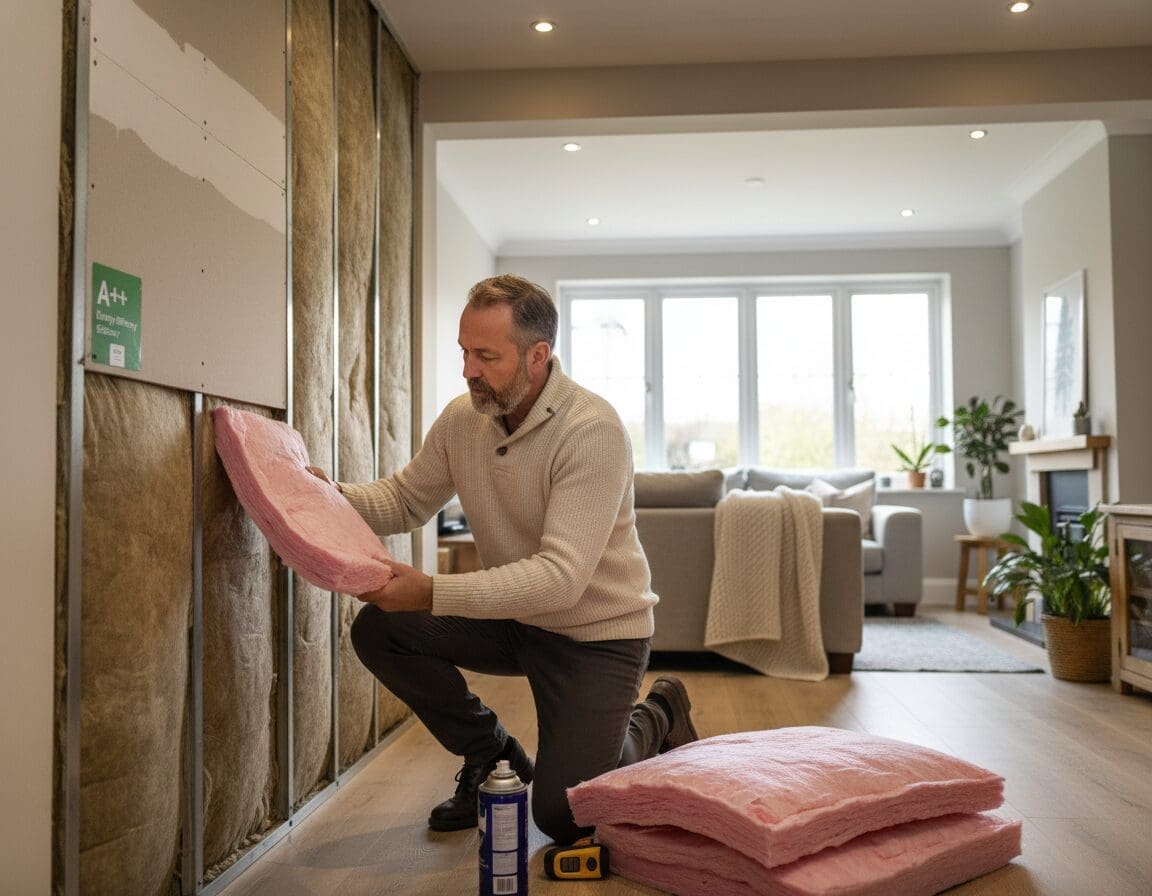
Solid wall insulation comes in two flavours: internal wall insulation and external wall insulation. External systems fix insulated boards and a protective render outside, preserving internal space and reducing thermal bridges. Internal systems add insulated plasterboard or stud walls within, which is cheaper but reduces room area and can disturb fixtures.
Moisture management matters. Use correct vapour control layers and follow BRE and manufacturer guidance to avoid interstitial condensation. Grants from schemes such as ECO may help with costs for eligible households, though solid wall works often have longer payback periods.
Floor and underfloor insulation choices for different property types
Choose solutions based on floor type. Suspended timber floors take mineral wool between joists or insulated boards under floorboards, while solid concrete floors are best insulated from above during re-flooring with rigid PIR or EPS boards and an insulated screed.
Insulating underfloor spaces requires attention to ventilation beneath suspended floors and a check on joist condition. Where basements exist, insulating the ceiling of the basement can be effective without disturbing the main slab.
Floor insulation brings thermal and acoustic benefits. Material choice depends on disruption you can tolerate and the property’s age; shallower floors in period cottages may limit options compared with modern concrete slabs.
Window and door upgrades: double glazing, secondary glazing and draught-proofing
Windows and doors influence comfort strongly. Double glazing UK products replace single panes with sealed units to improve U-values and reduce condensation. Secondary glazing fits a second pane inside existing frames and suits listed buildings or conservation areas.
Draught-proofing is low-cost and high-impact. Weatherstrips, sash cord repairs, letterbox seals and chimney draught excluders quickly reduce unwanted airflow and improve perceived warmth. Be mindful of ventilation needs when tightening airtightness; background vents or mechanical ventilation with heat recovery may be needed for whole-house upgrades.
Insulating around services: pipes, loft hatches and loft ladders
Pipes benefit from lagging to cut heat loss and prevent freezing in exposed areas. Use foam or mineral wool jackets suited to the location, such as garages or external runs.
Loft hatches and ladders are common weak points. Fit insulated hatch covers, seals and insulated boards around pulldown ladders. For loft ladders, seal gaps when closed or use an insulated box to limit losses.
Always follow safety guidance near heat sources. Leave required clearances around non-IC-rated downlights, flues and chimneys and seek qualified trades where gas appliances or complex services are involved.
Choosing the right approach and getting the job done
Begin with a simple home assessment or an energy survey to spot heat-loss areas. A thermal-imaging check or DIY draught-check will show priorities. If you do not have an EPC, get one — its SAP-derived recommendations help build a sensible retrofit insulation plan.
Prioritise the most cost-effective steps first: loft rolls and cavity wall insulation usually pay back quickest. Use insulation grants UK information and local schemes to reduce upfront costs. For deeper work, plan for solid wall insulation and whole-house airtightness alongside mechanical ventilation if budget allows.
Decide between DIY and professional work carefully. DIY insulation tips are great for loft roll installation, draught-proofing and simple pipe lagging. Leave cavity fills, external wall systems and any gas or electrical alterations to accredited teams. Choose an insulation installer UK who is MCS or PAS 2035-compliant and look for TrustMark or Gas Safe accreditation where applicable.
Seek at least three written quotes and an initial survey that includes moisture, structural and ventilation checks. Ask about warranties on materials and render fixings, and check maintenance needs. Track outcomes with smart meters, bill comparisons adjusted for weather, or a follow-up thermographic check to confirm the retrofit insulation plan has delivered the expected savings.