
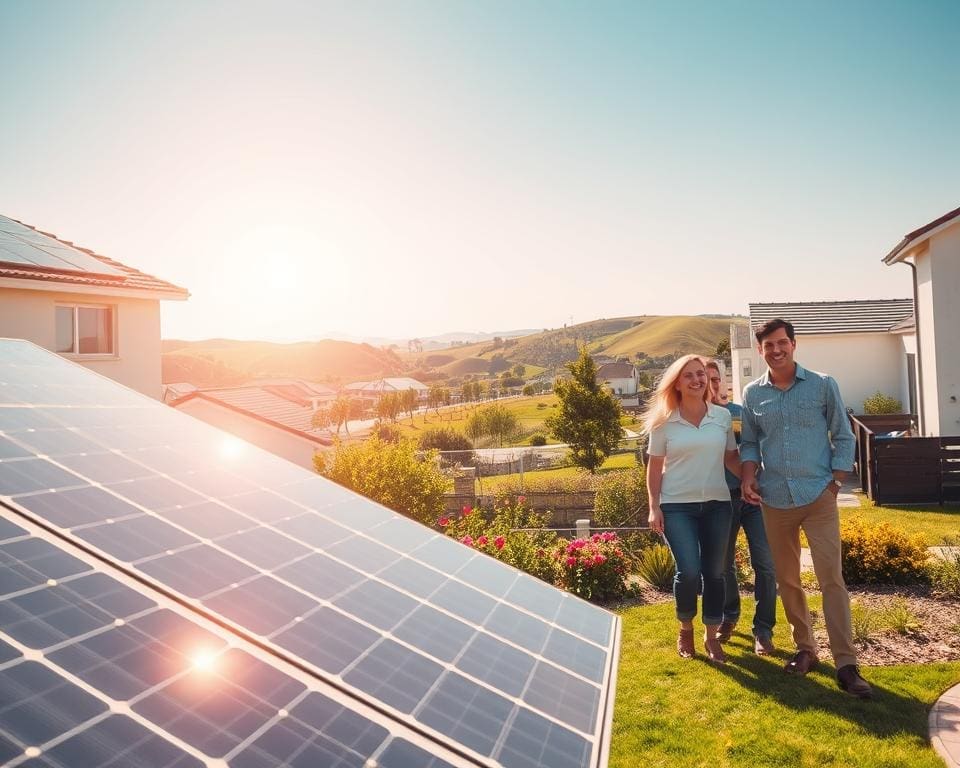
For UK homeowners the question what are the benefits of installing solar panels is both practical and inspiring. Solar photovoltaic (PV) systems fit on roofs and convert daylight into electricity. Typical domestic systems range from about 2–6 kW for terraced and semi‑detached houses to larger arrays for detached properties. Systems can be grid‑tied, exporting surplus power to the grid, or paired with battery storage to increase independence.
The benefits of solar panels UK owners commonly cite fall into three clear pillars. First, financial savings: lower energy bills and a buffer against rising tariffs. Second, environmental benefit: reduced carbon emissions and better local air quality. Third, increased property value and greater resilience when batteries are added.
Despite our changeable weather, modern panels generate useful electricity in diffuse light and still deliver year‑round output, with peaks in spring and summer. Rising energy prices and the UK government’s net‑zero ambitions make installing solar panels advantages increasingly compelling for households.
Later sections draw on data from the Department for Business, Energy & Industrial Strategy, guidance from the Energy Saving Trust and insight from the Solar Trade Association to set out costs, payback, planning and installation advice for homeowners thinking about solar energy advantages UK.
What are the benefits of installing solar panels?
Choosing solar panels for your home brings clear, practical advantages. On-site generation cuts the amount of imported electricity you buy from suppliers. That shift creates tangible solar savings UK households notice on their bills.
Reduced energy bills and long-term savings
A typical 4 kW system in the UK produces roughly 3,200–3,800 kWh a year, depending on roof orientation and location. With average electricity prices from BEIS, that output can save several hundred pounds a year for many households.
Lifetime savings over 25–30 years become significant once initial costs are spread out. The common solar payback period ranges from about 7–15 years. Payback shortens when more generation is used at home rather than exported.
Fitting a battery improves solar battery self-consumption. Without storage, households often use 30%–40% of what they generate. Adding a battery can raise that to 60%–80%, depending on battery size and habits. That higher self-consumption reduces the solar payback period, though batteries add upfront cost.
Environmental benefits and carbon footprint reduction
Every kWh produced by PV displaces grid electricity and lowers greenhouse gas emissions. The UK grid has reduced carbon intensity over recent years, yet rooftop solar still cuts marginal emissions and supports further decarbonisation.
Wider adoption helps the UK reach net-zero goals and improves local air quality by reducing reliance on fossil-fuel peaking plants. When embodied carbon of panels is accounted for, systems typically reach carbon payback within 1–3 years. After that point, they deliver net savings for the remainder of a 25+ year life.
Increased property value and market appeal
Energy efficiency measures attract modern buyers. Estate agent reports show that homes with owned, well-maintained systems and valid warranties can command a premium. Visible panels signal lower running costs and forward-thinking design.
Whether uplift is realised depends on installation condition, ownership status and included components such as batteries. Owned systems tend to boost appeal more than leased arrangements. In the UK market, lower bills and energy resilience add to perceived solar and house value UK.
Financial incentives, costs and practical considerations for UK homeowners
Deciding on solar takes more than enthusiasm. You need clear figures on solar panel cost UK, available support such as solar grants UK, and a realistic solar ROI calculation. This short guide walks through upfront costs, finance choices and the practical checks installers carry out before work begins.
A typical 3–4 kW domestic system in the UK, including panels, inverter, labour and VAT, commonly lies in the range of £4,000–£7,000. Price shifts come from panel brand and quality — for example LG, REC or Longi — inverter choice such as SMA, SolarEdge or Fronius, system size and roof complexity. Additional costs can arise for scaffolding, electrical upgrades or battery-ready inverters.
Finance routes include cash purchase, green loans from high street banks like Santander Green Home Loan, green mortgage solar products or remortgaging to release equity, and hire-purchase or power purchase agreements offered by some installers. Low-interest green finance often reduces monthly outlay. Lenders and insurers may view energy-efficient homes favourably, which helps when seeking a green mortgage solar product.
Domestic incentives have changed since the Feed-in Tariff ended in 2019. You should still check local schemes and support for low-income households. Some councils and devolved administrations run targeted help. ECO measures and local authority grants can cover insulation or combined upgrades alongside solar. Search for available solar grants UK and local advice before committing.
Return on investment and payback calculation methods
Establishing a robust solar ROI calculation starts with realistic generation estimates. Use system kW, regional irradiance and expected self-consumption to set annual yield. Multiply on-site generation used at retail electricity prices by the share you will consume.
Value exported to the grid adds to savings. Use a conservative export rate or the avoided cost method when grid export payments are uncertain. Account for panel degradation of roughly 0.5–0.8% per year and include maintenance and inverter replacement. Inverters usually last 10–15 years and may need replacing once over a 25–30 year horizon, so include a contingency for that cost.
Follow these steps to model payback:
- Estimate first-year generation from system size and location.
- Decide self-consumption fraction and apply retail electricity price for on-site use.
- Value exported energy at an assumed export or avoided cost rate.
- Apply annual degradation and add expected maintenance and inverter replacement costs.
- Compute simple payback (total cost ÷ annual net benefit) and run an NPV using a chosen discount rate for a fuller picture.
Planning permission, roof suitability and installation process
Roof orientation and shading determine real output. South-facing roofs perform best in the UK. South-west and south-east aspects follow closely. A roof pitch of about 30–40 degrees is ideal. Shading from trees, chimneys or neighbouring properties can cut yields, so ask for a shading analysis using tools such as PVsyst or an on-site survey.
Most domestic roofs can carry panels but older or weakened structures may need strengthening. Installers provide structural assessments and load calculations as standard. Ensure MCS certification for installer and components when using finance or to satisfy insurers.
Planning permission solar panels UK rules usually allow rooftop arrays as permitted development across England, Wales and Scotland when size, height and location rules are met. Exceptions include listed buildings, conservation areas and some flat roofs. Always check with the local planning authority where doubt exists.
Building Regulations and electrical compliance matter for safety. Part P considerations and correct certification on completion are required. Typical project stages run: initial enquiry and quote (1–2 weeks), technical survey (1–2 weeks), equipment order and scheduling (2–6 weeks), installation (1–3 days) and commissioning with paperwork or meter changes which may add several weeks. Timelines vary with season and supply chain conditions.
Practical advantages and long-term benefits for lifestyle and energy resilience
Installing solar panels helps households in the UK reduce reliance on volatile energy markets. Generating electricity on-site insulates families from wholesale price spikes and rising supplier tariffs. By shifting daytime tasks — such as running washing machines, dishwashers and EV charging — to periods of production, homes capture more value from their arrays and enjoy steadier, more predictable operating costs.
Pairing panels with batteries boosts resilience and convenience. Solar batteries backup power lets stored daytime generation run essential circuits at night and provide short-term support during outages. Common lithium-ion systems like Tesla Powerwall, LG Chem/RESU and Sonnen offer options for whole-house backup or selective-circuit protection, though typical domestic batteries usually supply limited hours and suit short outages or peak-billing avoidance best.
Routine solar maintenance UK is straightforward and low-cost. Keep panels free of heavy debris, check fixings and monitor inverter data for expected output. Annual visual inspections and live monitoring help spot underperformance early. Modern installations also benefit from solar lifespan warranties: many panels carry 10–15 year product guarantees and performance guarantees assuring 80–90% output after 25 years, while inverters typically have 5–12 year warranties that can be extended.
Beyond individual gain, visible local uptake creates community solar benefits. Neighbourhood projects and rooftop aggregation schemes can lower costs through scale and local ownership. Households with solar often adopt energy-conscious behaviours, shifting demand to daylight hours and easing evening peaks. Coordinated local generation can reduce distribution losses and may delay network reinforcement when combined with smart export control and demand-response measures, strengthening solar resilience UK for everyone.