
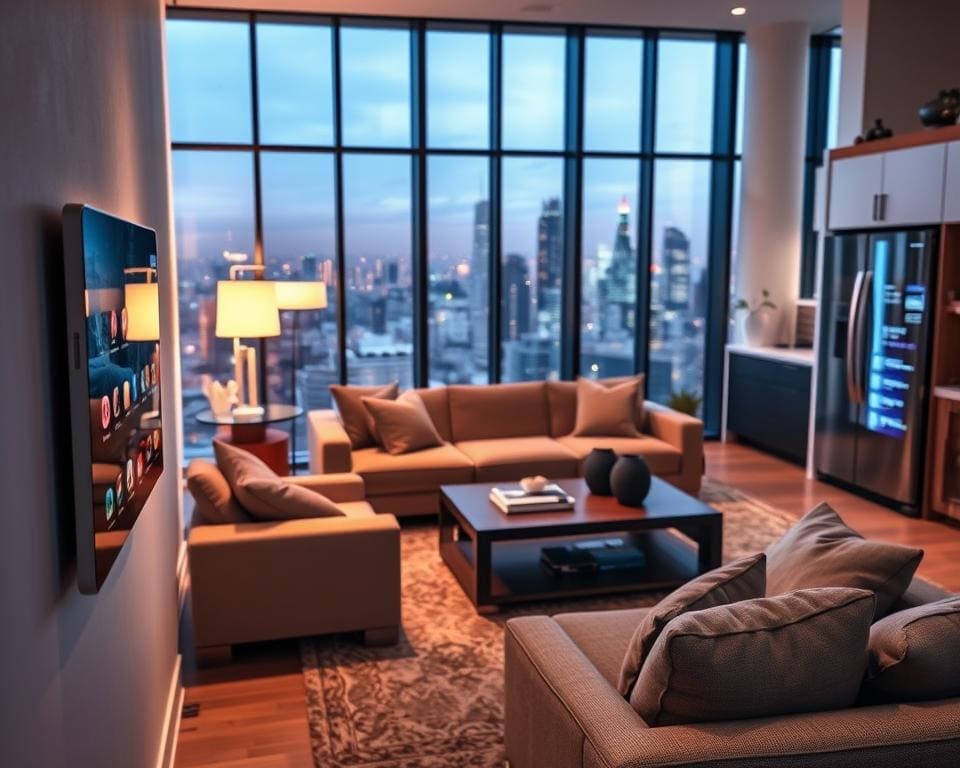
Smart home upgrades for modern living are technology-driven improvements that help UK households live more comfortably, efficiently and securely. They let you automate, monitor and control heating, lighting, security and appliances from a phone or voice assistant, turning a standard house or flat into a modern smart home.
Practically, these connected home upgrades aim to cut energy bills, boost security and simplify daily life. Simple smart plugs and bulbs save power and time, while smart heating, integrated alarms and reliable networking deliver bigger gains for terraced and detached homes.
The scope runs from plug‑and‑play devices to professional installs. Tenants can use non‑invasive smart home improvements such as Philips Hue bulbs or Google Nest thermostats that need little or no rewiring. Homeowners may opt for hardwired systems, structured networking from BT or Vodafone and whole‑house automation.
In the UK context, consider broadband speeds, smart meter compatibility and Building Regulations for fixed electrics or alarm installations. Choose trusted brands like Hive, Nest/Google and Ring, secure devices with strong passwords and two‑factor authentication, and follow data‑protection expectations under UK law.
By the end of this article you will know which smart home upgrades UK homeowners and renters should prioritise, how each upgrade delivers measurable benefits and the practical next steps for planning and maintaining a future‑ready home.
What are smart home upgrades for modern living?
Smart home upgrades turn everyday devices into connected tools that save time, cut energy use and improve comfort. In the UK smart home context, these upgrades can range from simple plug-and-play bulbs to whole-house heating controls. Pick solutions that match your lifestyle, budget and the layout of your property.
Defining smart home upgrades in a UK context
Defining smart home upgrades means looking at devices and systems that join a network to enable remote control, automation and data-driven optimisation. Many use Wi‑Fi for cameras and streaming devices, Zigbee or Z‑Wave for low-power sensors and smart thermostats, and Matter is emerging to improve interoperability across brands.
Typical examples include Hive and Google Nest thermostats, Philips Hue and LIFX bulbs, TP‑Link Kasa smart plugs, Ring and Arlo cameras, Yale and Nuki smart locks, and hubs such as Amazon Echo or Google Nest Hub. For fixed electrical work, use a NICEIC-registered electrician; for boiler changes, instruct a Gas Safe-registered engineer.
Benefits for everyday life: convenience, energy savings and wellbeing
The benefits of smart home upgrades show up in small, daily wins. Automation handles routines like morning lights and heating schedules, freeing time and helping those with mobility needs.
Energy savings are a strong motivator. Smart thermostats and radiator valves can cut heating costs by optimising when and where warmth is needed. Smart plugs and energy monitors reveal standby power losses that add up over months. Manufacturers and independent advisers often cite potential savings of around 10–15% on heating bills, depending on usage and property.
Wellbeing improves through consistent indoor temperatures, circadian lighting that suits day and night, and air‑quality monitoring for CO2 and humidity. Security features such as video doorbells, instant alerts and remote locks give peace of mind and reduce the risk of opportunistic crime.
How upgrades fit different home types: flats, terraced houses and detached homes
smart home for flats generally favours minimally invasive, plug-and-play solutions. Smart bulbs, smart plugs and battery-operated sensors work well when you cannot rewire or alter communal heating. Check with landlords or freeholders before fitting permanent devices.
smart home for terraced houses allows mid-level integration. Add zoned radiator valves, a smart thermostat, a robust Wi‑Fi mesh to deal with brick walls and a video doorbell for security. Party-wall issues are rarely a barrier, but any electrical changes should be made by qualified tradespeople.
smart home for detached homes offers the most scope. Whole-house heating controls, multi-zone systems, wired security and extensive mesh Wi‑Fi suit larger footprints. Detached properties also present opportunities to link solar PV, battery storage and EV charging for a greener setup.
- Cost and scalability: entry tier (£50–£300), mid tier (£300–£1,200), premium (from £1,200). Start small, choose interoperable standards and expand over time.
- Practical tip: favour Matter-compatible devices where possible to keep future upgrades simple and reliable.
Top smart upgrades to enhance comfort, convenience and security
Smart upgrades transform daily life by adding comfort, cutting energy waste and raising safety. This section highlights practical upgrades you can install in UK homes that work together to deliver a smarter, more caring living space.
Smart heating and climate control systems
Smart thermostats from Google Nest, Hive and tado° learn routines, support geofencing and can link to your boiler and hot-water controls. Pairing thermostats with smart radiator valves such as Danfoss or Salus lets you set room-by-room temperatures for better comfort and lower bills.
Zoning and accurate scheduling reduce wasted heating, help you use eco tariffs and work well with renewables like solar PV or heat pumps. Check thermostat wiring and boiler compatibility before buying, and use Gas Safe engineers for any gas appliance changes. Retrofits suit many older UK homes.
Connected lighting and ambience control
Systems such as Philips Hue, LIFX and IKEA TRÅDFRI offer tunable white and colour bulbs, motion automations and pre-set scenes to create mood. Smart dimmers and switches keep a physical control point while preserving the look of your rooms.
Circadian lighting supports sleep and daytime focus, while zoned lighting saves energy by illuminating only the areas you use. Bridges like the Hue Bridge or Matter-compatible devices make integration with voice assistants and routines easier.
Smart locks, doorbells and home security systems
Smart locks from Yale, Nuki and August add keyless entry and timed access codes for guests and tradespeople. Video doorbells and cameras from Ring, Arlo and Eufy offer two-way talk and parcel detection, improving everyday convenience.
Good smart home security depends on encrypted connections, regular firmware updates and choices about local storage versus cloud services. Be mindful of legal limits on recording communal areas and inform neighbours when cameras cover shared spaces.
Voice assistants and central hubs for seamless control
Amazon Alexa, Google Assistant and Apple HomeKit each bring different strengths. Alexa supports a wide range of devices, Google excels at search and Nest links, and HomeKit focuses on privacy and tighter access controls.
Hubs and routines let you centralise control, create scenes and bridge devices from multiple brands. Matter is emerging as a unifying standard that should make future integrations simpler. Voice control enhances accessibility for families and older residents.
Smart appliances and kitchen upgrades for modern living
Smart ovens, fridges and dishwashers from Bosch, Samsung and AEG can preheat remotely, manage inventory or shift cycles to off-peak times. These features save time and help you use energy more efficiently.
Consider appliance lifecycle, repairability and warranty when upgrading. Check compatibility with existing kitchen layouts and review water and energy ratings relevant to UK standards before purchase.
Home networking and Wi‑Fi optimisation for reliable connectivity
Most smart devices rely on a stable broadband connection. Poor Wi‑Fi is the main cause of failed smart-home experiences, so plan your network before you add many devices.
- Upgrade to fibre broadband where available and consider mesh Wi‑Fi systems such as Netgear Orbi, Google Nest Wi‑Fi or Eero for larger homes.
- Place routers centrally and use wired Ethernet for bandwidth-critical hubs or AV kit when possible.
- Change default passwords, enable guest networks to segregate IoT devices and keep firmware updated to protect your network.
Balancing devices across 2.4GHz and 5GHz bands improves range and speed. Good home Wi‑Fi optimisation supports smart heating UK setups, smart lighting, smart locks UK, voice assistants UK and smart appliances UK while safeguarding smart home security.
Planning, installation and ongoing management of smart upgrades
Start by assessing needs room by room to spot pain points in heating, lighting, security and connectivity. Prioritise projects by impact and budget and sketch a phased plan: a starter kit (voice assistant and smart bulbs), core systems (smart thermostat and video doorbell) and advanced integration (whole‑house heating and monitored security). This planning smart home upgrades approach helps you budget and set realistic timelines.
Choose devices that support open standards such as Matter, Zigbee or Z‑Wave to avoid vendor lock‑in and to future‑proof your setup. Check compatibility with existing boilers, alarm systems and broadband before purchase. For larger works, consider typical smart home installation UK costs and finance options offered by installers or major retailers, and factor professional labour into your estimates.
Decide between DIY and professional installation based on complexity: smart bulbs, plugs and voice assistants are straightforward, whereas hardwired heating controls, alarm systems, rewiring and EV chargers need qualified tradespeople. Use Gas Safe or NICEIC registered contractors where appropriate. Tenants should obtain landlord permission for fixed installations, and homeowners must check building regulations and confirm changes with their insurer to keep cover valid.
Test and stage new devices individually before adding automations, label equipment and document network credentials. Maintain systems with regular firmware updates, battery replacements and periodic checks in the app. Apply smart home security best practice: unique strong passwords, two‑factor authentication, IoT segmentation on a guest network and vendors with a reliable update record. Consider local storage options such as a NAS for CCTV and review privacy settings to respect household consent.
Track simple KPIs: energy use from a smart meter or device monitoring, room temperatures and successful automations. Use results to refine routines and expand incrementally. With careful planning smart home upgrades, sensible smart home maintenance and adherence to smart home installation UK standards, you can achieve measurable savings, greater wellbeing and smoother daily life across any UK property.