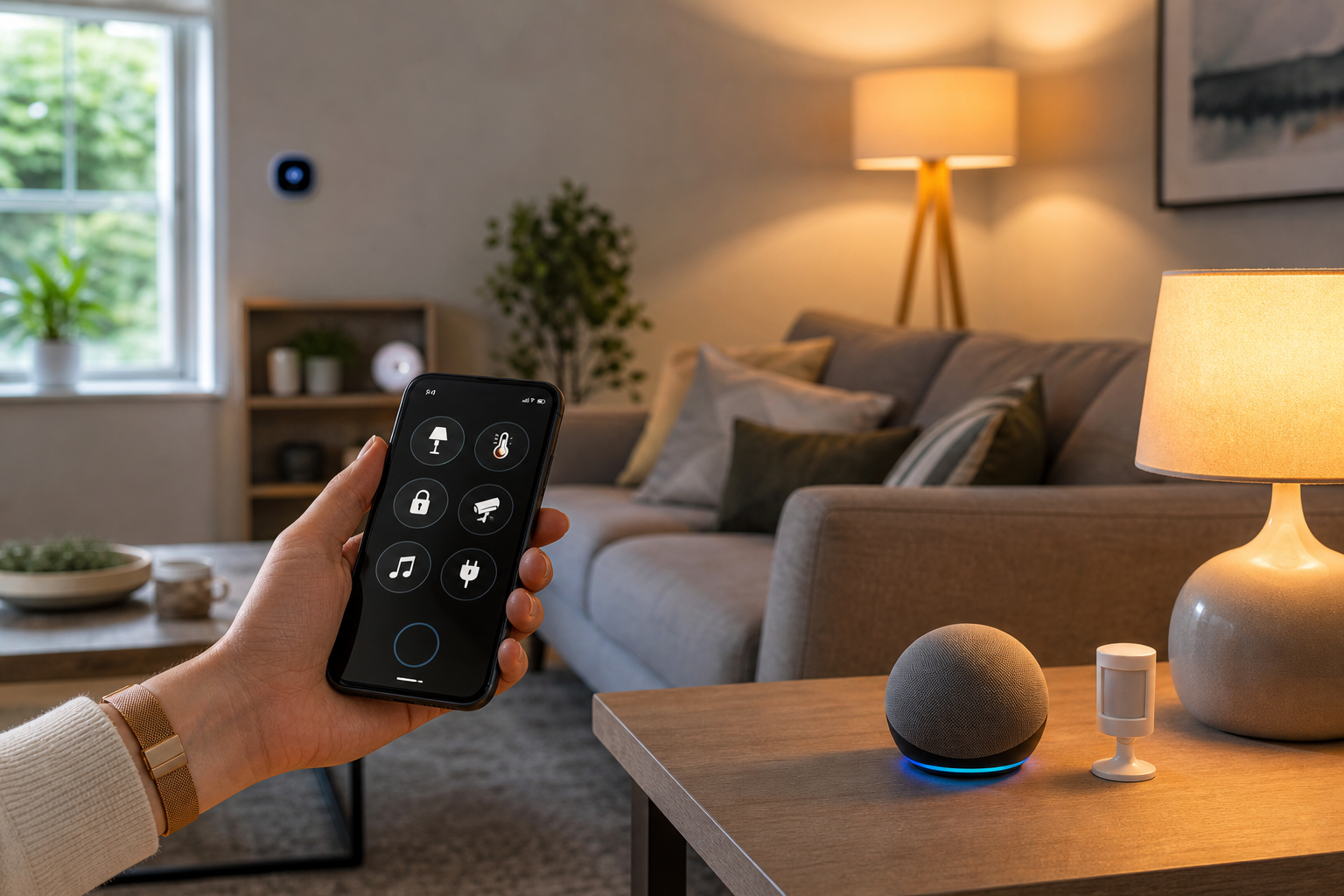

Integrating modern technology into a residential or commercial property no longer necessitates ripping up floorboards or chasing cables into walls. For property managers, landlords, and corporate housing providers, the goal is to increase asset value and tenant appeal without the downtime or expense of a full construction project. Implementing smart home upgrades that don't require renovation allows for a rapid transition to a "connected" property while maintaining the integrity of the existing building fabric.
The Shift Toward Non-Invasive Smart Technology
The evolution of the Internet of Things (IoT) has shifted the focus from hard-wired systems to wireless protocols. In the past, a smart lighting system required a complete rewiring of the premises. Today, the market is dominated by plug-and-play devices and battery-operated sensors that communicate via Wi-Fi, Zigbee, or Z-Wave.
For B2B operators, this shift is critical. It reduces the risk of structural damage and eliminates the need for costly building permits or specialised electrical contractors for every minor update. By focusing on surface-mounted or replaceable components, businesses can scale their technology deployments across multiple portfolios with minimal friction.
Essential Plug-and-Play Energy Efficiency Tools
Energy costs remain a primary concern for UK property owners and tenants. Improving the energy profile of a building without structural changes is one of the most effective ways to increase the desirability of a rental unit.
Smart Thermostats and Radiator Valves
Modern smart thermostats can often be installed by simply replacing an existing wall unit. However, the real impact comes from smart radiator valves (TRVs). These screw onto existing pipes and allow for room-by-room temperature control. Instead of heating an entire floor, the system can prioritise occupied spaces, significantly reducing waste.
Intelligent Lighting Solutions
Replacing traditional bulbs with smart LEDs is the simplest entry point for any property. Beyond the bulbs, smart plugs can be used to manage "vampire power"—the energy consumed by devices on standby. By scheduling these plugs to shut off completely during non-business hours, managers can lower the overall carbon footprint of the property.
Enhancing Security Without Structural Changes
Security is a top priority for B2B clients, yet traditional alarm systems often require invasive drilling and cabling. Non-invasive security upgrades provide a professional level of protection with a fraction of the installation time.
- Smart Door Locks: These typically replace the internal mechanism of a deadbolt or the entire handle, meaning no drilling is required. They allow for remote access management, which is invaluable for short-term lets or corporate housing.
- Wireless Camera Systems: Battery-powered or plug-in cameras provide high-definition surveillance without the need for Ethernet cabling through walls.
- Contact Sensors: Small, adhesive sensors placed on window frames and door jams can alert managers to unauthorised entry or open windows during winter.
These tools create a comprehensive security perimeter. When integrated into a single dashboard, they allow a property manager to monitor multiple sites from a central location, ensuring that the premises are secure without needing a physical presence on-site.
Optimising the User Experience for Professional Tenants
In the competitive UK corporate rental market, the "user experience" of a home is a key differentiator. Tenants expect a seamless transition into their living space, and technology that simplifies daily routines can justify a premium rental price.
Voice Integration and Central Hubs
A central smart hub acts as the brain of the operation, linking disparate devices into a cohesive ecosystem. Whether using a dedicated screen or a voice assistant, these hubs allow tenants to control lighting, heating, and security through a single interface. Because these are standalone devices, they require nothing more than a power socket.
Smart Air Quality Monitoring
Health and wellness are increasingly important in B2B property management. Plug-in air quality monitors can track CO2 levels, humidity, and volatile organic compounds (VOCs). This data allows managers to ensure that ventilation is adequate, promoting a healthier environment for residents without installing complex HVAC sensors.
Integrating these smart home upgrades that don't require renovation ensures that the property remains modern and competitive. By focusing on the intersection of convenience and efficiency, providers can offer a high-tech living experience that appeals to the modern professional.
Managing the Technical Transition
While the hardware is non-invasive, the digital infrastructure must be robust. A common mistake in B2B deployments is relying on a single, weak Wi-Fi router to manage dozens of IoT devices. This leads to latency and connection drops, which can frustrate tenants and lead to complaints.
To avoid this, the implementation of a mesh Wi-Fi system is recommended. Mesh nodes can be placed throughout the property to ensure a consistent signal without the need for professional cabling. This creates a stable foundation for all other smart devices to operate reliably.
Furthermore, data privacy is a paramount concern. When deploying these systems, it is essential to provide clear documentation to tenants regarding what data is collected and how it is used. Ensuring that devices are reset to factory settings between tenancies is a critical operational step to maintain privacy and security.
Frequently Asked Questions
Do these upgrades affect the property's insurance?
Most insurance providers view smart security and leak detection as positive additions that reduce risk. However, it is always advisable to notify the insurer about specific devices, such as smart locks or cameras, to ensure full coverage.
Can smart home devices be easily removed?
Yes, because these upgrades avoid permanent structural changes, they can be uninstalled quickly. Most devices are either plugged into sockets or attached with industrial-grade adhesive, leaving the original walls and fixtures intact.
How do I handle device connectivity across multiple units?
The most efficient method is to use a dedicated IoT network separate from the main tenant Wi-Fi. This prevents bandwidth congestion and allows the property manager to maintain control over core systems like heating and security.
Are smart locks secure enough for corporate rentals?
Modern smart locks use high-level encryption and are often more secure than traditional keys, which can be easily duplicated. They also provide a digital audit trail of who entered the property and when.
Which wireless protocol is best for non-invasive setups?
For most B2B applications, a combination of Wi-Fi for high-bandwidth devices (like cameras) and Zigbee or Z-Wave for low-power sensors is ideal. This reduces the load on the primary router and increases battery life.