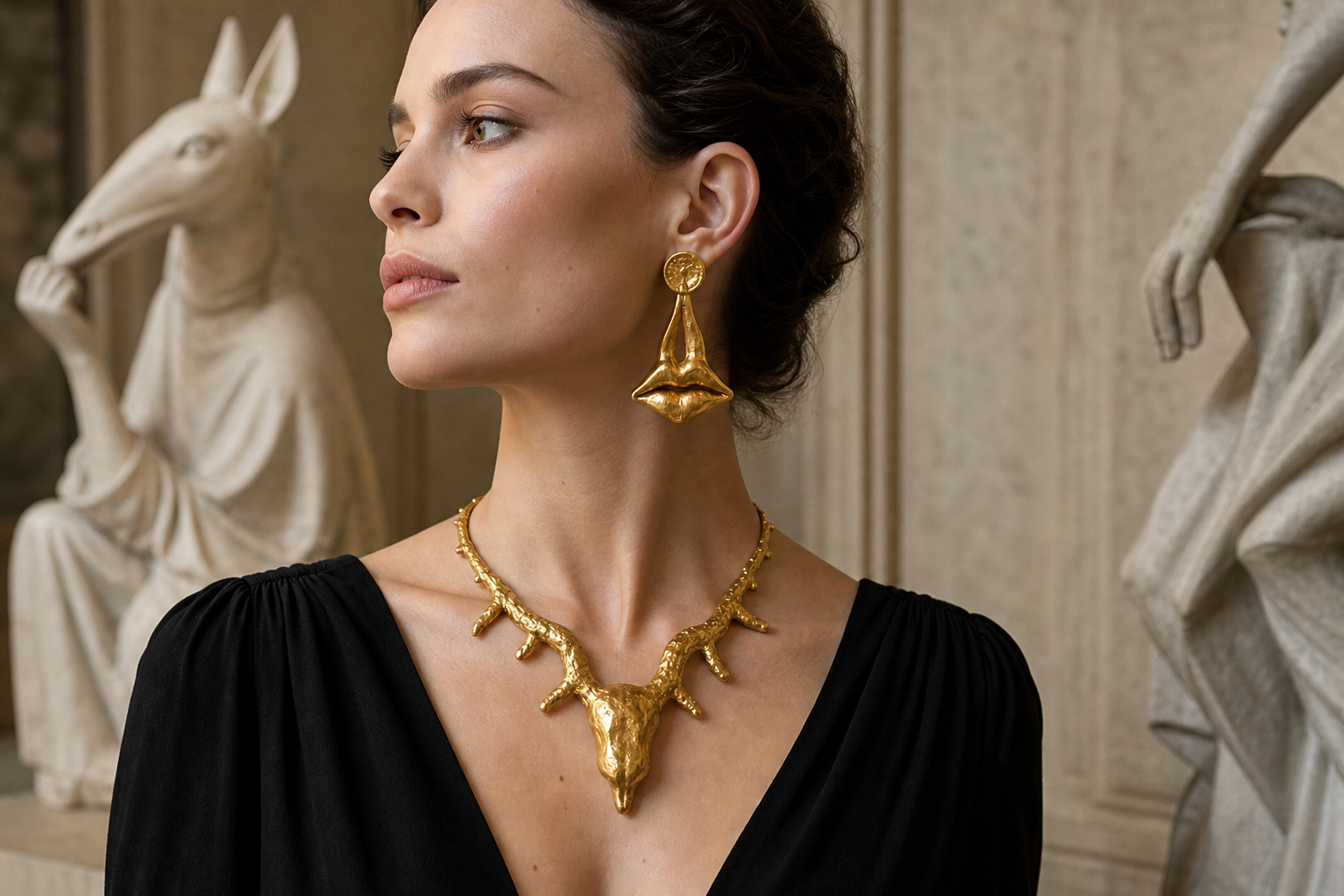

The intersection of high fashion and fine art has rarely been as provocative as it is within the world of Elsa Schiaparelli. For the modern luxury retailer and B2B curator, understanding the appeal of this house is essential. Schiaparelli Jewellery: Surrealism You Can Wear represents more than just ornamentation; it is a strategic blend of anatomical precision and avant-garde fantasy that challenges the traditional boundaries of accessory design.
The Heritage of Surrealist Adornment
Elsa Schiaparelli did not merely design clothes; she engineered visual shocks. Collaborating closely with artists like Salvador Dalí, she transformed the human body into a canvas for the unexpected. In the early 20th century, while other couturiers focused on elegance and symmetry, Schiaparelli embraced the absurd. This philosophy remains the cornerstone of the brand's jewellery today.
The brand’s approach to jewellery is rooted in the idea that an accessory should be a conversation piece. By taking mundane objects or anatomical parts and casting them in precious metals, the house creates a tension between the familiar and the strange. For business partners in the luxury sector, this translates to a product line that appeals to collectors who view jewellery as wearable sculpture rather than simple status symbols.
The Anatomy of Design: Key Motifs
The visual language of the house is instantly recognisable. It relies on a recurring set of motifs that bridge the gap between the biological and the artificial. These elements are not merely decorative; they are symbolic representations of the subconscious.
The Golden Body Parts
One of the most striking aspects of the current collections is the obsession with anatomy. Ears, noses, lips, and eyes are rendered in polished gold, often appearing as if they have been lifted directly from the wearer's face. This creates a mirroring effect that is both unsettling and mesmerising.
- The Ear: Often used in earrings or pendants, representing the act of listening and the intimacy of secrets.
- The Eye: A symbol of perception and surveillance, frequently appearing in rings and brooches.
- The Lips: A bold statement of femininity and desire, typically crafted with high-shine finishes to mimic organic texture.
The Power of the Gilded Object
Beyond the human form, the brand frequently elevates the everyday. By transforming a common object into a piece of high jewellery, the house forces the observer to reconsider the value of the ordinary. This "readymade" approach is a direct nod to the Dadaist movement, ensuring that every piece carries a weight of art-historical significance.
Market Positioning and B2B Appeal
From a commercial perspective, Schiaparelli Jewellery: Surrealism You Can Wear occupies a unique niche in the luxury market. It does not compete with the classic minimalism of contemporary brands; instead, it targets a demographic that values eccentricity and intellectual depth.
For luxury boutiques and high-end distributors, stocking these pieces allows for a diversification of the portfolio. The jewellery attracts a client who is likely also an investor in contemporary art. These buyers are less concerned with the current trends of "quiet luxury" and are more interested in "statement luxury"—pieces that define the wearer's personality and cultural literacy.
The production quality is equally critical. While the designs are whimsical, the craftsmanship is rigorous. The use of high-carat gold and precision casting ensures that the surrealist elements are executed with a level of sophistication that justifies the premium price point. This balance of daring design and traditional excellence is what sustains the brand's desirability in the global B2B landscape.
Integrating Surrealism into Modern Collections
The challenge for any curator is knowing how to present such bold pieces. Because the jewellery is so visually dominant, it requires a specific context to shine. The modern interpretation of the brand's aesthetic involves pairing these surrealist elements with structured, monochromatic tailoring.
The contrast between a severe black blazer and a gold anatomical brooch creates a visual equilibrium. This styling approach helps the jewellery act as the focal point of an ensemble without overwhelming the wearer. In a retail environment, this means presenting the pieces alongside minimalist apparel to highlight their sculptural qualities.
Furthermore, the brand's ability to evolve while staying true to its roots is a key driver of its success. The current creative direction has managed to translate the archival shocks of the 1930s into a language that resonates with the digital age, where "Instagrammable" and bold aesthetics are highly valued.
Frequently Asked Questions
What defines the surrealist style in Schiaparelli jewellery?
The style is defined by the juxtaposition of unexpected elements, such as anatomical body parts and everyday objects, crafted from luxury materials to create a dreamlike effect.
Who is the primary target audience for these pieces?
The primary audience consists of high-net-worth individuals, art collectors, and fashion enthusiasts who prefer bold, avant-garde statements over traditional, understated luxury jewellery.
How does the brand maintain its connection to art history?
The brand maintains this connection by continuing the collaborative spirit of Elsa Schiaparelli and Salvador Dalí, utilizing motifs that challenge perception and reality.
Are these pieces suitable for daily wear in a professional setting?
While bold, they can be integrated into professional attire by pairing them with neutral, structured clothing, allowing the jewellery to serve as a sophisticated focal point.
What materials are typically used in the current collections?
The collections primarily utilise high-quality gold, polished brass, and precious gemstones, ensuring that the surrealist forms are rendered with exceptional precision and durability.