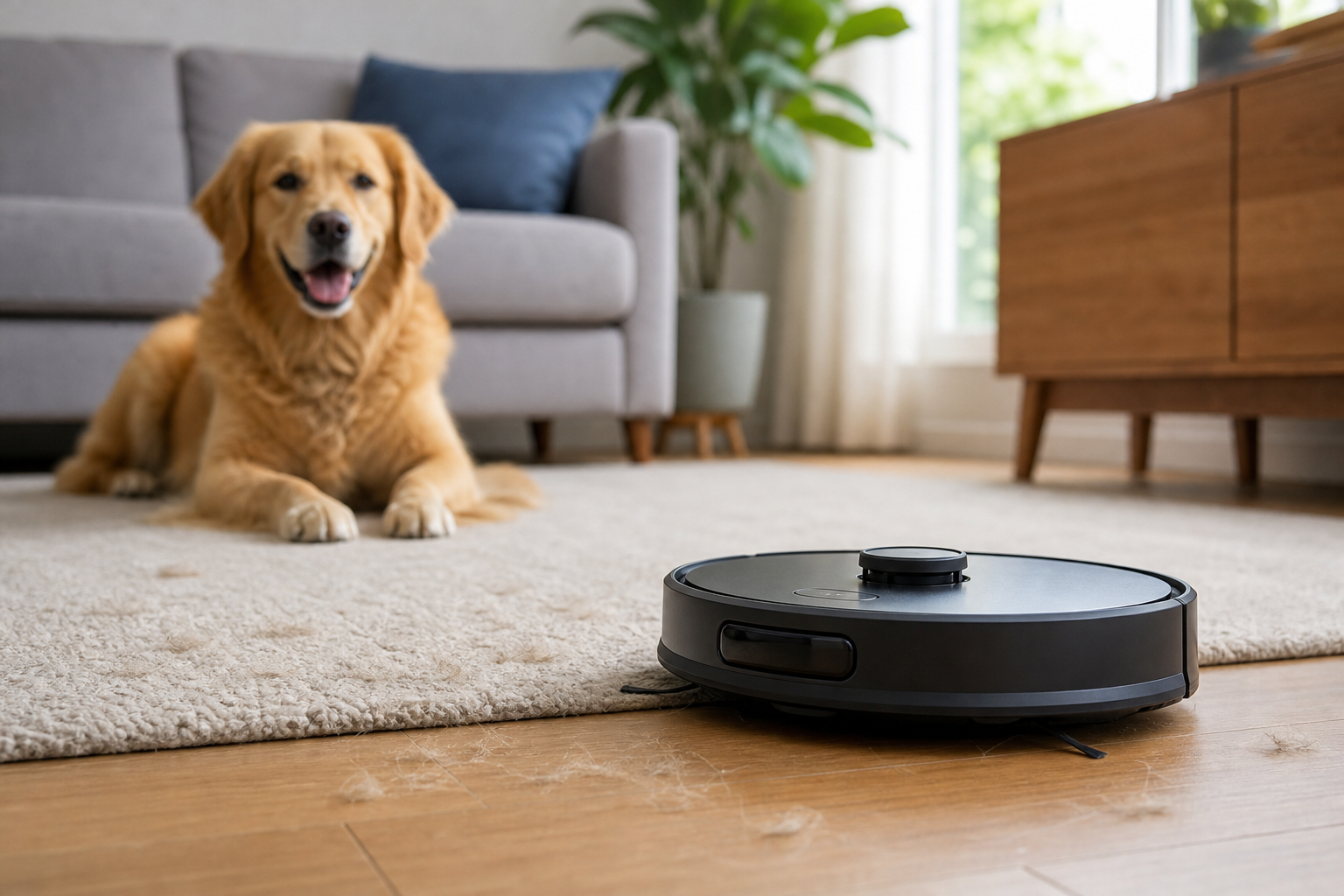

Maintaining a pristine environment in a commercial setting is a constant challenge, especially when pets are involved. Whether you manage a pet-friendly hotel, a veterinary clinic, or a modern co-working space that welcomes dogs, the accumulation of fur and dander can quickly compromise the professional image of your premises. While manual vacuuming remains a staple, automation offers a scalable solution to keep floors clear between deep cleans. Understanding the specific technical requirements for these machines is essential for making a sound procurement decision.
The Core Challenges of Pet Hair in Commercial Spaces
Pet hair is not like standard household dust. It consists of long, fibrous strands that tend to weave themselves into carpets and wrap tightly around rotating components. In a B2B context, the volume of debris is often higher, and the foot traffic is more intense, meaning that a standard domestic robot vacuum may struggle to keep pace.
The primary issue is "tangling". Most robot vacuums use a brush roll to agitate the carpet and lift debris. When long pet hair enters this mechanism, it creates a tight coil around the axle. This increases friction, drains the battery faster, and eventually stalls the motor if not cleared manually. For a business, this means increased maintenance downtime and a higher total cost of ownership.
Robot Vacuums for Pet Hair: What Matters Most?
When evaluating hardware for a professional environment, the focus must shift from basic suction power to the efficiency of the debris management system. The most critical factor is the design of the brush roll. Tangle-free or rubberised brushes are far superior to traditional bristle brushes because they allow hair to slide toward the suction intake rather than wrapping around the roller.
Suction power, measured in Pascals (Pa), is also vital, but it must be balanced with airflow. High suction is useless if the filtration system becomes clogged with fine dander. For B2B buyers, looking for a machine with a high-efficiency particulate air (HEPA) filter is non-negotiable. These filters trap microscopic allergens and dander, ensuring that the air quality remains high for both human clients and animal visitors.
Brush Roll Technology and Maintenance
The evolution of brush design has led to several innovations specifically for pet owners. Some models now feature integrated cutting blades that slice through hair as it is sucked up, preventing the dreaded "hair ring" from forming. Others use dual-rubber rollers that rotate in opposite directions, gripping the hair and pulling it directly into the dustbin.
From a maintenance perspective, the ease of access to the brush roll is a key metric. In a busy business environment, staff cannot spend thirty minutes with a pair of scissors cutting hair off a roller every day. A "quick-release" mechanism that allows the brush to be popped out in seconds is a significant operational advantage.
Navigation and Obstacle Avoidance
A robot vacuum is only as effective as its ability to cover the floor area without getting stuck. In a commercial setting, obstacles are frequent—from chair legs and cables to pet toys and water bowls. Advanced LiDAR (Light Detection and Ranging) mapping allows the device to create a precise floor plan, ensuring that no corner is missed.
AI-driven obstacle avoidance is particularly important for pet-friendly businesses. Modern sensors can now distinguish between a piece of fluff and a pet "accident". This prevents the robot from spreading a mess across the entire office, which would create a significant hygiene issue and a frustrating cleanup task for the facilities team.
Essential Features for B2B Procurement
When drafting a specification list for a commercial robot vacuum, certain features provide a higher return on investment than others. The goal is to reduce human intervention while maximising floor cleanliness.
- Automatic Emptying Stations: A dock that vacuums the robot's internal bin into a larger bag reduces the frequency of manual emptying from daily to monthly.
- Zonal Cleaning and No-Go Zones: The ability to designate specific areas for intensive cleaning (like the entrance mat) or exclude areas (like a water station) via an app.
- Scheduled Cleaning Cycles: Setting the machine to run during off-peak hours ensures that the floors are fresh for the start of the business day.
- High-Capacity Battery Life: For larger commercial footprints, a battery that can cover 100+ square metres on a single charge is essential to avoid frequent pauses.
Integration into Facility Management
Integrating robotic cleaners into a wider facility management strategy requires a shift in how cleaning is scheduled. These machines are not replacements for deep cleaning but are instead "maintenance" tools. They prevent the buildup of pet hair, which in turn extends the life of the carpets and reduces the wear and tear on heavy-duty industrial vacuums.
For managers, the data provided by the robot's app can be surprisingly useful. Heat maps showing where the most debris is collected can indicate high-traffic areas that may require more frequent manual attention or a change in floor layout to reduce congestion.
Frequently Asked Questions
Do robot vacuums actually remove pet hair effectively?
Yes, provided they have the correct brush design and suction power. Models with rubber rollers and HEPA filters are specifically engineered to lift embedded fur and trap allergens efficiently.
How often do I need to maintain a robot vacuum used for pets?
While automatic docks reduce bin emptying, you should check the brush roll weekly for tangles and replace the HEPA filter every three to six months depending on usage.
Will a robot vacuum scare the animals in my business?
Most pets habituate to the sound quickly. Choosing a model with a quieter decibel rating and a gradual start-up sequence helps animals feel more comfortable with the device.
Can these machines handle both hardwood and carpeted floors?
Modern high-end models feature automatic surface detection. They increase suction power when moving from a hard floor to a carpet to ensure pet hair is lifted from the fibres.
Is a robot vacuum a complete replacement for professional cleaning?
No, they are designed for daily maintenance. You will still need periodic professional deep cleaning or steam cleaning to remove deeply embedded oils and grime from carpets.