
For the modern business professional, travel is often a necessity rather than a luxury. Whether you are heading to a conference in Singapore, visiting a client in New York, or managing a site visit in Berlin, you likely carry high-value assets. Laptops, tablets, corporate smartphones, and sensitive documents are essential for productivity but make you a prime target for opportunistic theft. Learning how to keep your valuables safe while travelling ensures that a security breach does not derail your business objectives or compromise corporate data.
Strategic Planning Before Departure
Security begins long before you reach the airport. A proactive approach reduces the risk of loss and ensures that if an incident does occur, the recovery process is streamlined. For B2B travellers, the focus should be on minimising the "surface area" of risk.
The first step is a comprehensive audit of what you actually need. Many professionals over-pack gadgets, increasing the likelihood of leaving something behind in a hotel room or taxi. Only carry the hardware essential for the specific trip. If a tablet suffices for presentations, leave the heavy laptop at the office.
Digital security is just as critical as physical security. Ensure all devices are encrypted and protected by strong, unique passwords. Implement multi-factor authentication (MFA) across all corporate accounts. This ensures that even if a device is stolen, the data remains inaccessible to unauthorised parties.
Creating a Digital Backup
Before leaving the UK, perform a full system backup of all devices. Use a secure corporate cloud service or an encrypted external drive kept in a separate location from your travel gear. This prevents a total loss of critical project files should your hardware be stolen or damaged.
Documentation and Inventory
Maintain a detailed list of every high-value item you are carrying. Record the make, model, and unique serial number of each device. Take photographs of the items and your receipts. Store this inventory in a secure cloud folder. If you need to file an insurance claim or a police report in a foreign jurisdiction, having these details readily available is indispensable.
Physical Security During Transit
Transit hubs—airports, train stations, and ride-share vehicles—are high-traffic areas where distractions are common. These environments are where most thefts occur, often through "snatch-and-grab" tactics or opportunistic theft from unattended luggage.
The golden rule of transit is to never leave your bags unattended, even for a few seconds. In airports, keep your laptop bag between your feet or looped around your leg while waiting in queues. When using public transport, keep your bags in front of you rather than on your back, which prevents pickpockets from accessing zips without your knowledge.
Choosing the Right Luggage
Invest in professional-grade luggage that prioritises security. Look for bags with lockable zippers and reinforced materials that are difficult to slash. Hard-shell cases are generally more secure for checked luggage, provided they use TSA-approved locks.
For carry-on items, consider the following features:
- Anti-theft zippers that lock into place.
- RFID-blocking pockets to prevent contactless credit card skimming.
- Hidden internal compartments for passports and emergency cash.
- Cut-resistant fabric to deter opportunistic slashers.
Managing Your Personal Effects
Avoid carrying all your financial resources in one place. Distribute your cash and cards across different locations. Keep a small amount of local currency in an accessible wallet for daily expenses, but store the bulk of your funds and your primary corporate credit card in a secure, hidden location.
How to Keep Your Valuables Safe While Travelling at Your Destination
Once you arrive at your hotel or corporate housing, the environment may feel safe, but complacency is a risk. Hotel rooms are not impenetrable, and common areas like lobbies or gym facilities are often unsupervised.
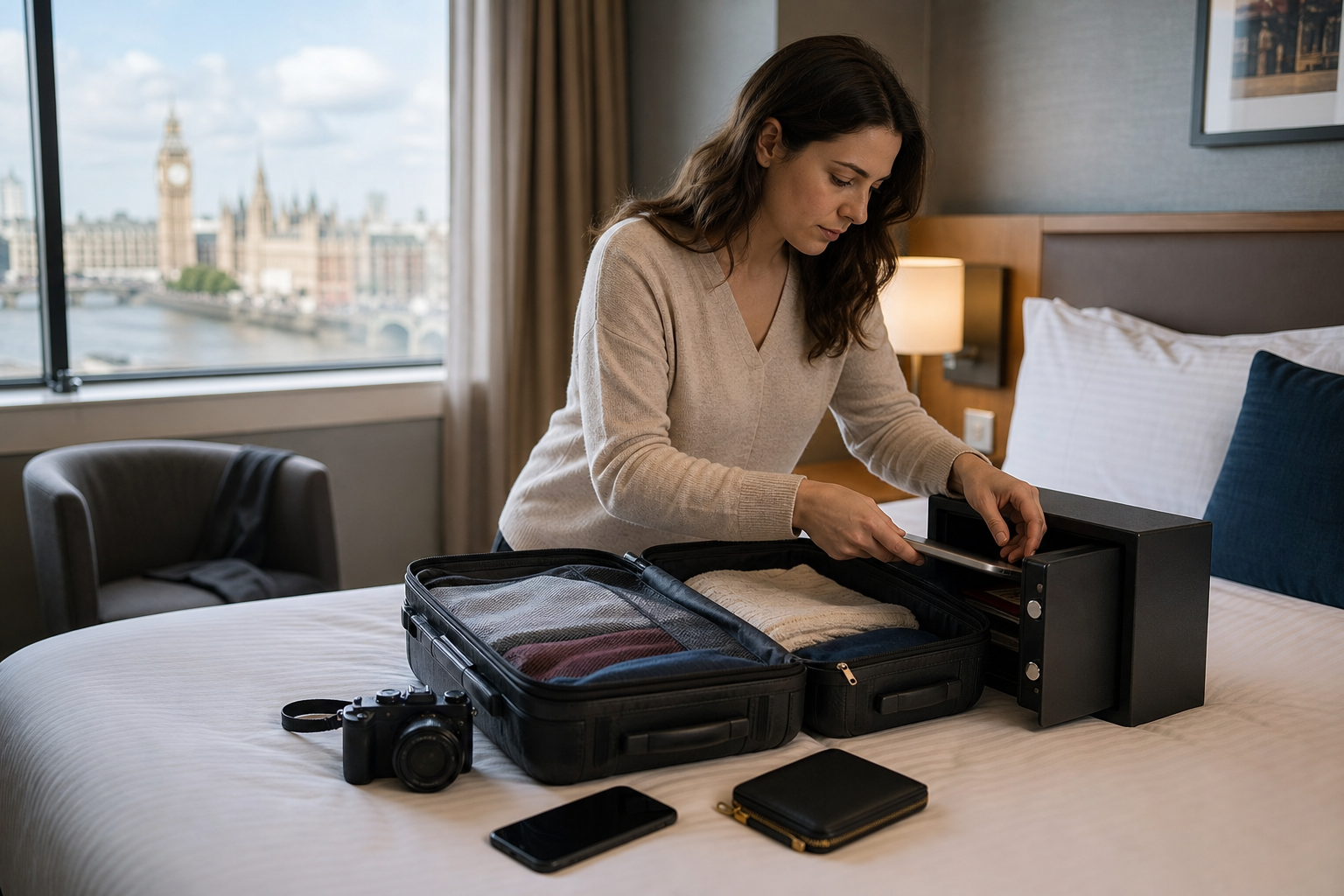
The hotel safe is a useful tool, but it is not infallible. Some safes have master codes known to staff, and some are easily bypassed. For extremely sensitive items, such as a corporate master key or a high-value prototype, consider using a portable travel safe or a reinforced locking cable to tether your laptop to a heavy piece of furniture.
Securing Your Workspace
When working from a hotel desk or a cafe, be mindful of your surroundings. Never leave your laptop unattended to go to the restroom or order a coffee. If you must step away, take your device with you.
Furthermore, be cautious of the "shoulder surfing" technique, where individuals glance at your screen to steal passwords or view confidential client data. Use a privacy screen filter on your laptop to ensure that only you can see the content of your display.
Safe Handling of Documents
Physical documents, such as contracts or passports, require specific care. Use a waterproof, RFID-blocking document organiser. When not in use, these should be locked in the room safe. If you are carrying sensitive corporate blueprints or legal papers, consider using a locked briefcase that remains with you at all times.
Navigating Public Spaces and Networking Events
Business travel often involves networking events, dinners, and mixers. These social settings are designed for relaxation, which can lead to a lapse in security awareness. In a crowded room, it is easy to set a phone or tablet down on a table and forget it during a conversation.
Always maintain a mental map of where your valuables are. If you are attending a gala or a formal dinner where you cannot carry a laptop bag, use the hotel's secure storage or ensure your room is locked and the "do not disturb" sign is displayed to avoid unnecessary entries.
When using public Wi-Fi at conferences or airports, always use a corporate VPN. While this is a digital security measure, it protects the "value" of the information stored on your device. An unsecured connection can lead to data interception, which is a theft of intellectual property just as damaging as the loss of the hardware itself.
Frequently Asked Questions
Should I trust the hotel room safe for my passport?
While hotel safes are better than leaving items on a desk, they are not foolproof. It is advisable to use the safe for your passport but keep a digital scan of the document in a secure cloud folder for emergency access.
What is the best way to carry large amounts of cash for business expenses?
Avoid carrying large sums of cash whenever possible. If necessary, use a money belt worn under your clothing or a hidden internal pocket in your luggage to keep the bulk of the funds away from your primary wallet.
How can I protect my laptop from theft in a taxi or ride-share?
Keep your laptop bag on your lap or securely between your feet. Avoid placing it in the boot of the car if you are making multiple stops, as this leaves the device unattended while you are inside a building.
Are RFID-blocking wallets actually necessary for business travellers?
Yes, as contactless payment and passport scanning are now global standards. RFID-blocking technology prevents criminals from using handheld scanners to steal your credit card details or personal information while you move through crowded terminals.
What should I do immediately if a corporate device is stolen?
First, notify your company's IT security department so they can remotely wipe the device and revoke access to corporate servers. Second, file a formal police report in the local jurisdiction to provide documentation for insurance claims.