For building managers, facilities teams, M&E engineers, housing associations and social landlords across the United Kingdom, improving Evinox HIU efficiency and performance directly impacts daily operations and long-term costs. Efficient HIU systems reduce energy consumption, improve resident comfort and support compliance with UK regulations.
Poorly optimised units often lead to higher fuel bills, inconsistent hot water delivery and increased maintenance issues. In contrast, a well-balanced and properly maintained Evinox HIU system ensures stable performance, fewer complaints and extended asset lifespan.
This guide focuses on practical improvements that deliver measurable results. It addresses key components such as the Evinox ModuSat unit, system controls, and the differences between communal and individual installations. Clear actions cover routine maintenance, system balancing, commissioning adjustments and control settings for both hot water and heating.
In addition, it highlights monitoring strategies and simple diagnostics that help identify inefficiencies early. Where specialist input is required, experienced providers such as R&B London HIU Engineers offer dedicated Evinox HIU service and repair support to maintain optimal system performance.
Understanding Evinox HIU systems and core components
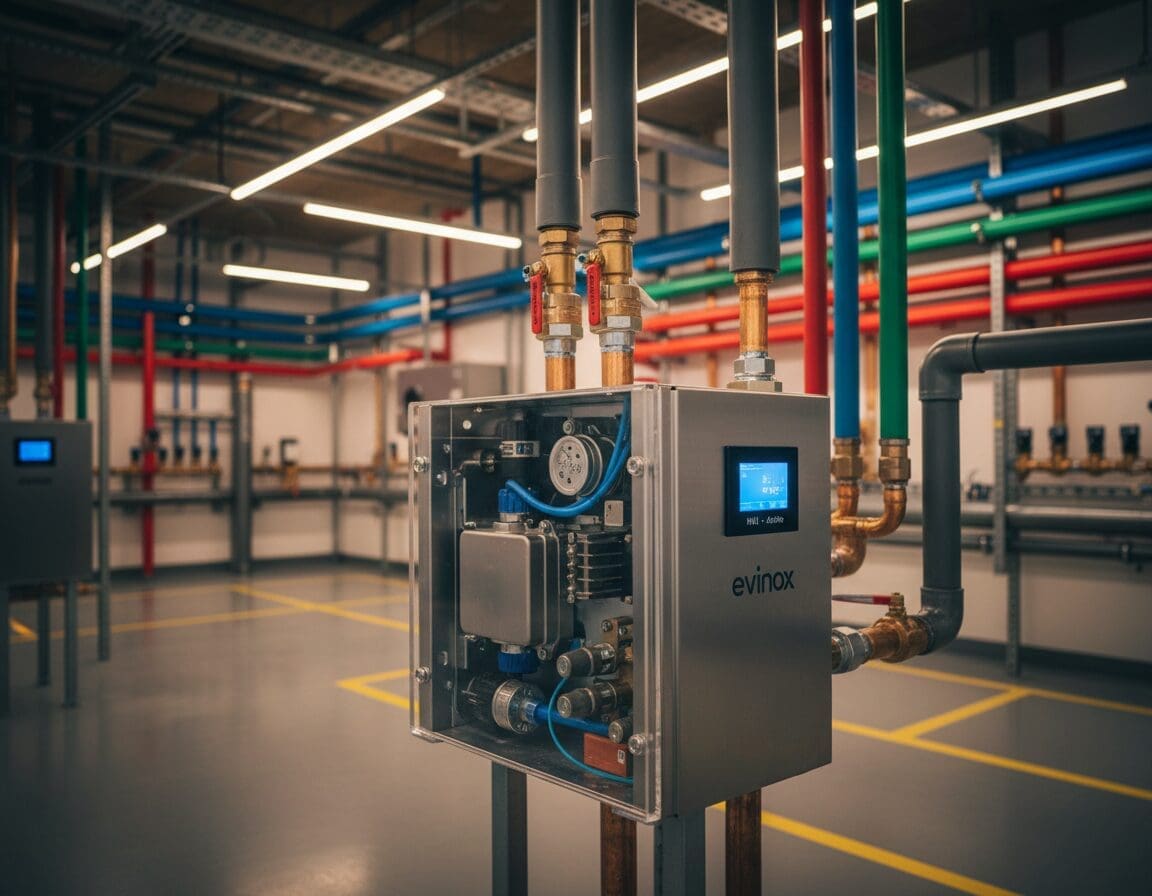
The Evinox ModuSat unit sits at the heart of many modern communal heating HIU systems. Its compact, factory-built design brings a plate heat exchanger for domestic hot water, separate primary and secondary circuits, integral pump(s) and metering options into a single insulated enclosure. This layout aims for reliable DHW delivery, quick response at taps, low primary return temperatures and a small footprint for plantrooms and riser cupboards.
Understanding heat interface units means seeing how a primary district or building loop hands heat to the HIU. The HIU’s plate heat exchangers transfer energy to the space heating circuit and the DHW circuit while keeping systems hydraulically separate. Good design improves Evinox ModuSat heat interface unit performance and supports efficient central plant operation.
The next points break down the most important parts and how they affect everyday use.
Overview of the ModuSat and heat interface design
The ModuSat is built for multi-occupancy sites where predictable hot water and heating are essential. Plate exchangers deliver rapid DHW response. Pumps control flow through primary and secondary loops. Valves manage temperature and divert flows between circuits. Built-in metering and insulation protect efficiency and allow fair billing in HIU heating interface units UK installations.
Key components and controls that affect performance
- Plate heat exchangers: their size and cleanliness dictate heat transfer. Fouling raises primary return temperatures and reduces efficiency.
- Pumps and variable-speed control: correct selection and inverter drives save electricity and fine-tune flow rates.
- Control electronics and thermostats: setpoints, sensor placement and control logic shape comfort and prevent excess cycling.
- Valves and three-port diverters: proper operation keeps DHW and space heating temperatures stable.
- Strainers, pressure relief and check valves: they protect components and preserve hydraulic balance.
- Metering and energy monitoring: Evinox-compatible meters and pulse outputs support billing and performance checks.
How communal systems differ from single installations
Communal schemes link many HIUs to a shared primary loop. That means primary supply temperature and flow affect every connected unit. Central plant strategies such as variable primary flow or weather compensation must align with individual HIU controls to avoid inefficiencies and resident complaints.
Shared plant increases interdependence. Fouling or poor control on the primary side will influence all HIUs. Service access, isolation arrangements and metering rules are more formal in communal heating HIU systems than for single‑home boilers.
Common performance limits and indicators to watch for
- Elevated primary return temperatures—sign of poor heat transfer or fouled exchangers, reducing central plant efficiency.
- Slow DHW recovery or low flow—may point to blocked strainers, failing thermostatic valves, pump faults or exchanger fouling.
- Excessive cycling—can come from incorrect control setpoints, oversized pumps or poor thermostat placement.
- High pump energy use—suggests lack of variable-speed control or excessive bypassing.
- Noises, leaks or pressure loss—indicate mechanical faults, air ingress or failing components needing attention.
- Metering anomalies—erratic or zero readings often mean meter faults, wiring issues or failed sensors.
Focusing on these elements will help maintain good Evinox ModuSat heat interface unit performance and ensure that Evinox HIU components and controls deliver the reliability expected from HIU heating interface units UK projects.
Practical steps to optimise HIU efficiency and system operation
Small, regular actions keep communal heating systems stable and cost-efficient. A structured approach to Evinox HIU service and maintenance protects performance and extends asset life.
Routine inspection and preventive maintenance
Start with visual checks to identify early issues such as leaks, corrosion or loose pipework. Clean inlet strainers and filters to maintain proper flow and prevent blockages. Test pressure relief valves and expansion vessels to avoid pressure instability and potential system loss.
Plate heat exchangers require regular attention, especially when scaling or fouling occurs. Reduced heat transfer increases fuel use and lowers efficiency, so timely chemical cleaning or mechanical servicing is essential. At the same time, verify that controls and sensors operate correctly. Faulty temperature sensors or wiring issues often lead to incorrect system behaviour and unnecessary energy consumption.
Accurate metering also plays a key role. Check energy meters, battery-backed clocks and pulse outputs to ensure reliable data. Consistent monitoring supports correct billing and enables better system optimisation. Always document maintenance activities clearly, including settings and performance data, to support future servicing and warranty claims.
Specialist support and repairs
More complex work requires specialist expertise, particularly for Evinox HIU systems. HIU maintenance and repairs by R&B London HIU Engineers ensure that servicing follows manufacturer standards and system requirements. Experienced engineers use the right tools and procedures to prevent recurring faults and unnecessary downtime.
Professional support becomes especially important when components need replacement or when Evinox HIU performance continues to decline despite routine maintenance. A targeted approach helps maintain efficiency and protects long-term system reliability.
Balancing and commissioning for consistent performance
Proper balancing and commissioning ensure even heat distribution throughout a building. Incorrect flow settings often result in cold spots, overheating in certain areas and wasted pump energy.
During commissioning, measure flow rates and set differential pressures accurately. Adjust radiator valves and system controls so that temperature differences between primary and secondary circuits match design expectations. After occupancy, revisit these settings to reflect real usage patterns, as demand often differs from initial assumptions.
Using balancing valves and precision tools such as differential gauges and clamp meters improves accuracy. Well-balanced systems deliver consistent comfort while reducing unnecessary energy consumption.
Control settings and system optimisation
System settings should always reflect actual demand. Set domestic hot water and heating temperatures at levels that meet comfort requirements without causing excessive return temperatures or energy waste.
Apply time controls and adaptive schedules to match building usage. Introduce setback periods where possible and align HIU control logic with weather compensation systems. This prevents short cycling and reduces overheating.
Anti-legionella cycles require careful planning. Periodic high-temperature flushes manage health risks while maintaining reasonable energy use. Follow UK public health guidelines when defining these routines. Where possible, install variable-speed pumps to match flow with demand and reduce electricity consumption.
Monitoring and data-driven optimisation
Continuous monitoring helps identify inefficiencies before they become costly problems. Track key parameters such as primary and secondary temperatures, flow rates, pump energy use and overall consumption.
Simple on-site diagnostics also provide valuable insights. Checking DHW outlet temperatures under controlled conditions reveals heat exchanger performance, while observing pressure behaviour during pump operation can highlight system irregularities.
Remote monitoring solutions further improve efficiency. Smart metering and connected systems enable faster fault detection and allow maintenance teams to prioritise interventions based on real data. By using performance trends to guide maintenance decisions, systems remain efficient while service costs stay under control.
Evinox faults, repairs and professional services in the UK
Faults on Evinox HIU heating interface units UK commonly start with loss of hot water or poor DHW temperature. Fouled plate heat exchangers, failed thermostatic or mixing valves, weak pumps and blocked strainers are typical causes. Metering and communication failures, worn seals and leaks also appear often and lead to pressure instability and billing errors.
Diagnosing issues requires a simple, staged approach. Begin with visual checks, confirm primary plant supply and mains power, then measure sensor outputs, temperatures and flows. Systematic testing of pumps under load and inspection of plate heat exchangers helps decide whether component-level repair or replacement is needed. This practical method underpins effective HIU repairs and fault diagnosis Evinox engineers carry out.
For complex jobs engage specialist teams such as Evinox HIU services by R&B London HIU Engineers. Tasks like chemical cleaning of plate exchangers, control board replacement and major valve overhauls demand manufacturer knowledge and certified technicians. Using authorised contractors preserves warranty terms and ensures safe, compliant work on communal systems.
Adopt planned maintenance to control lifecycle costs and boost Evinox ModuSat heat interface unit performance. HIU maintenance and repairs by R&B London HIU Engineers, plus remote monitoring and proactive parts replacement, reduce emergency call-outs and improve resident satisfaction. Choose providers with proven track records on HIU heating interface units UK, proper accreditation and clear reporting to secure long-term value.