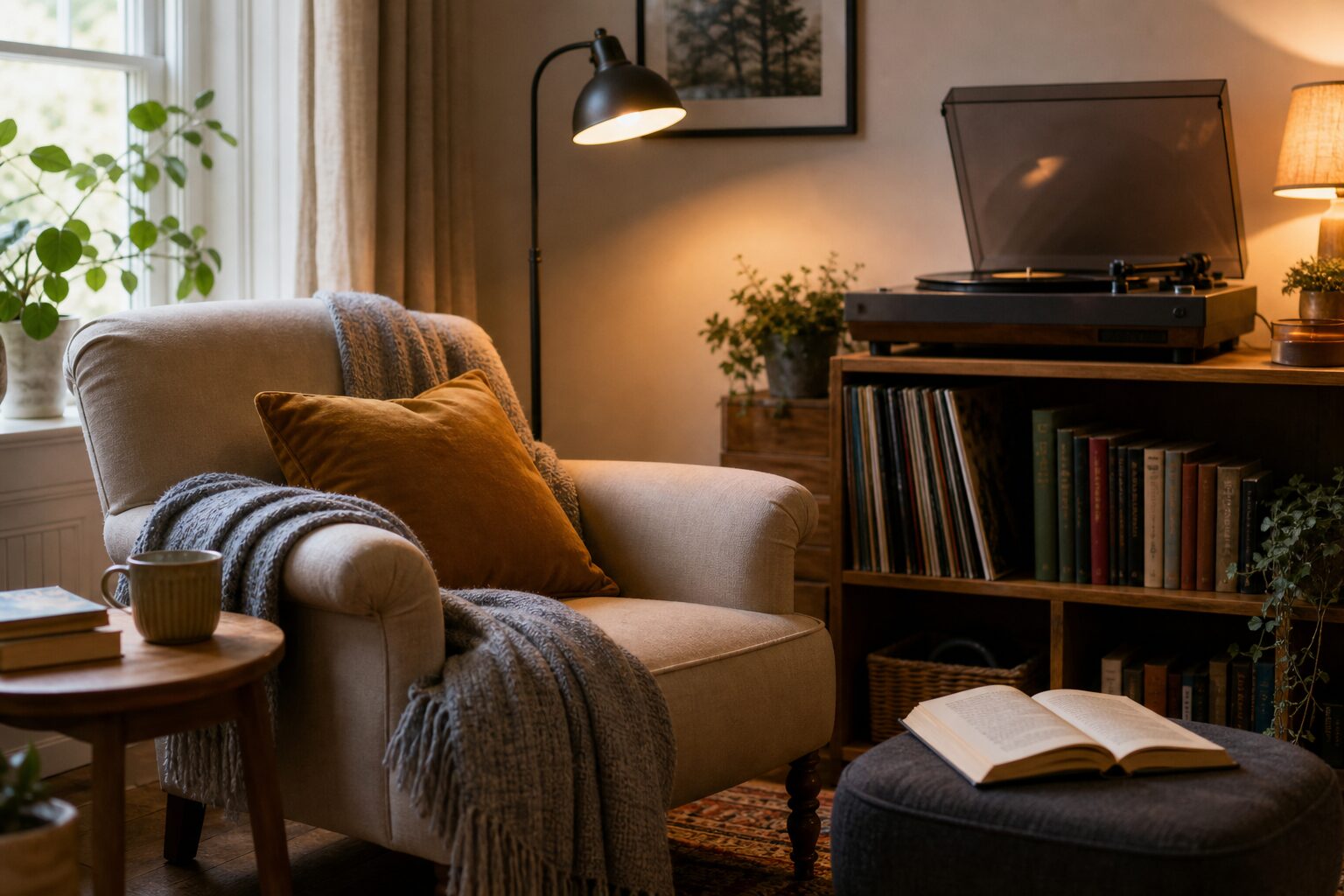

A well-designed quiet nook can make a workplace, hotel lounge, library, showroom or shared office feel more thoughtful and human. This guide explains How to create a cosy corner for music and reading in a way that suits business settings, supports comfort, and avoids clutter. The aim is to build a small, calm area where people can pause, listen, browse, focus or simply enjoy a softer moment within a busy environment.
Why a cosy music and reading corner works in commercial spaces
A dedicated corner for music and reading can add warmth to a professional interior without changing the whole space. It gives visitors, staff or clients somewhere informal to settle, which can be especially useful in reception areas, break rooms, hospitality venues, education settings and co-working environments.
The best corners feel intentional rather than decorative. They should make sense within the wider layout, reflect the organisation’s style, and serve a clear purpose. In a business environment, comfort still needs structure. Seating, lighting, sound, storage and safety all need to be considered.
Music and reading also work well together because both encourage people to slow down. A chair, a small table, a curated shelf and gentle sound can transform an unused alcove into a memorable feature.
How to create a cosy corner for music and reading in a practical layout
The most successful corners start with the right location. Look for a place that already feels slightly separate, such as a window bay, a recess, a quiet end of a lounge, or an underused wall near shelving. Avoid areas with heavy foot traffic, bright screens or frequent interruptions.
Choose a quiet but visible position
A cosy corner should feel sheltered, not hidden. In a B2B setting, visibility matters for safety, accessibility and ease of use. People should understand at a glance what the area is for.
Consider these placement points:
- Keep the corner away from doors, printers, kitchens and busy corridors.
- Use existing architectural features, such as columns, alcoves or low partitions.
- Leave enough space for wheelchair users and easy movement around furniture.
- Avoid blocking fire exits, signage, sockets or service routes.
If the setting is open plan, visual separation can be created with a rug, a bookcase, a planter or a change in wall colour. These cues help define the corner without building a hard barrier.
Plan the user journey
Think about how someone will approach, sit, browse, listen and leave. A person should not need to move furniture or search for controls. Books, magazines, headphones or speakers should be easy to reach, while cables and equipment should stay tidy.
In client-facing spaces, the corner may be used briefly while someone waits. In staff areas, it may support longer breaks. In a hotel or serviced apartment setting, it may need to feel more residential. The layout should match the likely dwell time.
Furniture, textiles and storage that create comfort
Comfort comes from layers. One armchair may be enough for a small corner, but the surrounding details are what make it inviting. Choose furniture that is durable, easy to clean and suited to commercial use.
A good seating option should support relaxed posture without looking too casual for the setting. High-backed chairs can help reduce distractions, while compact lounge chairs suit smaller spaces. If the area is shared, two chairs with a small table between them can encourage quiet conversation without turning the corner into a meeting zone.
Useful elements include:
- A supportive chair or small sofa with contract-grade upholstery.
- A side table for books, drinks, glasses or personal items.
- A slim shelf, magazine rack or cabinet for reading material.
- A rug to soften acoustics and visually mark the area.
- Cushions and throws, used sparingly and cleaned regularly.
Storage is important because clutter quickly undermines a calm mood. Keep books upright, remove damaged items, and avoid overfilling shelves. For businesses, a smaller, well-chosen collection often works better than a large mixed pile.
Lighting and sound for a calm atmosphere
Lighting can make or break a reading corner. Overhead office lighting is rarely enough on its own, especially if the aim is to create a softer mood. A floor lamp or wall light with warm-toned light can make the space feel more comfortable while supporting reading.
Position the light so it does not create glare on pages, screens or framed artwork. Adjustable lamps are useful because people read at different angles. In public or semi-public settings, fittings should be stable, robust and compliant with relevant safety requirements.
Sound needs equal care. Music should enhance the corner without disturbing nearby work or conversation. The right approach depends on the business type. A workplace may prefer headphones, while a hotel lounge, salon or showroom might use low-level background music.
Keep these principles in mind:
- Set volume low enough for easy conversation nearby.
- Avoid tracks with sudden changes in volume or harsh tones.
- Use equipment that staff can manage simply and consistently.
- Keep speakers away from shared walls if noise transfer is a concern.
- Review playlists so the mood suits the brand and audience.
Acoustic comfort is not only about music. Rugs, curtains, upholstered seating and shelves can reduce echo, making the corner feel warmer and more private.
Style, branding and sensory detail
A cosy corner should suit the wider brand rather than look like a separate display. For a law firm, that might mean a restrained palette, quality reading lamps and carefully selected publications. For a creative studio, it may involve bolder colour, art books and a record player used as a visual feature. For a hospitality business, texture and lighting may be central.
Use colour to create calm. Deep greens, warm neutrals, muted blues, soft terracotta and natural wood tones often work well in UK interiors. Avoid too many competing patterns, especially in smaller spaces.
Scent, temperature and touch also matter. A chilly corner will not feel cosy, however attractive it looks. Check for draughts, direct heat from radiators, and uncomfortable glare from windows. Materials such as wool, boucle, linen-effect fabrics and timber can make the area feel warmer without becoming overly domestic.
Maintenance, accessibility and day-to-day management
A music and reading corner needs light but regular upkeep. Without it, books become tired, cushions lose shape, and cables appear untidy. Assigning responsibility within facilities, front-of-house or office management helps the corner remain usable.
Accessibility should be considered from the start. Seating height, clear floor space, lighting levels and reach distances all affect who can use the area comfortably. Avoid relying only on low chairs or low shelves. Where headphones are provided, keep hygiene and storage in mind.
Practical checks include inspecting furniture wear, cleaning textiles, updating reading material, testing lamps and keeping audio equipment secure. These details protect the investment and maintain the atmosphere over time.
Frequently Asked Questions
What is the best place for a cosy music and reading corner?
The best place is a quiet, visible area away from heavy foot traffic and operational noise. Window bays, alcoves, lounge edges and unused corners often work well when they remain accessible and safe.
How much space does a business need for this type of corner?
A compact corner can work with one comfortable chair, a side table, lighting and a small shelf. The key is leaving enough circulation space so the area feels relaxed rather than squeezed.
Should businesses use speakers or headphones for the music element?
It depends on the setting. Speakers suit lounges and hospitality spaces, while headphones are often better for offices, libraries and shared work areas where sound control is important.
What reading materials should be included?
Choose materials that fit the audience and brand, such as design books, sector magazines, local interest titles or well-presented general reading. Keep the selection tidy, current and easy to browse.
How can the corner stay cosy without looking unprofessional?
Use quality furniture, restrained colours, tidy storage and warm lighting. A business setting can feel welcoming and polished when comfort is balanced with order, durability and brand consistency.