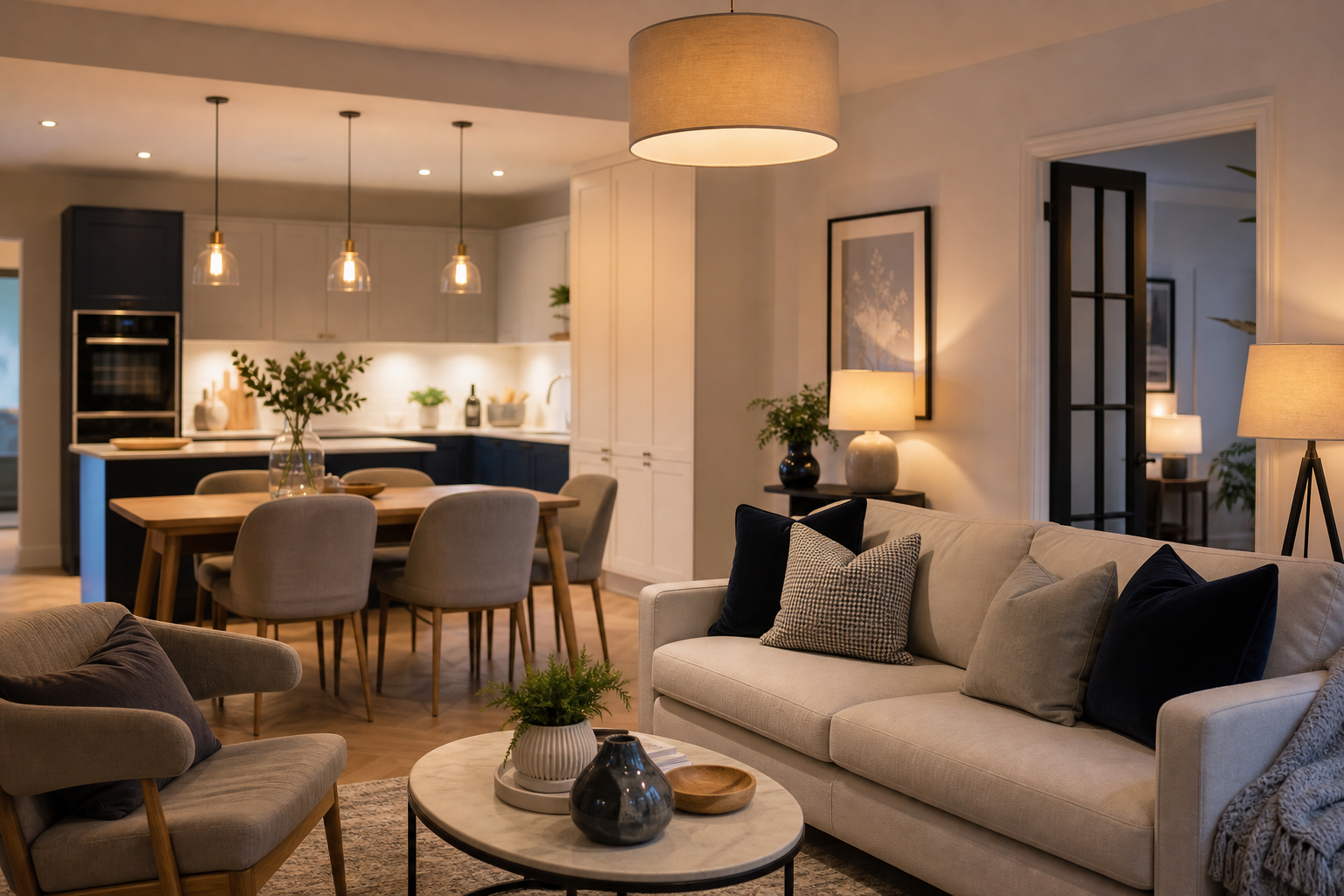

Lighting shapes how people work, move, browse, meet and relax. For businesses, it also affects brand perception, safety, productivity and running costs. Knowing How to Choose the Perfect Lighting for Every Room helps facilities teams, designers, landlords and decision-makers create spaces that feel professional, practical and welcoming. The right scheme is rarely about one impressive fitting. It is about matching light levels, colour, placement and controls to the real purpose of each area.
Why Room-by-Room Lighting Matters in Commercial Spaces
Every room has a different job. A boardroom needs clarity and focus, while a reception area must create confidence from the moment visitors arrive. A stockroom needs safe, even visibility. A restaurant corner may need warmth and atmosphere. Treating every area in the same way often leads to glare, dark spots, wasted energy or spaces that simply feel uncomfortable.
In a B2B setting, lighting decisions also need to support compliance, maintenance and long-term value. Poor lighting can make tasks harder, increase eye strain and create avoidable risks in circulation areas. Overly bright lighting can feel harsh and expensive to run. A balanced approach considers people, tasks and the building itself.
Good commercial lighting usually combines three layers: ambient lighting for overall brightness, task lighting for specific work, and accent lighting for emphasis. Once these layers are understood, it becomes easier to adapt them room by room.
How to Choose the Perfect Lighting for Every Room: A Practical Framework
Before selecting fittings, assess how each space is used throughout the day. A room may have more than one purpose, especially in offices, hospitality venues and shared commercial buildings. Lighting should be flexible enough to support those changing needs.
Start with these practical checks:
- Purpose: Identify whether the space is used for focused work, meetings, display, relaxation, storage or movement.
- Users: Consider employees, customers, visitors, contractors and anyone with accessibility needs.
- Natural light: Note windows, skylights, shaded areas and seasonal changes.
- Surfaces: Dark walls and floors absorb light, while pale surfaces reflect it.
- Controls: Decide where dimming, sensors or scene settings would improve use and efficiency.
- Maintenance: Choose fittings and lamps that can be accessed safely and replaced without disruption.
This framework helps avoid decisions based only on appearance. A beautiful pendant may suit a hotel lounge but perform poorly above a detailed workbench. Equally, a practical panel light may be ideal for a back office but too plain for a client-facing reception.
Lighting for Core Business Areas
Offices and Workstations
Office lighting should support concentration without creating glare on screens. Even, comfortable ambient light is important, but it should not do all the work. Desk lamps or local task lighting can help employees adjust their own environment, especially where teams carry out detailed reading, design work or administrative tasks.
Colour temperature matters. Neutral white light often works well in general office areas because it feels clean and alert without being too cold. Very warm light may feel relaxed but can reduce the sense of focus. Very cool light can feel clinical if used without care.
Position fittings to reduce reflections on monitors. Linear lights, recessed panels and indirect lighting can all work well when placed thoughtfully. For meeting rooms, add dimming or scene controls so presentations, video calls and discussions can each have suitable lighting.
Reception Areas and Client-Facing Rooms
Reception lighting has a commercial role as well as a practical one. It should help visitors navigate the space, recognise the brand and feel confident they have arrived in the right place. A mix of ambient and accent lighting often works best.
Feature pendants, wall lights or illuminated signage can create a memorable first impression, but they must be supported by enough general light for safety and comfort. Seating areas may benefit from warmer tones, while the reception desk needs clear task lighting for signing documents, checking screens and greeting guests.
Client meeting rooms need adaptable lighting. Bright, balanced light supports discussion and paperwork. Softer settings may suit informal conversations or hospitality. If video conferencing is used, avoid strong backlighting behind speakers and make sure faces are evenly lit.
Retail, Showroom and Display Areas
Retail and showroom lighting should guide attention. General lighting helps customers move around comfortably, while accent lighting highlights products, textures and displays. The goal is not simply to make everything bright; it is to create contrast where it matters.
For product-led businesses, colour rendering is especially important. A light source should show colours accurately, particularly for fashion, interiors, furniture, flooring, cosmetics and food displays. If colours look dull or distorted, customers may not see the product as intended.
Track lighting is often useful because displays change over time. Adjustable fittings allow teams to re-aim light without redesigning the whole scheme. In showrooms, combine ceiling light with lower-level illumination to avoid flat, lifeless displays.
Hospitality, Breakout and Wellbeing Spaces
Restaurants, cafés, hotel lounges and workplace breakout areas rely heavily on atmosphere. Warm light usually feels more comfortable in these spaces, especially where people are expected to relax or talk. However, practical lighting is still needed for cleaning, service and movement.
Layering is essential. Wall lights, pendants, table lamps and concealed LED strips can create depth. Dimmers allow staff to shift the mood between daytime service, evening use and maintenance. In workplace wellbeing rooms, avoid harsh contrast and flicker, as these spaces should feel calm and restorative.
Technical Factors That Influence the Final Choice
Choosing fittings is easier when key technical terms are understood. Brightness, colour and efficiency all affect the final result.
Lumens describe light output, while watts describe energy use. Modern efficient lamps can produce strong output with lower wattage, so comparing watts alone is no longer enough. Colour temperature, measured in Kelvin, affects whether light appears warm, neutral or cool. Colour rendering affects how accurately colours appear under the light.
Glare control is also important in commercial settings. A space can be bright but still uncomfortable if fittings shine directly into people’s eyes or reflect off screens and polished surfaces. Diffusers, baffles and careful positioning can reduce this problem.
Emergency lighting should be considered separately where required. It is part of a wider safety strategy and should not be treated as decorative lighting. In shared buildings, warehouses and public-facing premises, suitable lighting for escape routes, stairs and exits is essential.
Controls, Energy Use and Long-Term Management
Lighting controls can improve comfort and reduce waste. Occupancy sensors are useful in store cupboards, washrooms, corridors and meeting rooms that are not constantly occupied. Daylight sensors can adjust artificial lighting when natural light is available. Dimmers allow teams to tune spaces for different tasks.
For businesses managing multiple rooms or sites, consistency matters. Standardising lamp types, fittings or control systems can make maintenance simpler. It can also help facilities teams keep replacement stock under control.
Energy performance should be considered alongside durability. A cheaper fitting may cost more over time if it fails early, uses more electricity or is difficult to maintain. Commercial lighting should be assessed as part of the building’s ongoing operation, not only as an upfront purchase.
Common Lighting Mistakes to Avoid
Many lighting problems come from treating light as decoration rather than infrastructure. Design and appearance matter, but they must support function.
Common mistakes include:
- Using one central fitting for an entire room, which often creates shadows and uneven light.
- Ignoring glare, especially in offices, reception desks and rooms with screens.
- Choosing colour temperature by habit, rather than matching it to the activity and mood.
- Forgetting maintenance access, particularly in high ceilings, stairwells and public areas.
- Over-lighting customer spaces, which can make them feel harsh and uncomfortable.
- Under-lighting back-of-house areas, where safety and accuracy are still important.
Avoiding these issues keeps the scheme practical as well as attractive. It also helps ensure that staff and visitors experience the building as intended.
Frequently Asked Questions
What is the best lighting for a commercial office?
The best office lighting usually combines even ambient light with controlled task lighting. It should minimise glare, support screen work and allow some flexibility for meetings, focused tasks and collaborative activity.
Should every room use the same colour temperature?
No. Different rooms need different atmospheres and levels of alertness. Neutral light often suits offices, while warmer tones may be better for reception lounges, hospitality areas and breakout spaces.
How can businesses reduce lighting energy costs?
Businesses can reduce waste by using efficient fittings, occupancy sensors, daylight controls and sensible zoning. Regular maintenance also helps ensure lights perform properly without unnecessary overuse or poorly lit areas.