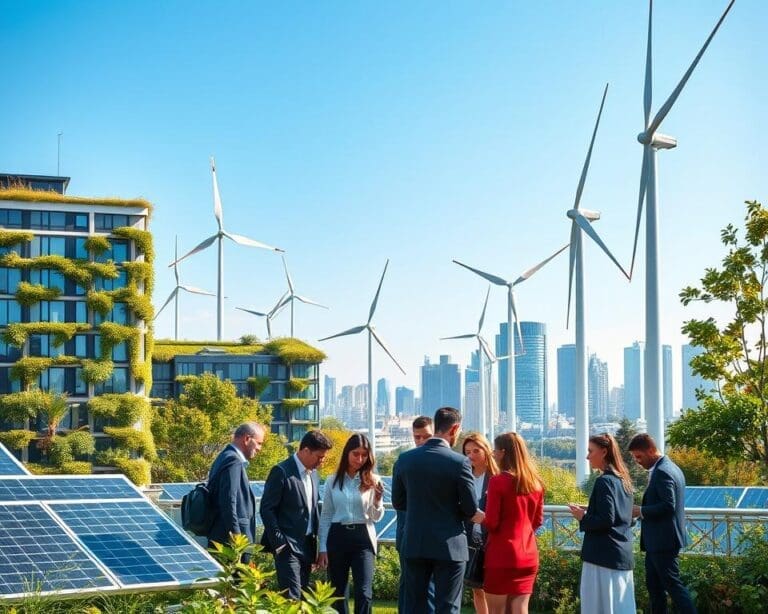

Green technology sustainability means using tools and systems that cut pollution, save resources and back low‑carbon economies. It covers renewable energy, energy efficiency, circular economy practices, low‑emission transport, smart grids and greener manufacturing. This article asks a clear question: how is green tech supporting sustainability across environmental, social and economic fronts?
In practical terms, environmental technology impact is measured by avoided greenhouse gas emissions, energy savings in kWh, renewable capacity added in MW or GW, and material reuse rates. It also includes air quality gains and socio‑economic indicators such as green jobs created and increased resilience to climate shocks.
The United Kingdom provides a policy backdrop for progress. The Climate Change Act and the net zero by 2050 target set the statutory course. Recent government strategies — from the Ten Point Plan for a Green Industrial Revolution to the British Energy Security Strategy — act as drivers for sustainable technology UK deployment and investment.
This introduction frames a short roadmap: first, a high‑level overview of green technology sustainability; next, focused analysis of renewable energy innovations; then greener cities and transport; and finally resource efficiency and circular manufacturing. Together, these sections show how green tech can secure a healthier planet, create jobs and strengthen communities for future generations.
How is green tech supporting sustainability?
Green technology drives practical change across the UK by linking innovation with public policy and local action. This short overview shows how inventions, business models and community projects work together to meet sustainability goals UK and deliver measurable benefits.
Overview of green technology and sustainability goals
Green technology covers renewable generation, storage, efficiency and low-carbon transport. Examples include solar PV arrays, onshore and offshore wind, tidal turbines, batteries and pumped hydro. Efficiency tools range from LED lighting to HVAC optimisation, while digital solutions such as IoT and AI cut waste and boost performance.
These innovations sit within broader aims set by the UN SDGs and UK targets. Priority areas include SDG 7 for clean energy, SDG 11 for sustainable cities, SDG 12 for responsible consumption and SDG 13 for climate action. Firms and councils align projects with the net-zero pathway and local carbon-neutral ambitions to show progress toward sustainability goals UK.
Key sectors where green tech makes an impact
Energy sees rapid change as renewables and grid modernisation replace fossil generation. Companies such as Ørsted and growing Scottish offshore wind projects show how scale can cut emissions and costs. Solar expansion adds decentralised capacity across homes and businesses.
Transport is shifting to electrification for cars, buses and fleets. Charging networks from BP Pulse and Pod Point expand access. Trials of hydrogen buses and freight pilots test routes for heavy vehicles and longer distances.
Buildings benefit from retrofit programmes, heat pumps and smart controls that reduce operational emissions and bills. Industry adopts electrification, low-carbon fuels and process efficiency. UK CCUS cluster pilots explore carbon capture, utilisation and storage to lower industrial footprints.
Waste and materials evolve through recycling technology, chemical recycling and product design that support a circular economy. These approaches cut resource extraction and create new streams of value.
Measuring environmental, social and economic benefits
Environmental measurement includes scope 1–3 emissions, lifecycle assessments and resource intensity metrics such as energy per unit produced. Biodiversity co-benefits are tracked where projects affect habitats and ecosystems.
Social metrics cover job creation, training and energy affordability. Improved air quality from lower transport emissions brings health gains that are easier to quantify than in the past.
Economic measures look at investment flows from venture capital, corporate and government sources, plus ROI from efficiency upgrades and falling unit costs for renewables and storage.
Standardised reporting frameworks such as Science Based Targets, ISO standards and developments in the UK Green Taxonomy help with measuring sustainability benefits. Clear rules make it possible to compare outcomes and show credible progress across sectors impacted by green tech.
Renewable energy innovations driving decarbonisation
Renewable energy innovations are reshaping how the UK cuts carbon and powers daily life. Rapid gains in technology, falling costs and smarter systems mean clean power can be more reliable and more widely adopted. That shift matters for homes, farms and industry as the country aims for net zero.
Advances in solar and wind technologies
Solar and wind advances have driven big improvements in output and affordability. New PV cells such as PERC and bifacial modules lift efficiency while large-scale farms and rooftop arrays expand deployment. Trials in agrivoltaics show crops and panels can share fields, making land use more productive.
Wind technology has moved quickly, especially offshore. Larger rotors, higher hubs and floating foundations let developers place turbines in deeper water where winds are stronger. The UK leads in offshore capacity with major projects from SSE and Ørsted showing how scale cuts costs and boosts supply.
Energy storage and smart grids for reliability
Energy storage UK options now include lithium-ion, flow batteries and long-duration systems. Small batteries provide fast frequency response, while pumped hydro and hydrogen help cover multiday gaps in generation. These systems make renewables dependable for homes and business.
Smart grids tie generation and demand together using meters, demand-side response and virtual power plants. National Grid ESO and distribution network operators are integrating storage and distributed resources so the network can balance supply in real time. Digital tools and AI improve flexibility and resilience.
Policy support and investment trends in the UK
Public policy and UK green investment are steering projects from concept to construction. Contracts for Difference and green finance vehicles lower investor risk and attract private capital. Corporate power-purchase agreements add long-term demand for clean power.
Venture and private-equity funding is flowing into storage, grid software and low-carbon fuels. Planning reforms for offshore consent and support for industrial decarbonisation hubs aim to speed delivery. Supply-chain constraints and skills shortages remain risks, yet the UK has a clear advantage in offshore wind and emerging hydrogen markets.
Practical guides on integrating small-scale solar chargers, portable power banks and battery care can help households play their part. For pragmatic tips on garden charging and portable systems, see a focused how-to guide on sustainable device charging.
Greener cities and sustainable transport solutions
Urban centres are reshaping how people move and live to meet climate targets and improve daily life. Small changes in transport, planning and technology add up to big gains for air quality, equity and resilience. This section looks at practical steps cities can take to accelerate progress.
Electric vehicles, charging infrastructure and uptake
Battery-electric cars and plug-in hybrids are gaining market share across the UK as emissions rules tighten and purchase incentives remain. Public charging has expanded with networks from BP Pulse and Shell Recharge, plus more workplace and destination chargers. Local councils are rolling out kerbside sockets in towns and suburbs.
Managed charging and vehicle-to-grid pilots show how fleets could support the electricity system. Barriers such as range anxiety and upfront cost persist, while rural areas need faster roll-out. Second-life battery markets present a chance to cut costs and extend material value.
Public transport modernisation and active travel tech
Electrifying bus fleets and testing hydrogen for heavy vehicles reduce emissions from high-mileage services. Digital ticketing and real-time passenger information make journeys simpler and more reliable. Cities like London, Manchester and Birmingham invest in bus priority lanes and low-emission zones to boost uptake.
Technology also supports cycling and walking. Growth in e-bikes, dockless systems and journey-planning apps helps shift short trips away from cars. Micromobility solutions lower congestion and create space for greener streets, which strengthens active travel and public health.
Urban planning tools and smart-city applications
Digital twins and GIS-based planning tools help councils model land use, congestion and air quality with greater accuracy. Building Information Modelling supports integrated retrofit strategies that scale up energy efficiency.
Sensors for smart lighting and waste management cut operational costs and improve service delivery. Mobility-as-a-service platforms can tie together buses, bikes and car clubs, giving citizens seamless options. Thoughtful deployment of smart city technology must prioritise social equity so low-income communities gain equal access to benefits.
- Support roll-out of electric vehicle charging in suburbs and rural towns.
- Expand protected cycle networks and secure funding for e-bike schemes.
- Adopt digital planning tools to target interventions where they deliver the greatest benefit.
Resource efficiency, circular economy and green manufacturing
Adopting circular economy UK practices means designing products to last, be repaired and be recycled. That shift cuts demand for virgin materials and lowers lifecycle emissions. Extended producer responsibility schemes in the UK encourage makers to take back goods, while product-as-a-service business models keep items in circulation and reduce landfill and incineration.
Resource efficiency in factories combines process optimisation, electrification of heating and heat recovery to reduce energy use. Green manufacturing now embraces low-carbon steel, cement alternatives with lower clinker and bio-based materials. Additive manufacturing trims waste by building parts only where needed and enabling lighter components for transport and energy sectors.
Advances in recycling technology—from improved mechanical and chemical recycling for plastics to textile recycling and AI-led sorting—strengthen sustainable supply chains. Industrial symbiosis turns by-products and waste heat into inputs for other processes, improving resilience and cutting exposure to volatile commodity markets for batteries and renewables.
Scaling these gains will create jobs in remanufacturing and recycling and demand new skills through apprenticeships and training. Policy tools such as green public procurement, Innovate UK funding and clear extended producer responsibility rules are vital enablers. Together, these measures make a persuasive case that circular economy UK approaches and green manufacturing deliver economic, social and environmental benefits.