
Medical technology improves patient outcomes by turning innovation into measurable gains across diagnosis, treatment, monitoring and rehabilitation. In the UK context, advances from companies such as Philips, Siemens Healthineers and Medtronic are helping the NHS tackle long waiting lists, support an ageing population and shift care towards value-based models.
This article is a product-led medical device review that evaluates diagnostics, digital health, surgical robotics, implants, wearables and AI-driven data tools. It explains how each class contributes to earlier diagnosis, fewer complications, faster recovery, better quality of life and reduced readmissions.
Evidence is drawn from peer-reviewed journals like The Lancet and BMJ, NHS case studies, MHRA guidance, NICE assessments and manufacturer performance data. Outcomes will be presented using clinical metrics—mortality, morbidity, length of stay, PROMs—and economic measures such as cost per QALY and reduced bed-days.
The intended readers are clinicians, NHS procurement leads, health-tech purchasers and informed patients across the United Kingdom. The tone is inspirational yet rigorous, highlighting real-world successes and practical limitations to inform smarter adoption of medical technology benefits and encourage healthcare innovation UK.
How does medical technology improve patient outcomes?
Medical technology reshapes care by shortening diagnostic delay, tailoring treatments and tracking progress. Clinicians and patients in the UK are already seeing the benefits of diagnostics and clinical outcomes technology that speed decision-making and reduce harm.
Enhanced diagnostics for earlier intervention
Rapid molecular tests, high-resolution imaging and point-of-care devices cut time-to-diagnosis. This earlier intervention limits disease progression and lowers complication rates.
Examples include earlier cancer detection that raises resection rates and survival, and sepsis screening that reduces time-to-antibiotics in line with NHS sepsis guidance. Better diagnostic accuracy reduces false positives and negatives, preventing unnecessary procedures and patient harm.
Precision treatments and personalised care
Genetic testing, companion diagnostics and biomarker-driven therapies allow targeted options. Oncology targeted therapies and immunotherapies reach the right patients with fewer side effects.
NICE approvals and the NHS Genomic Medicine Service embed genomics into pathways across the UK. Device-enabled customisation, such as image-guided radiotherapy and adaptive insulin pumps, refines dosing and delivery for individual needs, supporting personalised medicine UK.
Measurable improvements in recovery rates
Combining diagnostics with tailored therapy produces clear recovery rates improvement. Metrics show lower complication and infection rates, shorter length of stay and faster functional recovery.
Minimally invasive surgery informed by pre-op imaging speeds mobilisation and reduces hospital days. Remote monitoring for heart failure cuts readmissions by flagging deterioration early. Outcomes are measured with length of stay, 30‑day readmission rates, PROMs, complication rates and survival statistics, linking clinical outcomes technology with economic value.
Innovations in diagnostic tools and imaging
Rapid change in diagnostics is reshaping patient care across the NHS. New scanners, bedside tests and intelligent software give clinicians clearer answers sooner. These advances support quicker treatment choices and improve pathways from emergency wards to oncology clinics.
Advanced imaging modalities and their impact
Higher-field MRI at 3T and above, low-dose CT protocols and PET-CT or PET-MRI fusion deliver richer anatomical and functional detail. These systems enhance staging accuracy in oncology and improve characterisation in neurology and cardiology.
Manufacturers such as Siemens Healthineers, Philips and GE Healthcare provide scanners with faster acquisition, motion correction and advanced sequences. Shorter scan times increase patient comfort and throughput, while clearer images support better surgical planning and more precise radiotherapy targeting.
Clinical gains include earlier detection of metastases and finer assessment of disease burden. Such improvements contribute to improved survival and lower morbidity by guiding timely, tailored interventions.
Point-of-care testing and rapid diagnostics
Bedside testing for blood gases, rapid PCR for respiratory pathogens, CRP and troponin speeds up clinical decisions in emergency and primary-care settings. Faster turnaround reduces unnecessary admissions and enables prompt initiation of appropriate therapy.
Devices such as Abbott i-STAT and Roche cobas Liat proved their value during the COVID-19 pandemic by accelerating diagnosis at the front line. In the UK, point-of-care testing UK adoption depends on robust quality control, staff training and pathways that link results into electronic health records.
Effective implementation of rapid diagnostics hinges on governance, connectivity and routine calibration. When integrated correctly, these tests transform flow in urgent care and community clinics.
AI-assisted interpretation to reduce diagnostic errors
AI in imaging now helps radiologists and pathologists by prioritising urgent findings, detecting subtle abnormalities such as small lung nodules or intracranial haemorrhage and by quantifying disease extent. Machine-learning tools can shorten reporting times and reduce inter-observer variability.
Peer-reviewed studies report gains in sensitivity and specificity when algorithms are used as decision support. Such tools aim for diagnostic error reduction while preserving clinician oversight and clinical judgement.
Regulatory scrutiny from MHRA, validation on UK populations and seamless interoperability with PACS and EHR systems remain essential. Transparent algorithms and continued clinician involvement ensure AI augments care without replacing human responsibility.
Role of digital health and telemedicine in patient care
Digital health is reshaping how people receive care across the UK. Telemedicine UK services, mobile health apps and remote monitoring chronic disease programmes are bringing clinical insight into homes. These tools help clinicians spot problems early and keep patients connected to their care teams.
Remote monitoring uses devices such as home blood pressure monitors, continuous glucose monitors from Dexcom and Abbott, wearable ECGs like AliveCor Kardia and home spirometry to collect steady data. That longitudinal capture supports early detection of deterioration and enables proactive interventions.
NHS pilot schemes and NHS@home initiatives show remote monitoring chronic disease efforts for heart failure and COPD can reduce admissions and improve outcomes. Integration with electronic health records and clinical workflows remains essential for scale and clinician confidence.
Remote monitoring for chronic disease management
Device ecosystems need interoperability. When CGM or wearable ECG data feed into a clinician’s dashboard, teams act quicker. This lowers risk and supports personalised care plans that change with a patient’s readings.
Virtual consultations improving access and continuity
Virtual consultations NHS services expanded rapidly during the pandemic and continue to improve access. Video and telephone appointments reduce travel, ease follow-up and boost appointment adherence for routine care.
Remote consultations suit many reviews and medication checks. They face limits when a hands-on exam is needed and can expose digital exclusion. NHS England guidance addresses confidentiality, UK GDPR and inclusion strategies to reach underserved groups.
Mobile health apps and patient engagement
Mobile health apps support self-management, medication reminders, physiotherapy exercises and mental-health support. Clinically validated tools like MyCOPD and SilverCloud and apps listed on the NHS Apps Library show stronger results when linked to care pathways.
Patient engagement digital health grows when apps collect PROMs and let clinicians monitor progress. App validation, data security and clinician oversight must guard against apps replacing clinical judgement. When governance is right, mobile health apps become a powerful ally for long-term care.
Impact of surgical technology and robotics on outcomes
The evolution of theatre technology is reshaping outcomes across surgical specialties in the UK. Advances move care towards less trauma, faster recovery and greater safety. These shifts matter to patients, clinicians and the NHS when assessing value and access.
Minimally invasive techniques have cut length of stay and postoperative pain. Laparoscopic colorectal and bariatric procedures show shorter inpatient time and lower wound infection rates compared with open approaches. Endovascular aneurysm repair tends to reduce early morbidity versus open repair and speeds return to normal activities. These gains are reflected in improved minimally invasive surgery outcomes but require investment in training, theatre scheduling and capital equipment for broad NHS adoption.
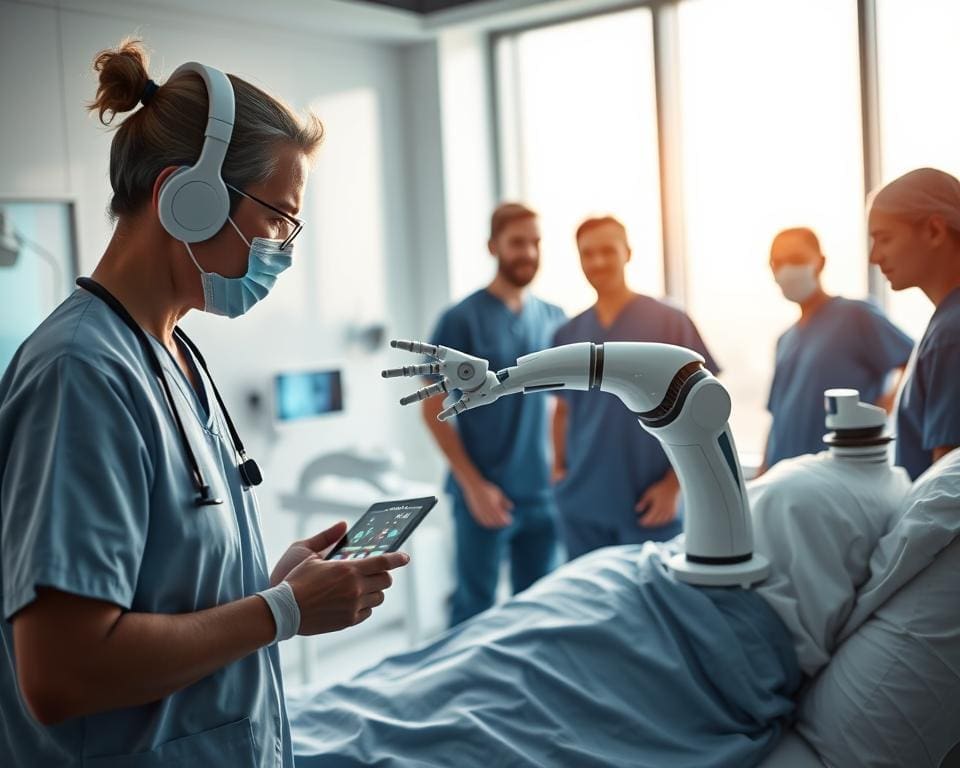
Robotic platforms extend surgeon capability with articulated instruments, three‑dimensional vision and tremor filtration. Systems such as Intuitive Surgical’s da Vinci and CMR Surgical’s Versius allow finer dissection and suturing in confined spaces. Meta‑analyses report less blood loss, fewer conversions to open surgery and enhanced nerve‑sparing in some urological and gynaecological operations. A balanced Da Vinci review UK highlights benefits alongside cost and workforce considerations when evaluating robotic surgery benefits for regional services.
Perioperative monitoring is growing more sophisticated with near‑infrared spectroscopy, intraoperative neuromonitoring and depth‑of‑anaesthesia tools. Integrated theatre suites stream real‑time data to teams and dashboards. Use of analytics and standardised checklists reduces avoidable harm and supports Enhanced Recovery After Surgery pathways, improving patient‑reported outcome measures and shortening hospital stays.
- Clinical examples: laparoscopic colorectal and bariatric surgery, endovascular aneurysm repair.
- Robotic advantages: improved dexterity, 3D vision, tremor reduction supporting precise surgery.
- System needs: training, maintenance costs, centralised services and robust UK outcome data.
When combined, minimally invasive approaches, surgical robotics UK deployment and stronger perioperative monitoring form a coherent strategy to improve short‑term recovery and long‑term function. Careful evaluation of outcomes, investment implications and patient selection will determine how widely these gains are realised across the NHS.
Medical devices, implants and prosthetics improving quality of life
Advances in medical devices transform daily life for many people. New materials, smarter prosthetic control and continuous monitoring combine to restore function and reduce risk. The focus in UK practice is on durable solutions that work with the body and with health services.
Next-generation implants use ceramics, titanium alloys and polymer coatings to lower rejection and slow wear. Drug-eluting surfaces cut infection and inflammation, which extends implant lifespan and reduces the need for revision surgery. Orthopaedic manufacturers such as Zimmer Biomet and Stryker deliver joint replacements that show improved longevity. Cardiovascular care has seen bioprosthetic valves and leadless pacemakers from Medtronic adopted in NHS practice.
Regulation and oversight matter for implantable devices outcomes. The MHRA monitors safety and adverse events after approval. NICE evaluates clinical and cost-effectiveness before recommending wide adoption. Post-market surveillance provides real-world data that shape practice and patient counselling.
Smart prosthetics and assistive technologies now offer finer control and sensory feedback. Myoelectric limbs and neural-interface research give users more natural movement and better functional outcomes. Commercial devices enter clinics alongside research-stage systems, supporting rehabilitation pathways led by physiotherapy and occupational therapy teams.
Accessibility depends on commissioning and policy in the NHS. Multidisciplinary support is crucial for best results, whether the device is a high-end prosthetic or a simple adaptive aid. Training and ongoing adjustment improve independence and quality of life.
Wearable devices provide continuous insight into health. Consumer brands like Fitbit and Apple Watch sit alongside medical-grade patches that measure heart-rate variability, arrhythmias and sleep. Evidence links wearable-detected atrial fibrillation screening to earlier diagnosis and stroke-prevention pathways, though validation and false-positive risk must be managed.
Integrating wearable health trackers into clinical workflows requires clear consent and robust data governance. NHS pathways need protocols to triage alerts and act on findings from patient devices. When systems align, wearable data can prompt timely intervention and improve long-term outcomes.
Data, AI and personalised medicine shaping treatment pathways
Combining genomic data, imaging, wearable outputs and electronic health records creates a powerful platform for precision medicine. The NHS Genomic Medicine Service and NHS Digital initiatives show how integrated datasets can enable tailored care, while lessons from Care.data underline the importance of clear consent and strong governance.
When these data streams feed health data analytics, clinicians gain tools for risk stratification and targeted screening. Predictive algorithms NHS teams use can flag patients at higher risk of deterioration or readmission, allowing earlier intervention and better allocation of resources. Such clinical decision support helps focus treatment where it brings the greatest benefit.
AI personalised medicine UK is already advancing companion diagnostics in oncology, guiding therapy choice to improve outcomes and reduce harm. Evidence from hospital projects shows predictive analytics can lower adverse events and optimise workflows, but UK clinical validation and MHRA regulation for AI as a medical device remain essential to ensure safety and transparency.
Barriers persist: data interoperability, workforce digital skills, regulatory compliance, algorithmic bias and public trust. With responsible adoption — robust regulation, clinician leadership and patient-centred implementation — data, AI and personalised medicine can transform pathways across the United Kingdom, yielding earlier cures, fewer complications and better quality of life.