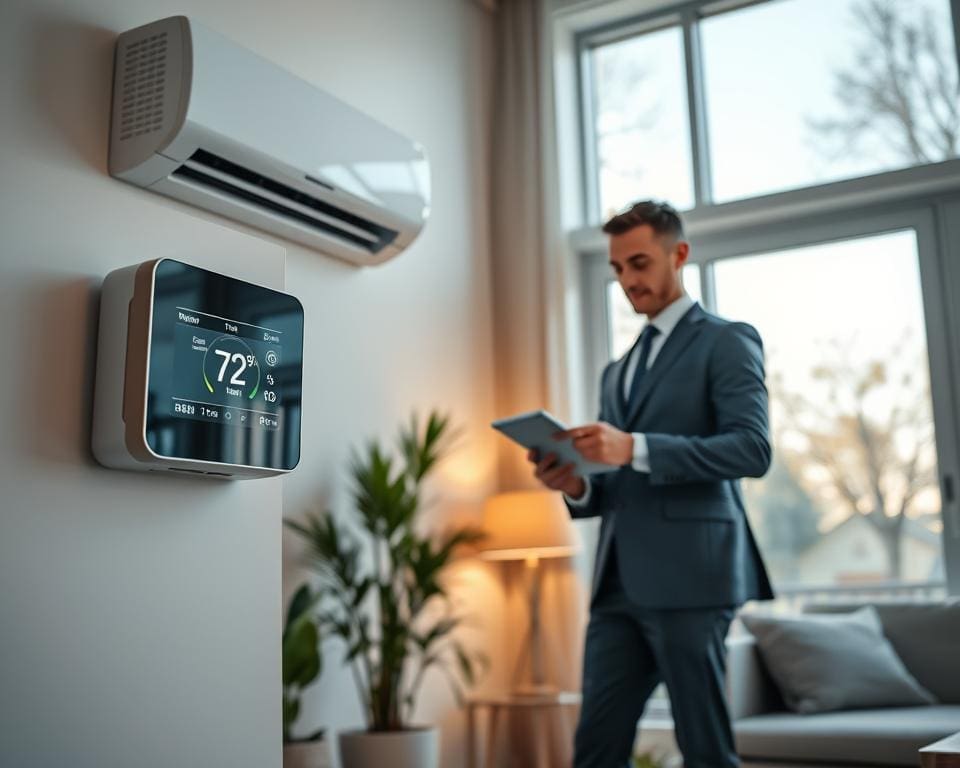
Automated climate control answers a simple question: how does automated climate control work in smart homes to keep indoor life comfortable and efficient? At its core, smart home climate control uses sensors, software and connectivity to monitor and adjust heating, ventilation and air conditioning automatically. An automated thermostat or HVAC automation platform learns preferences, follows schedules and reacts to conditions without constant manual input.
The main objectives are straightforward. Systems aim to maintain set temperature and humidity, improve occupant comfort, cut energy use and shrink the carbon footprint. They also enable remote control and scheduling and tie into other smart devices such as shading, ventilation and occupancy sensors to create coordinated responses.
Think of typical user scenarios: an automatic morning warm-up, away-and-return modes that save energy while you are out and pre-warm before you arrive, seasonal shifts that add humidification in winter and dehumidification in summer, and health-driven routines that prioritise air quality and allergen reduction.
In the UK context, these systems must work across period homes, terraced houses and modern flats, and integrate with gas boilers, combi boilers, heat pumps, underfloor heating and electric radiators. Popular brands and platforms familiar to UK consumers include Google Nest, ecobee, Hive, Tado and Bosch Smart Home, many of which support Apple HomeKit, Google Home and Amazon Alexa for seamless control.
Installation and any changes to gas or oil heating should comply with UK building regulations and be handled under Gas Safe or Oftec rules, while electrical work must follow Part P and, where required, be carried out by a qualified electrician.
Later in this article you will find a deeper dive into core components, control logic and connectivity, plus the comfort and home climate automation benefits, practical installation advice, privacy considerations and likely future trends for smart thermostat UK and HVAC automation.
How does automated climate control work in smart homes?
Automated climate control blends hardware, software and networked devices to make homes more comfortable and efficient. At its heart lie smart thermostat components, climate control sensors and actuators that act on simple rules or advanced models. The result is a system that senses conditions, decides what to do and takes action with minimal input from the homeowner.
Core components of an automated climate control system
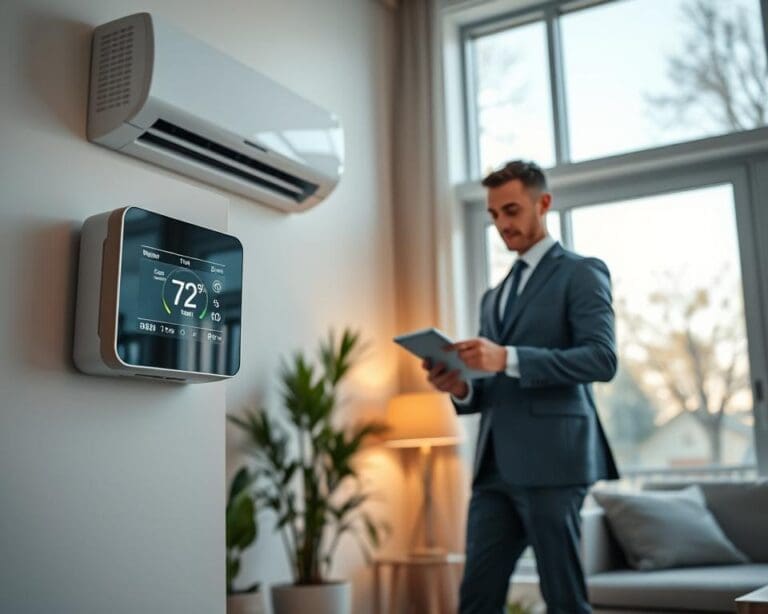
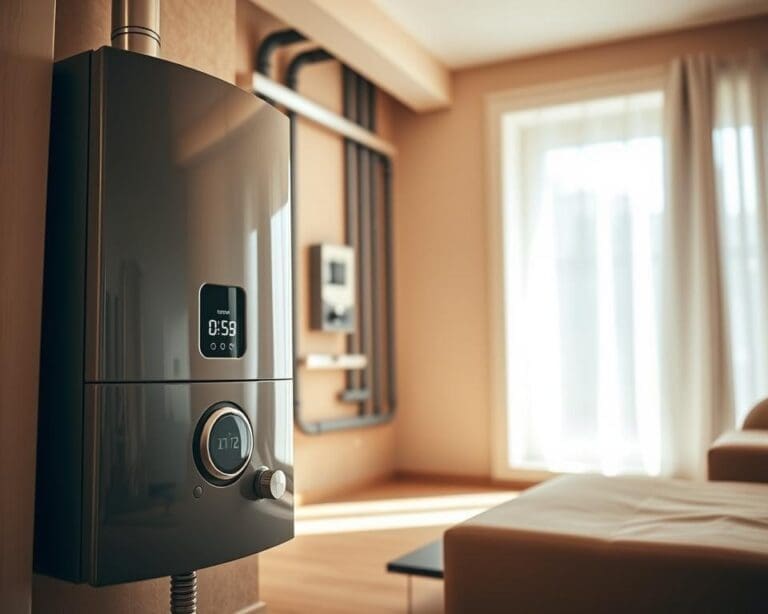
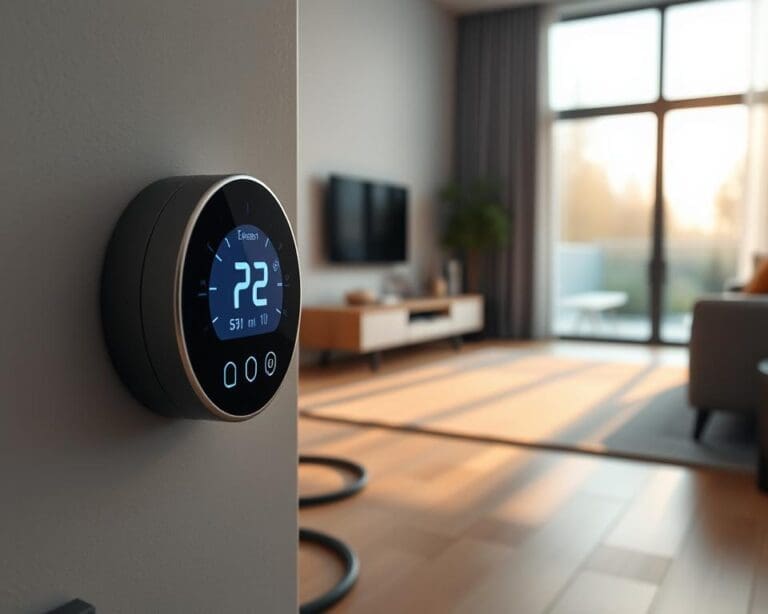
Wall-mounted smart thermostats from Google Nest and Tado sit alongside inline controllers for boilers and heat pumps. Some thermostats learn routines, while others follow set schedules. Smart radiator valves from Danfoss, Honeywell and Tado give room-by-room control. Zone valves and motorised dampers manage multiple areas or ventilation circuits.
Climate control sensors include temperature and humidity sensors, CO2 and VOC monitors, window and door contacts, plus occupancy sensors UK for presence detection. Place sensors away from drafts and direct sunlight to get reliable readings. Boilers, air-source and ground-source heat pumps, furnaces, underfloor heating manifolds and MVHR units form the main HVAC hardware.
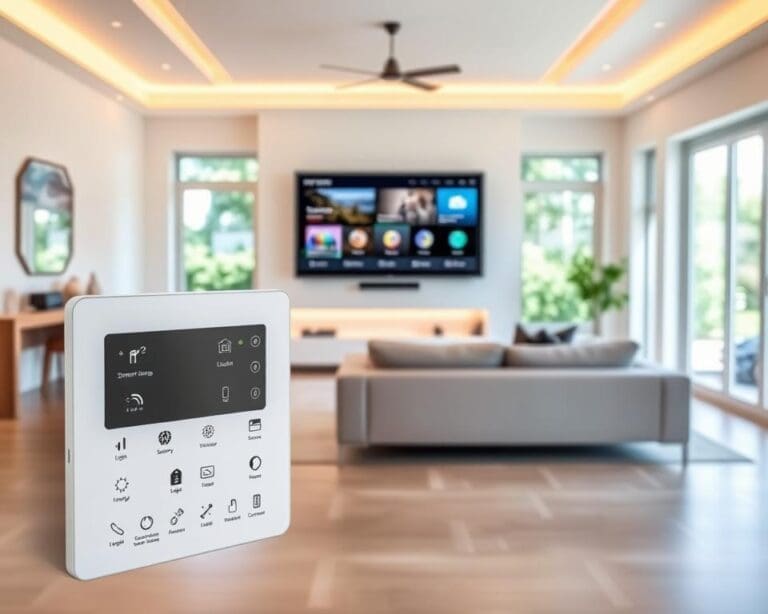
Gateways and hubs translate between device protocols and cloud or local controllers. User interfaces range from mobile apps and voice assistants to wall controls and web dashboards. Energy monitoring ties systems into smart meters or standalone monitors such as Sense to inform optimisation routines.
Control logic and algorithms
Basic strategies include on/off control, PID loops and hysteresis to avoid short-cycling. Schedule-based logic lets households set different temperatures by time, day and zone. Adaptive algorithms learn occupancy patterns and predict pre-heating needs.
Advanced setups use model predictive control to forecast internal temperature trajectories with weather data and building thermal models. HVAC automation algorithms balance comfort and energy use. Occupancy-aware control relies on motion sensors, geofencing and smart-lock integration to adjust setpoints automatically.
Air-quality-driven control uses CO2 and VOC readings to trigger ventilation or filtration in tightly sealed flats. Safety features provide frost protection and anti-legionella cycles for hot-water systems as fallback routines.
Connectivity and communication protocols
Local wireless options include Zigbee Z‑Wave Wi‑Fi Thread and BLE. Zigbee and Z‑Wave form resilient mesh networks for local device-to-device communication. Thread provides an IP-based mesh that simplifies routing for modern smart home stacks.
Wired standards such as Modbus and BACnet appear in larger buildings, while conventional 24V thermostat interfaces remain common in many UK homes. Cloud services and APIs enable third-party integrations. Matter is emerging to improve interoperability across Apple, Google and Amazon ecosystems.
Security depends on strong encryption, secure pairing and timely firmware updates. Robust password practices and network segmentation reduce risks when devices connect to cloud platforms or local hubs. Choosing the right mix of smart home communication protocols and local control options helps homeowners keep systems responsive and secure.
Benefits for comfort, energy efficiency and sustainability
Smart climate control turns a house into a home that knows you. By learning routines and responding to weather and occupancy, systems create living spaces that feel right while cutting waste. The result is a more comfortable daily life and a practical route to lower bills and lower carbon footprints.
Improved comfort through personalised climate zones
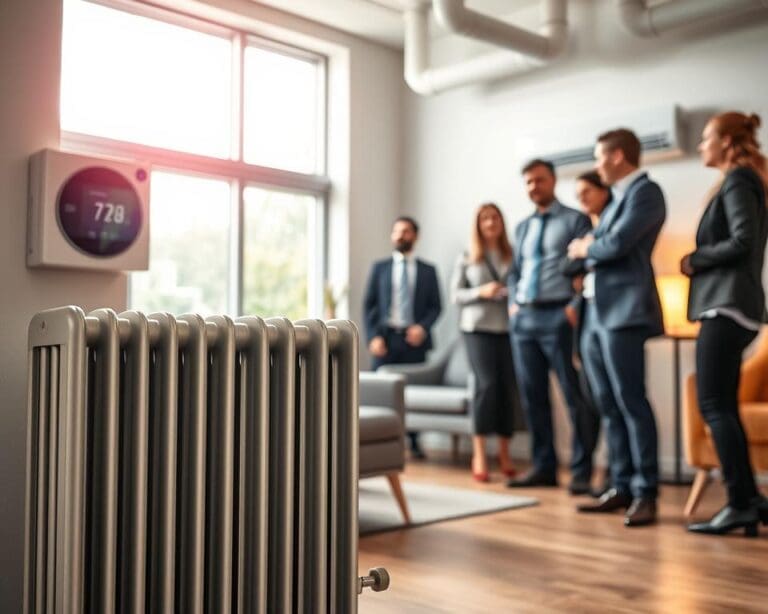
Room-by-room control with smart radiator valves and multi-zone thermostats produces true personalised climate zones. Bedrooms can stay cooler at night while living areas remain warm. Home offices get heat only when occupied.
Features such as anticipatory heating, humidity control and integration with smart blinds manage solar gain and keep conditions ideal. Geofencing and scheduled triggers let a home pre-warm before arrival without running heating all day.
Targeted filtration and ventilation reduce allergens and pollutants, improving sleep and wellbeing. Humidity control helps prevent mould in the damp parts of the UK while preserving comfort.
Energy savings and cost reduction
Industry estimates show smart thermostats and zoning can reduce heating energy use by 10–25%, though results depend on house fabric and occupant behaviour. Optimised schedules and adaptive learning capture both behavioural and automatic savings.
Smart strategies enable smart heating energy savings by shifting demand to low-cost periods and by integrating with time-of-use tariffs. Heat pump optimisation is key; smart controls manage flow temperatures, schedule pre-heating and use cheap electricity for thermal stores.
Linking heating to local renewables and batteries prioritises self-generated power for heating loads, increasing savings and value from installations. For homeowners seeking to reduce heating bills UK, upfront costs vary but incentives such as the Boiler Upgrade Scheme may improve payback timelines. Learn more about practical system setups at how smart home heating systems work.
Environmental impact and sustainability considerations
Smarter control reduces fuel use and, when paired with heat pumps or solar, drops household carbon intensity compared with traditional boilers. Carbon savings heat pump optimisation supports the shift to low-carbon homes.
Choose devices from manufacturers that supply long-term support and firmware updates to lower embodied carbon and limit e-waste. Smart homes that time-shift heating offer demand flexibility, helping the grid use cleaner generation.
Policy incentives and growing market options make sustainable smart homes practical for more people. Participating in flexibility schemes or adopting heat pump optimisation can deliver both environmental gains and new revenue or saving streams.
Installation, privacy and future trends in smart home climate control
Begin with a pragmatic site survey that checks your boiler type, wiring, TRV compatibility, home insulation and zoning needs. For smart thermostat installation UK homeowners often fit thermostats and TRVs themselves, but work on boilers, heat pumps or gas and oil systems should be left to Gas Safe or Oftec registered engineers and a qualified electrician. Confirm compatibility with combi and system boilers, and whether a common wire or hub is required for devices such as Nest or other 24V controllers.
Correct commissioning and tuning matter. Calibrate sensors, set sensible schedules and setback temperatures, and tune zones to avoid wasted energy. Maintain devices with firmware updates, occasional battery changes for wireless sensors, and seasonal checks on filters and MVHR units. These steps keep systems efficient and extend lifespan while improving indoor air quality.
Privacy and security are as important as performance. Thermostats and climate systems collect temperature, occupancy patterns, geolocation for geofencing and energy use data, so adopt smart home data security best practice: strong unique passwords, two‑factor authentication where available, up‑to‑date firmware and a segmented IoT network. Prefer manufacturers that provide clear privacy policies, local control options and exportable data to reduce cloud exposure and enhance privacy smart home climate control.
Look ahead to interoperability and new services. The Matter smart home standard promises simpler cross‑vendor integration and less vendor lock‑in, while edge AI will enable privacy‑preserving predictive control and anomaly detection. Households may join demand‑response schemes as part of the future of HVAC automation, pairing heat pumps with solar and batteries for flexibility. For UK homeowners, start with a clear survey and goals, choose interoperable devices with strong support, prioritise safety and compliance, and consider staged upgrades from a smart thermostat to TRVs and full zoning for gradual, secure improvement.