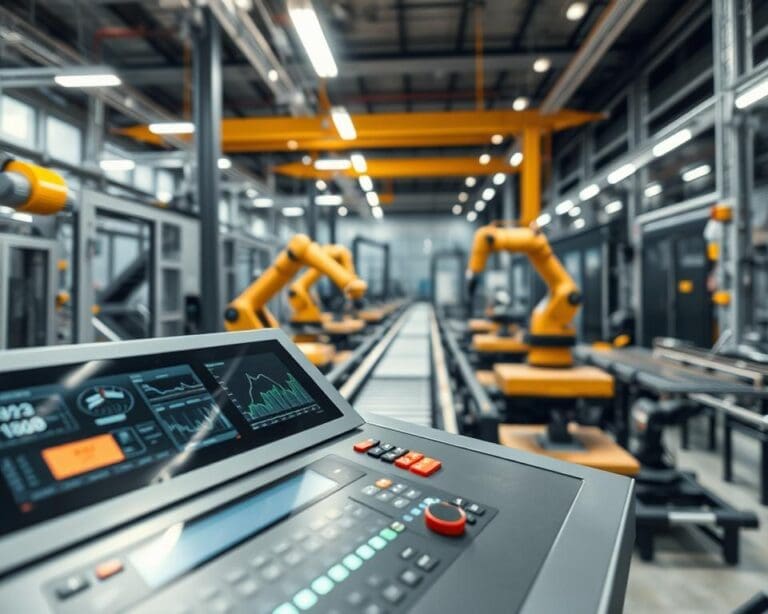

The Provision and Use of Work Equipment Regulations 1998, commonly known as PUWER, sets the legal framework for work equipment safety in the UK. PUWER places duties on employers, the self-employed and anyone who has control of work equipment to ensure it is suitable, safe for use, maintained and inspected. The Health and Safety Executive (HSE) provides authoritative guidance on these regulatory expectations.\
What is a PUWER Assessment for machinery?
A PUWER Assessment for machinery is a structured, practical process. Inspectors and competent assessors carry out systematic checks to identify hazards, verify safeguards, review maintenance regimes and confirm documentation such as user instructions, conformity markings and maintenance records. The aim is clear: turn legal requirements into measurable safety actions.
At a high level, benefits include fewer accidents and injuries, reduced unplanned stoppages and improved equipment reliability. Dutyholders gain clearer responsibilities and stronger defences during enforcement or litigation. Employers should expect prioritised remedial actions, defined inspection schedules and records that support work equipment safety compliance.
Think of a PUWER Assessment as an investment in people, productivity and reputation. It drives practical changes that lift workplace culture and support continuous improvement. Targeted PUWER Assessor Training and machinery safety training for engineers help embed competence and sustain results.
PUWER complements other regulatory regimes such as LOLER, the Management of Health and Safety at Work Regulations and BS EN machinery standards. Later sections will clarify duties, show how assessments cut incidents, detail inspection elements and digital tools, and outline training and ongoing compliance under machinery safety regulations UK.
How a PUWER Assessment strengthens machinery safety
An effective PUWER inspection and risk assessment turns vague duties into clear action. Employers learn their PUWER obligations, from selecting suitable equipment to ensuring safe installation, providing training and keeping machines in efficient working order. Dutyholders responsibilities become explicit through documented findings, named competent persons and prioritized action plans.
Clarifying PUWER obligations for employers and dutyholders
A PUWER Assessment defines who qualifies as a dutyholder: employers, controllers of equipment, hirers and owners. Typical outputs include an inventory of equipment, recorded suitability assessments, maintenance logs and inspection records. These documents show compliance with work equipment safety compliance and reduce enforcement risk when the Health and Safety Executive reviews records.
Identifying hazards and reducing machinery-related incidents
Assessment teams focus on identifying hazards such as entanglement, crush, shear, cutting and ejection. They check electrical, thermal and ergonomic risks and look for failures in guarding, controls or emergency stops. Techniques include visual inspection, functional testing, interlock verification and review of incident and near-miss logs.
Ensuring ongoing work equipment safety compliance through inspection
PUWER requires more than a one-off check. Ongoing inspection regimes vary with usage and environment. Practical models include daily workplace equipment safety checks by operators, periodic formal inspections by competent engineers and statutory checks after repairs. Well-kept inspection schedules UK and clear records—inspector name, date, equipment ID, checks performed, defects and corrective actions—support demonstrable work equipment safety compliance.
Linking PUWER findings to risk management and safe systems of work
Assessment outputs feed directly into risk management and development of safe systems of work. Residual risks guide written safe operating procedures, permit-to-work systems and lock-off/tag-off processes. The hierarchy of controls—elimination, substitution, engineering, administrative and PPE—frames corrective actions and training needs.
Case examples: measurable safety improvements after assessments
Case examples PUWER show clear benefits. In one manufacturing site, improved guarding and interlock testing after an assessment produced measurable safety improvements and a sharp drop in finger amputation incidents. A food-processing plant that adopted routine pre-use checks halved unplanned downtime. An engineering firm that formalised maintenance logs and inspection schedules UK avoided an HSE prohibition notice after assessor-led inspections.
Engineers and trained PUWER assessors play a vital role in recognising hidden faults such as control system failures or poor lock-off procedures. Linking findings to digital reporting tools and targeted training speeds corrective action and improves metrics such as reduced incidents, increased mean time between failures and lower enforcement action risk.
Practical elements of a PUWER inspection and risk assessment to boost safety
A practical PUWER inspection turns regulation into clear action. Inspections combine visual checks, functional testing and documented evidence so engineers and dutyholders can act with confidence. Use this guide to structure workplace activity and finish with a tracked plan that improves safety and uptime.
What a thorough PUWER inspection covers: checks, tests and documentation
- Identification and labelling of equipment, including conformity markings such as CE or UKCA where applicable.
- Review of manuals and safe operating instructions to confirm correct user guidance.
- Physical checks of guards, emergency stops and control integrity during workplace equipment safety checks.
- Electrical safety checks, isolation and lock-off arrangements, and verification of maintenance history.
- Functional testing of interlocks, stop functions and controlled test runs when safe to perform.
- Torque and force checks where relevant and insulation testing for electrical components.
- Documentation for PUWER: inspection checklists, risk assessments, maintenance and repair records, training records and evidence of remedial actions.
Use of digital tools for machinery safety inspections and PUWER compliance software
Digital tools speed the process and cut paperwork. PUWER Software for safety inspections offers standardised checklists, image capture and immediate defect tagging.
Look for mobile app inspections, offline data capture and CMMS integration. These features let teams run workplace equipment safety checks in remote areas and sync records later.
Platforms such as puwersafe.co.uk provide templates tailored to UK law, digital reporting and training modules. This reduces admin and strengthens audit readiness for inspection reports UK.
Inspection reporting tools for engineers and how they improve corrective action tracking
- Configurable defect prioritisation with assignment and escalation workflows to speed repairs.
- Photographic evidence and date-stamped verification of repairs for strong audit trails.
- Automated notifications to responsible engineers and progress dashboards for managers.
- Corrective action tracking that shows time-to-closure, backlog counts and repeat fault frequency.
These inspection reporting tools for engineers help reduce time-to-fix and increase accountability. Clear records support inspection reports UK and deliver measurable KPIs.
Integrating PUWER Assessment outputs with maintenance schedules and training
Convert assessment findings into actions by categorising defects by severity. Schedule immediate repairs versus planned maintenance and update preventive tasks in your CMMS.
Integrating PUWER with maintenance schedules enables automatic parts ordering and resource allocation. This reduces downtime and improves procurement efficiency.
Targeted training closes the loop. After-action sessions, machinery safety training for engineers and formal PUWER Assessor Training upskill teams and reduce repeat faults.
- Create an action register from the assessment, assign owners and set deadlines.
- Incorporate recurring failures into reliability improvement plans and schedule refresher training for identified competency gaps.
- Track closure rates and repeat fault frequency to demonstrate continuous improvement.
Training, compliance and ongoing improvement for machinery safety regulations UK
Operators, maintenance staff and PUWER assessors share responsibility for safe plant and machinery. Operators need clear, practical instruction in safe use and guarding. Maintenance teams must be competent in inspection, fault diagnosis and repairs. PUWER Assessor Training should cover the Regulations, risk assessment techniques and recognised machinery safety standards so assessors can produce robust, legally defensible reports.
Structured learning pathways help embed competence. Start with operator familiarisation and toolbox talks, progress to accredited maintenance programmes such as City & Guilds modules and IOSH courses, and include targeted PUWER Assessor Training that teaches inspection methods, evidence recording and report writing. Machinery safety training for engineers should mix classroom theory with hands-on assessment to reinforce safe skills.
Ongoing compliance relies on routine activity and good records. Schedule regular re-assessments and equipment compliance inspections UK to verify corrective actions. Adopt PUWER compliance tools and training on puwersafe.co.uk or similar platforms to centralise inspection records, track actions and produce audit-ready reports. Carry out audits against internal safe systems of work and HSE guidance, and make records available for inspection.
Continuous improvement follows a Plan-Do-Check-Act cycle. Plan using assessment findings, implement corrective actions and training, check results through follow-up inspections and audits, and act by updating procedures and competence plans. Engage competent assessors, consider independent external audits to benchmark performance, and demonstrate leadership commitment to safety. Use PUWER Assessments as a catalyst for a safer, more productive workplace and start or renew assessment programmes to protect people and sustain operations.