
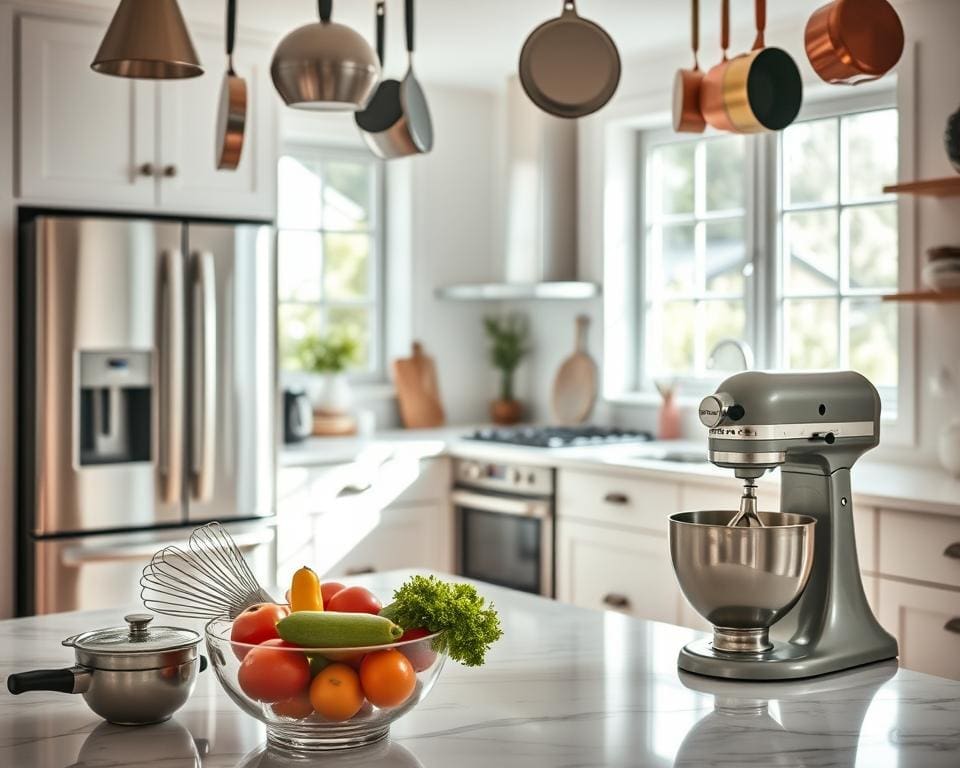
Choosing kitchen appliances is both practical and personal. For many UK homeowners and renters, the right appliances improve daily routines, reflect lifestyle and add long‑term value to the home.
This short kitchen appliance buying guide explains what to expect from the rest of the article. You will learn how to assess cooking needs, balance upfront cost with running costs, and evaluate energy and sustainability credentials.
Practical UK details matter: consider typical kitchen sizes in British homes, compatibility with 230V 50Hz supplies, and compliance with British Standards and current EU/UK energy labelling. Major retailers and brands such as John Lewis, Currys, AO, Beko, Bosch, Miele, Samsung, Hotpoint and Siemens shape availability and aftercare across the market.
The following sections cover four core areas. First, identify cooking habits and match appliance capacity to your household. Next, weigh energy efficiency, sustainability and smart features. Then, research brands, warranties and aftercare. Finally, use showroom and online testing to make a confident choice.
Use these appliance selection tips as an opportunity to design a kitchen that supports wellbeing, creativity and sustainability. Whether you hunt for the best kitchen appliances UK or simply need advice on choosing kitchen appliances, this guide aims to make the process calm and rewarding.
How do you select the best kitchen appliances?
Choosing appliances begins with a clear view of how you cook and who uses the kitchen. Good kitchen appliances selection flows from patterns of daily meals, weekend baking or frequent entertaining. A focused start makes the rest of the process easier and more confident.
Identify your cooking habits and culinary priorities
List the meals you prepare most often. If you bake every weekend, prioritise an oven with reliable temperature control and even heat. If you make quick lunches and frozen meals, a compact microwave and streamlined hob may be enough.
Think about safety and simplicity when cooking for children or older adults. Choose models with user-friendly controls, safety locks and easy-clean surfaces. For homes where several people cook, consider features like dual ovens or warming drawers to reduce time spent waiting for the oven.
Match appliance choices so they work together. An induction hob pairs well with a powerful extractor and magnetic cookware. Picking complementary items avoids costly retrofits later.
Set a realistic budget and consider total cost of ownership
Start by setting an appliance budget UK that reflects must-haves and nice-to-haves. Use three tiers: essential, desirable and optional. This keeps decisions practical and prevents overspending on marginal features.
Look beyond the sticker price. Estimate running costs with energy labels and kWh usage, especially for fridge-freezers, dishwashers and washing appliances. Compare likely repair costs and warranty length to understand the total cost of ownership appliances over the device’s life.
Consider refurbished or outlet models for savings, but factor in shorter warranties. Watch retailer finance deals such as 0% offers and extended warranties, without letting promotions push you beyond your budget.
Match appliance size and capacity to your household
Measure your kitchen, including apertures and clearance for doors. Know standard UK under-counter sizes and whether you need an integrated unit or a freestanding model. Always allow space for ventilation and future servicing access.
Choose capacity to suit people and habits. A couple might need around 120–150L fridge space plus 80–100L freezer. Larger households need proportionally more. Pick dishwasher place settings to match daily use so you avoid running half-empty cycles.
Decide between built-in and freestanding items. Built-in appliances create a clean look but can be more expensive to replace. Check door swing, plumbing and ventilation needs before you buy.
Energy efficiency, sustainability and smart technology for modern kitchens
Choosing appliances now shapes household bills and environmental impact for years. Read labels, weigh repair options and decide which smart features truly help your daily routine. Small choices in purchase and use cut running costs appliances and reduce waste.
Understanding energy ratings and running costs
The UK and European energy label returned to an A–G scale in 2021 to simplify comparisons. Look for kWh/100 cycles or annual kWh figures on the label rather than relying on the letter alone. Compare models of similar capacity so a larger A-rated fridge-freezer does not mislead you when a smaller B-rated unit uses less energy overall.
Fridge-freezers and washing machines are high-consumption items because they run frequently or continuously. A more efficient fridge can save dozens of kilowatt-hours each year, adding up to substantial savings over a decade. Check standby power draw and labelled modes; some smart kitchen appliances keep radios or sensors active and add hidden energy use.
To reduce running costs appliances, use eco-wash cycles, run full loads, set fridges and freezers to recommended temperatures and clean condenser coils regularly. These steps keep consumption low and prolong appliance life.
Sustainable materials and repairability
Choose durable builds and robust finishes like stainless steel and replaceable door seals. Modular components let you swap parts without replacing the whole unit. Appliance repairability matters as much as initial efficiency when aiming for sustainable appliances UK buyers can maintain for years.
Check repairability scores where available and the availability of spare parts. Brands such as Miele and Bosch are known for strong aftercare and parts supply. Hotpoint has varied reputations depending on model and era, so read independent tests from Which? and comparable bodies before you buy.
Avoid sealed, non-serviceable designs if longevity is a priority. Under WEEE regulations, retailers and councils must provide recycling routes for old appliances, so plan disposal responsibly at end of life.
Smart appliances: convenience versus privacy
Smart kitchen appliances offer remote control, energy-optimised cycles, firmware updates and diagnostic alerts. App-controlled washing machines, connected fridges and smart ovens can save time and help reduce energy use when features are used sensibly.
Balance convenience against possible downsides. Subscription services, faster obsolescence from software changes and privacy risks are real. Check data policies and whether a device can function offline before committing to features you may not need.
Adopt a pragmatic approach: pick smart kitchen appliances that deliver clear daily value, such as remote start, fault alerts and energy reports. Confirm compatibility with home networks and voice assistants if these functions matter to you.
Choosing trusted brands, warranties and aftercare
Picking the right brand and aftercare plan gives confidence that your new appliance will serve you well. Mix expert tests from Which? and the Good Housekeeping Institute with verified user reviews on retailer sites such as John Lewis, Currys and AO to build a clear picture of brand reputation appliances and real-world reliability.
Look for names with a track record in the UK. Miele and Bosch are noted for durability and engineering. Samsung and LG lead on smart features and sleek design. Beko and Hotpoint offer strong value for money. Read detailed comments, not just star ratings, to spot recurring faults and ease of repair.
Check consumer bodies and recall databases for safety notices and past problem models. This step sharpens your judgement when comparing the best appliance brands UK and helps avoid models with persistent issues.
Warranty coverage and customer support
Most appliances come with a standard 1–2 year manufacturer warranty. Extended plans up to five or ten years are often available from makers or retailers. Typical cover includes parts and labour. Exclusions commonly include wear-and-tear items and accidental damage.
Understand the claims process before you buy. Ask about authorised repair networks, expected response times and whether the supplier offers on-site or depot repairs. Register appliances with the manufacturer and keep receipts and installer certificates, especially for gas appliances fitted by Gas Safe-registered engineers.
Consider independent local engineers for competitive repair quotes. Confirm that using an independent service will not void appliance warranties UK terms. Knowing repair options makes aftercare simpler when problems arise.
Where to buy: high street, specialist retailers or online
Choose the sales channel that matches your needs. High-street stores like John Lewis offer face-to-face advice and strong guarantees. Specialist showrooms provide demonstrations and tailored guidance. Online retailers such as AO, Currys and Amazon give wide choice and competitive pricing.
Compare delivery and installation packages, disposal of old appliances and any extra fitting fees. For gas cookers and hobs, ensure installers are Gas Safe-registered. Confirm return and cancellation policies for online buys, since distance selling rules can vary once an appliance is installed.
Buy from authorised dealers to protect warranty rights and secure genuine spare parts. Planning where to buy appliances UK and arranging clear appliance aftercare at purchase gives peace of mind and a better long-term ownership experience.
Practical selection tips and showroom testing
Before you visit a retailer, prepare an appliance buying checklist that covers aperture measurements, power and plumbing points, ventilation needs and a clear budget range. Shortlist three or four models per appliance and print comparison sheets or save screenshots so you can compare specs on the shop floor. Pack a tape measure, a list of focused questions about energy consumption and noise, and a smartphone for live price checks and to record kitchen appliance demonstration details.
During showroom testing appliances, engage with controls and watch build quality closely: open and close doors, try handles and note control ergonomics and display legibility. Request hands-on test kitchen appliances where staff will run a short cycle for dishwashers or a kitchen appliance demonstration for ovens and hobs. Listen for noise on refrigerators and extractor hoods, ask about preheat times and temperature accuracy on ovens, and test induction responsiveness where cookware is available.
Ask practical questions about installation, delivery timing and whether teams will commission appliances on site. Check spare parts availability and typical service turnaround times in your region. Use an appliance selection checklist to record answers and to weigh repairability and warranty terms alongside brand reputation.
On delivery, inspect for transport damage before installation and keep packaging until you are satisfied. Ensure gas or electrical work is commissioned by a qualified engineer and that certificates are issued. Store manuals, warranty papers and receipts together, photograph serial numbers and register the product with the manufacturer. Use a simple decision matrix: match cooking habits and capacity needs, balance purchase price with lifetime energy and repair costs, and choose appliances that feel right in showroom tests while supporting sustainability and long‑term satisfaction.