
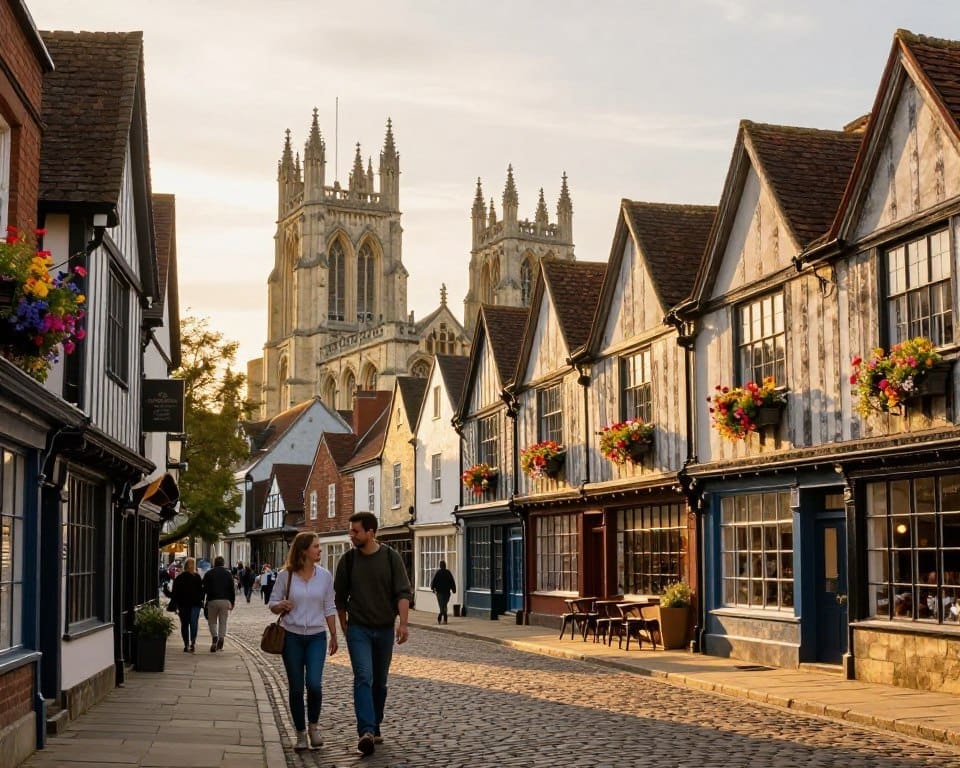
Canterbury’s charm is a layered story of Romans, medieval pilgrims and Georgian town planners. This introduction explains how to explore the historic streets of Canterbury with an eye for detail, atmosphere and respect.
Located in Kent in southeast England, the city grew around Canterbury Cathedral, the seat of the Archbishop of Canterbury. Remnants of a Roman street grid and the West Gate meet narrow medieval lanes, Tudor timber-framed houses and neat Georgian façades. The River Stour threads through the centre, shaping routes and reflections as you wander.
This Canterbury walking guide is for day-trippers, weekend visitors, history enthusiasts, photographers and local explorers. Read with an open pace: linger in alleys, listen for stories cut into stone and balance headline sights with quieter corners to feel the city’s depth.
What follows in this article are four clear sections: an approach to wandering and the best times, top routes and must-see highlights, and practical tips, tours and tools to enhance your visit. Use this as a practical map and an invitation to explore Canterbury history on foot.
How do you explore the historic streets of Canterbury?
Start with a simple plan and room for surprise. Choose a clear anchor point such as Canterbury East or West station, the Bus Station, or the Cathedral Quarter, then let time slow. A balanced Canterbury walking approach pairs mapped highlights with unstructured wandering so you notice carved stonework, timber framing and small plaques that mark past lives.
Set a comfortable pace. Use a paper map or an offline map app to track lanes like Mercery Lane and Butchery Lane. Pause in cafés, churchyards and riverside benches to absorb the Canterbury atmosphere. Small courtyards and side alleys often hold the most memorable details.
Introductory approach to wandering Canterbury
Begin with one or two fixed stops: the cathedral precincts and a market or café. From there, allow at least an hour for free exploration. Keep an eye on building dates and plaques. Let curiosity lead you into courtyards and arcades while a simple map keeps you grounded.
Best times to wander for light and atmosphere
Early morning, from dawn until about 09:30, offers soft light and quiet streets, ideal for photography and calm reflection. Late afternoon into the golden hour brings warm tones to cathedral stone and timbered facades; sunset along the River Stour feels particularly atmospheric.
Season matters. Spring and early autumn give gentler crowds and mild temperatures. Summer offers long daylight but more visitors. Winter supplies crisp light and festive markets in December. Local events such as the Canterbury Festival and heritage open days can change crowd levels and access, so check schedules when planning the best time to visit Canterbury.
Responsible and respectful exploration
Tread lightly in narrow lanes and churchyards. Respect private property and residential courtyards; do not trespass. Observe photography rules inside religious buildings like Canterbury Cathedral and use designated riverside paths to protect bankside vegetation and wildlife.
Support independent cafés, pubs and specialist shops to encourage local livelihoods. Choose public transport, walking or cycling to cut car congestion and practise responsible tourism Canterbury by leaving no trace. Note that many historic lanes are cobbled and uneven; wear sensible shoes and consult accessible routes such as much of the Cathedral Quarter and riverside promenades when needed.
- Keep noise low in narrow lanes and at worship sites.
- Use offline maps and simple walking apps for navigation.
- Carry water, wear suitable footwear and follow local guidance.
Top routes and must-see historic highlights in Canterbury
Begin your route with short, focused walks that let the city’s layers reveal themselves. Follow quiet lanes, pebbled courtyards and riverside paths. Each turn brings a new detail, from carved doorways to timbered façades.
Cathedral Quarter and its surrounding lanes
The Cathedral Quarter sits at the heart of Canterbury, centred on Canterbury Cathedral and the Archbishop’s Palace. Take time to study the West Front, stained glass and medieval sculptures that speak of centuries of worship and conflict.
Walk the cathedral precincts and cloisters, then seek the Norman staircase and the exterior of the chapter house. Pop into the Canterbury Cathedral Visitor Centre for tickets, guided tours and exhibitions that explain Thomas Becket’s martyrdom and the cathedral’s national role.
Venture into nearby Mercery Lane and Sun Street. Small bookshops, galleries and independent shops cluster in the Precincts’ alleys. These lanes reward slow exploration and unexpected finds.
St Peter’s and St Margaret’s – hidden medieval corners
Slip north and west of the cathedral to discover St Peter’s Canterbury and St Margaret’s Street. These areas preserve a quiet medieval grain with timbered houses and churchyards.
Look for jettied upper floors, carved doorways and historic signage that mark old plot patterns. Narrow back alleys reveal how medieval streets were organised around everyday life.
Pause at the Canterbury Roman Museum and interpretation panels in the Buttermarket area to link medieval scenes with the city’s Roman past.
River Stour walk and historic bridges
The River Stour walk works as both a scenic route and a way to read Canterbury’s transport history. Start at Westgate Gardens and follow the riverside south past the cathedral toward Dane John Gardens.
Historic crossings and Canterbury historic bridges frame views of waterfront houses, mill sites and weirs. Consider a guided punt or boat trip to see riverside façades from the water and photograph reflections against willow-lined banks.
Quiet stretches of the Stour bring wildlife and moments of calm amid the city’s bustle.
Markets, guildhalls and civic architecture
Head to the Buttermarket to feel a market tradition that stretches from Roman times through the medieval era to today. Weekly stalls showcase local produce, crafts and independent traders.
Seek out guildhalls Canterbury once used for trade and governance. Their stone and timber forms sit beside 17th–18th-century townhouses and the Greyfriars Chapel remains, each building telling part of the civic story.
Visit the Westgate Towers for a sense of the city’s defensive past. Seasonal markets on cathedral grounds and city squares bring colour and context, revealing social history through goods and handicraft.
Practical tips, tours and tools to enhance your visit
Arriving by train is often the easiest way into Canterbury: high-speed services run to Canterbury West from London St Pancras, while Canterbury East links regional routes. City buses serve the centre and there are park-and-ride sites for drivers, but central parking is limited. Pack comfortable shoes for cobbles and steps, a weatherproof layer and a power bank for phones. For a half-day, aim for the Cathedral, a short riverside stroll and the market; for a full day include a Cathedral tour, the Roman Museum, St Peter’s lanes, a short boat trip and an evening in a historic pub.
Choose from a range of walking tours Canterbury offers, from official guided visits Cathedral Canterbury to specialist Blue Badge-led routes. Canterbury Heritage Tours and cathedral guides run themed walks on Roman history, Chaucer’s pilgrim trails and medieval architecture. There are also evening ghost walks, photographic walking tours and family-friendly treasure hunts. Pre-book cathedral tickets and check start points and durations to avoid disappointment in peak months.
Arm yourself with reliable maps Canterbury options: pick up an Ordnance Survey or a compact city-centre map and download offline areas in Citymapper or Google Maps. Use audio guides at the cathedral and museums, and consult Historic England listings for detailed building notes. A concise guidebook—such as Lonely Planet or a local historic guide—pairs well with Visit Canterbury event listings to spot festivals, markets and temporary exhibitions.
Mind safety and etiquette on narrow lanes and riverbanks: watch your step, supervise children near water and check weather if taking a boat trip. Contact Canterbury Cathedral and museums ahead for accessibility details and any necessary arrangements. Respect places of worship by observing quiet areas, dressing appropriately and following photography rules. Leave no trace: use bins, support conservation through donations or buying locally made souvenirs, and help keep the city’s heritage for future visitors.