Designing a stylish patio area starts with a clear idea of how you want to use the space. Whether your goal is a cosy corner for morning coffee, a dining area for friends, or an all‑weather spot for relaxing, defining purpose is the first step in any patio makeover.
UK gardens come in all sizes, from compact terraces and urban courtyards to larger suburban back gardens. Good patio design ideas adapt to these constraints by creating distinct zones and smooth circulation so that every square metre feels intentional and useful.
Think about materials early. Porcelain paving and FSC‑certified decking offer low maintenance and long life, while native planting and rainwater management support sustainable outdoor living UK. Later sections will expand on durable choices and budget options, from cost‑conscious to premium upgrades.
Practical matters matter: check planning rules for large changes, consider drainage and fall for paving, and seek professional advice for structures or electrics. Simple plans, mood boards and scaled sketches help you visualise a modern patio design before work begins.
This article will walk through garden patio ideas that balance beauty, usability and resilience, with tips on zones, lighting, materials and styling to inspire a practical, stylish patio design for UK climates.
patio design ideas for creating atmosphere and flow
Start by clarifying the patio purpose before choosing materials or layout. A clear brief helps you decide whether the space is an outdoor dining area, a cosy lounge for alfresco living, a barbecue and kitchen zone, a child play corner or a multi‑use spot that changes with the seasons.
Defining your patio’s purpose
Ask simple questions to set priorities: how many people will use the space, what times of day and year matter most, do you need privacy or shade, and are pets or children factors in material choice. Sketch a priority list, measure usable area and draw furniture footprints to check fit.
Typical setups range from a small urban patio with a bistro table for dining to a suburban layout with separate dining and lounging areas, or a larger patio with an integrated kitchen and firepit for patio entertainment ideas.
Establishing zones and circulation
Good patio zoning creates an effortless outdoor flow and clear garden circulation. Divide the area into dining, lounging, cooking and planting sections using changes in surface, levels, pergolas, planters and furniture arrangement.
Keep main routes at least 900–1200mm wide so movement feels free. Ensure access to house doors, gates and utilities stays unobstructed. Use decking for a lounge, paving for a dining section or a low retaining wall to mark transitions.
For example, allow roughly 2.1m × 1.5m for a four‑seater outdoor dining area and leave about 1m of circulation around lounge seating. Size barbecue or outdoor kitchen zones with safe clearances for cooking and service.
Include level thresholds or gentle ramps for wheelchair and pram access and choose slip‑resistant finishes for wet British weather.
Using scale, proportion and focal points
Get garden scale right so the patio feels balanced rather than cramped or sparse. Match furniture and structures to the house and fence proportions. Use odd numbers in planting and vary heights to add interest.
Choose a patio focal point to anchor sightlines from inside the house and seating areas. Focal feature ideas include a sculptural pot, firepit, trimmed tree, water feature or a planted screen that creates a view.
Use pergolas, trellis or tall planters to frame the focal point. Small patios can gain drama from vertical features like climbers or a tall pot. Bigger terraces can support central firepits or dining islands without harming outdoor flow.
Lighting to extend usability
Lighting shapes ambience and safety while it helps to extend patio use into the evening. Combine task lights for cooking and dining with ambient string lights and accent garden lighting to highlight the patio focal point.
Pick warm colour temperatures around 2700–3000K for comfortable alfresco living. Use dimmable circuits or smart lighting to vary scenes and install fittings with suitable IP ratings; IP44 is a sensible minimum for most external lights.
Choose low‑energy LED and solar options for low‑use paths. Add motion sensors for security and timers or apps to control scenes. Hire a qualified electrician for fixed wiring and follow British Standards such as BS 7671 for safety and compliance.
Materials, surfaces and sustainable choices
Choosing the right materials shapes a patio’s look, function and future. Consider paving options and decking materials UK buyers favour when planning patio surfaces that must cope with wet winters and bright summers. Think about long life, ease of care and the environmental cost of each choice.
Choosing paving and decking materials
Natural stone such as granite, sandstone and limestone brings warmth and texture. It is durable and tactile but often needs sealing and professional installation. Porcelain offers a low‑maintenance alternative; porcelain vs natural stone becomes a common choice because porcelain is non‑porous, frost‑resistant and easy to clean.
Concrete and block paving are cost‑effective and versatile for pattern and colour. Expect more frequent cleaning and occasional joint maintenance. For raised areas, timber and composite decking remain popular. Choose pressure‑treated softwood or hardwoods such as Iroko for a natural finish, or select composite decking from trusted brands for lower upkeep. Composite decking resists rot and carries long warranties; aluminium subframes reduce joist corrosion in damp coastal sites.
Soft landscaping and planting schemes
Planting softens hard edges and adds scent, colour and wildlife value. Use patio planting ideas to layer height; climbers, structural shrubs and low maintenance plants keep small spaces lush without constant fuss. For tiny patios, container planting UK options like dwarf olive, bay and ornamental grasses give Mediterranean charm where space is limited.
Pick plants by aspect and soil. Native planting for patios supports insects and birds; include lavender, buddleia and hellebores for pollinators. For screening, choose evergreen photinia or Prunus laurocerasus ‘Rotundifolia’. Use high‑quality compost with good drainage and place pots on pot feet to protect surfaces.
Sustainable and weather‑resistant options
Sustainability matters. Look for FSC or PEFC certified timber and recycled or reclaimed stone. Permeable paving reduces run‑off; resin bound aggregates, gravel setts and porous concrete allow water to soak away. An eco friendly patio pairs permeable surfaces with rain barrels or soakaways to ease pressure on drains.
Durable, weather resistant outdoor choices include high‑grade porcelain and composite decking. These age well and need little intervention. Use stainless steel fixings, galvanised fittings or powder‑coated aluminium for coastal durability. Source materials from UK suppliers such as Marshalls, Wickes or Jewson and request samples to check tone and texture in situ.
- Installation tip: ensure correct fall, typically 1:80 to 1:100, for effective drainage.
- Waterwise idea: link water butts to irrigation or install a rain garden to absorb excess runoff.
- Lifecycle focus: prefer materials with warranties and clear end‑of‑life recycling options.
Furniture, textiles and styling tips to elevate your space
Choose patio furniture ideas that suit the scale and use of each zone. For small patios, pick compact bistro sets; for lounging areas, opt for modular sofas; and for dining, consider extendable tables that adapt to guests. Materials matter: teak or oak and FSC‑certified hardwoods give a classic feel, powder‑coated aluminium keeps maintenance low, and woven synthetic rattan offers warmth with weather resistance.
Invest in outdoor textiles UK that are designed for the elements. Solution‑dyed acrylics such as Sunbrella and ranges from Voyage Maison outdoor collections resist fading and mildew. Combine quick‑dry foam pads and removable covers so cushions dry fast and are easy to wash or store. Add an outdoor‑grade polypropylene rug to define seating and add texture without trapping moisture.
Layer styling with a cohesive palette that complements your brick or render: a neutral base with accent colours drawn from planting or tableware works well. Accessories lift the mood — cantilever parasols for shade, waterproof storage benches for wet cushions, side tables, plant stands and lanterns for evening ambience. For seasonal adaptability, use under‑seat storage, lightweight pieces that can be moved into sunny microclimates and protective covers for winter.
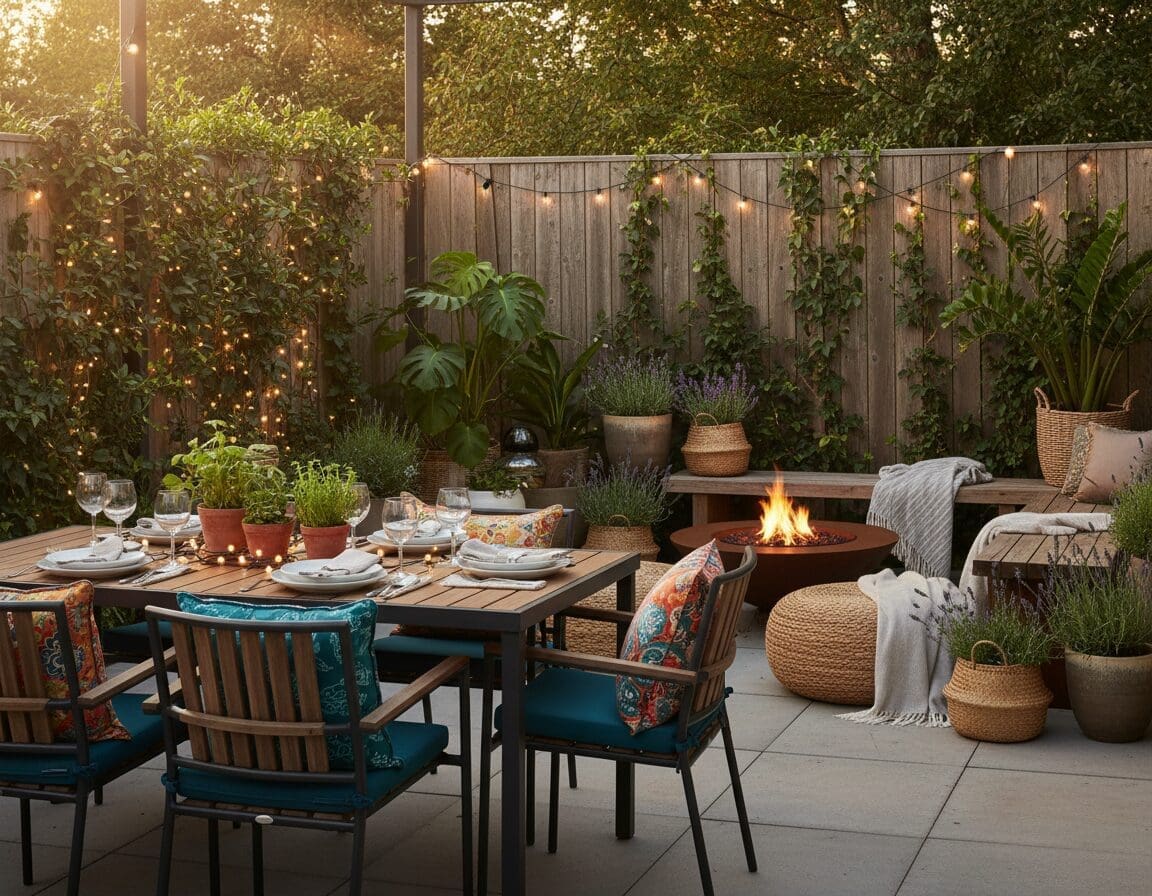
Try three curated looks to inspire garden styling: Modern Minimal with sleek lines, porcelain paving and monochrome textiles; Cottage Chic with natural timber, abundant planting and patterned cushions; and Mediterranean Retreat with terracotta pots, drought‑tolerant planting and warm wood tones. Before you install, run through a checklist: furniture footprint and circulation clearance, weatherproofing and storage plan, lighting and power needs, planting schedule and maintenance time, plus budget allocation across surfacing, planting and furnishings. These alfresco styling tips help you create a durable, attractive patio you’ll enjoy year after year.