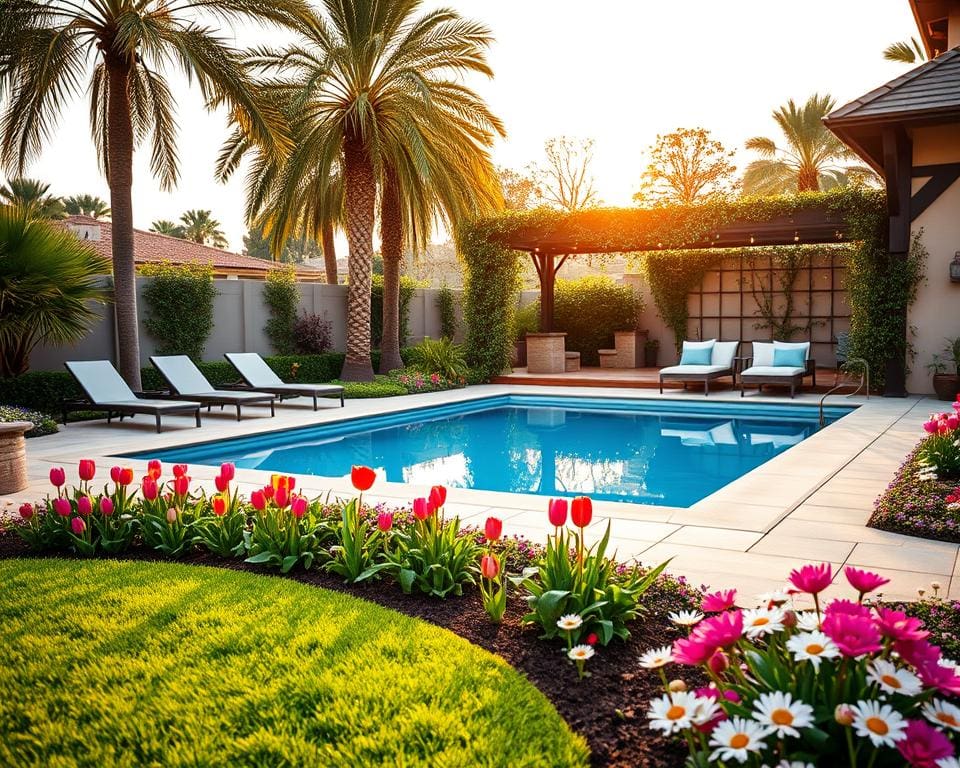

Designing a garden swimming pool takes more than choosing attractive plants. You need to plan the pool’s position, access, drainage, paving, privacy, lighting and seating as one connected space. This helps you create an outdoor swimming pool area that feels safe, useful and welcoming in every season.
Good swimming pool garden design should link the pool with your house, patio, lawn and boundaries. It should not look like an isolated feature. Think about how you will use your UK garden pool, whether for exercise, family fun, entertaining, relaxing or a mix of all four.
British weather also affects your choices. Rain, frost, damp surfaces and shorter winter days can influence paving, planting, furniture, drainage and storage. Early advice from an experienced swimming pool builder can help you avoid poor levels, weak drainage and costly changes.
This guide begins with a safe and practical layout. It then explores pool landscaping ideas, suitable planting, hard landscaping and privacy features. Finally, you will learn how to shape a comfortable poolside garden design for relaxing and spending time outdoors.
Plan a safe and practical garden swimming pool layout
Begin your garden pool planning by studying the whole site. Check the house, garden boundaries, mature trees, neighbouring properties and underground services. Note the direction of sunlight throughout the day, since this will affect water temperature, comfort and planting.
Place the pool where it receives useful sunlight, while allowing for shade from walls, buildings and trees. Avoid positioning it beneath overhanging branches. Falling leaves, sticky sap and spreading roots can increase cleaning work and may affect paving, pipes or drainage.
A clear route should connect the house, changing area, pool, seating and garden entrance. You should not need to cross planted beds or wet grass to reach the water. This simple approach improves pool access and helps the garden feel easy to use.
Leave a generous, unobstructed space around the pool. Your pool designer and installer can set suitable dimensions for the pool type and site. This area should support safe entry, child supervision, loungers, furniture movement and routine cleaning.
Separate wet and dry zones within the pool surround. Paving beside the water should lead smoothly towards seating, storage and changing areas. Avoid narrow bottlenecks and sudden changes between smooth, wet paving and grass.
Plan the ground to carry rainwater and splash water away from the pool and nearby buildings. A gentle fall, drainage channels, permeable paving and suitable surface drains can limit standing water. Good swimming pool drainage reduces frost damage and keeps walking areas safer.
For further guidance on connected routes, review this guide to planning paths and terraces. Use a strong sub-base beneath paving, with a geotextile membrane where ground conditions require it. Seal joints and keep drainage channels clear before autumn.
- Use frost-resistant, slip-resistant finishes near wet areas.
- Provide safe steps with risers of about 15–18 cm and ample tread depth.
- Add handrails where they will help less steady walkers.
- Use level thresholds and gentle ramps where possible.
- Keep paths wide enough for furniture, maintenance and wheelchair movement.
Pool construction may require checks on soil, retaining structures, drainage, electrics and planning rules. Ask your local planning authority, building professionals and qualified pool contractors to confirm the requirements before work starts. This is an important part of responsible outdoor pool design UK projects.
Good pool safety starts with a secure boundary and suitable gates. Use self-closing, self-latching gates where appropriate. Choose safe access steps, a suitable pool cover and clear views from the house. A cover can reduce heat loss, debris and evaporation, but it cannot replace supervision.
Keep pumps, filters, heaters and chemical storage in a secure, ventilated space. Protect the equipment from rain and frost, while leaving enough pool equipment access for inspection and servicing. Plan for future repairs, replacement parts and deliveries, especially if the pool sits behind the house or at the end of a narrow garden.
Use outdoor lighting to guide movement without glare across the water or disturbance to neighbours. Electrical work should be completed by a qualified professional with fittings made for outdoor and wet conditions. Leave room to lift the cover, move furniture, trim plants, clean the pool and reach drainage points without harming paving or borders.
Choose planting, paving and privacy features for your pool area
Your planting, paving and screening should suit the pool, the house and the local climate. Check the soil, drainage, wind exposure and sunlight before choosing materials or plants. A clear plan helps you create a safe, attractive and low-maintenance pool garden.
Select poolside plants that suit the British climate
Choose robust species that tolerate British rain, wind, cool temperatures and seasonal change. Reliable British garden plants include lavender for well-drained soil, hardy geraniums, heucheras, ornamental grasses and ferns for shady areas. Choisya gives evergreen structure, while clipped yew or hornbeam can create a formal backdrop.
Use layers to add depth without blocking views across the water. Combine low ground cover, flowering perennials, grasses, shrubs and carefully placed small trees. Evergreen plants give winter structure, while flowers and grasses bring colour from spring to autumn.
Avoid thorny roses, spiny berberis, sharp leaves and irritant plants beside paths, steps or seating. Select species with gentle foliage and non-invasive roots. Avoid plants that drop many leaves, berries, pollen or sticky sap into the pool. These materials can increase skimming, filtration and cleaning work.
Keep planting away from the pool edge to protect paving and leave room for maintenance. Your pool contractor or landscape designer can advise on suitable distances. Use stable containers where soil is poor or flexible planting is useful. Give each pot drainage and place it where it cannot be knocked into the water.
Use slip-resistant paving and attractive edging
Choose swimming pool paving with a textured surface and good resistance to wet conditions. Slip-resistant paving is vital around steps, ladders and narrow paths. Select a finish that stays comfortable under bare feet and does not create sharp edges.
Set the paving on a stable, well-drained base. A gentle fall should direct water away from the pool and surrounding seating. Keep joints neat and inspect them often for moss, weeds or movement. Avoid loose gravel beside the water, as it can enter the pool or hurt bare feet.
Create privacy with screening, hedging and planting
Good pool privacy ideas should protect your view as well as your privacy. Use layered garden screening instead of one tall, solid barrier. Evergreen shrubs, hornbeam panels and clipped yew can block sightlines without making the space feel enclosed.
Place taller plants along boundaries and lower plants near the pool. This arrangement keeps the water visible and improves air movement. Prune shrubs away from walkways, remove fallen leaves regularly and use mulch with care. Loose mulch should not sit directly beside the pool.
Design comfortable outdoor spaces around your swimming pool
Your pool garden should offer more than a place to swim. Create a poolside seating area where you can dry off, relax and supervise children. Link it to shaded seats, a dining zone and clear paths, so your outdoor entertaining space feels spacious rather than crowded. Keep seating close to attractive views, while preserving a clear sightline to the water.
A well-planned swimming pool patio can support meals, reading and quiet breaks. Choose garden pool furniture that resists moisture, sunlight and changing British weather. Stable aluminium, teak and quality composite materials are practical choices. Add a pergola, retractable awning or parasol for shade, and store cushions in a dry, ventilated place when not in use.
Place a dining table near the house or outdoor kitchen for easy serving. Keep cooking smoke, food waste and busy routes away from the pool. Built-in benches with storage, a shed or a changing area can hold towels, inflatables and cleaning tools. An outdoor shower or foot-rinse point also helps keep grass, soil and sun cream out of the water.
Use layered poolside lighting to guide movement after dark. Low-level path lights, step lights and subtle wall fittings improve safety without glare. Durable paving, evergreen planting and weather protection support an all-season garden design. Balance drainage, maintenance, privacy and comfort so the pool feels connected to your home and the wider landscape.