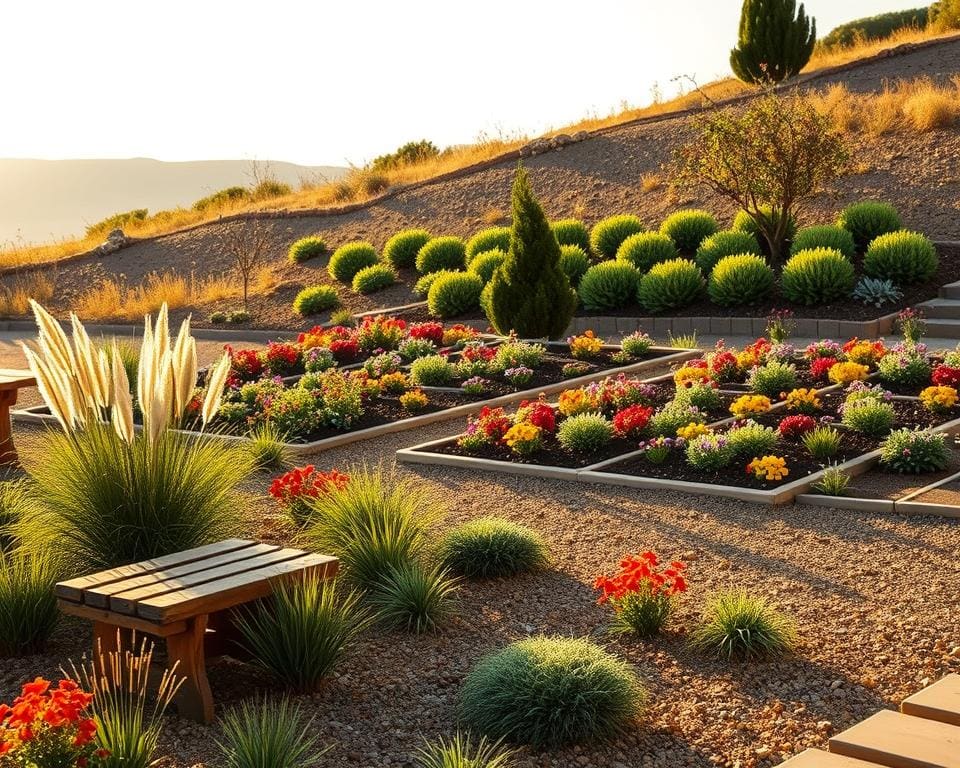

A low maintenance garden is not a space without work. It is a carefully planned outdoor area that reduces repeated jobs such as mowing, watering, weeding, pruning and replacing plants that fail. With the right choices, you can create an easy-care garden that remains attractive in every season.
Begin by assessing your garden. Consider its size, aspect, soil type, drainage and exposure to wind. Note existing trees, water access and the time you can realistically give to upkeep. These details will guide your planting and help you avoid costly mistakes.
Effective low-maintenance gardening combines practical design, healthy soil, suitable plants, mulch and simple seasonal routines. A low-effort garden design may include gravel, paving, clear paths and open planting areas. These features reduce mowing and weeding while making the space easier to use.
For year-round interest, combine evergreen foliage with spring flowers, summer colour, autumn leaves, berries, ornamental grasses, attractive bark and winter stems. Plants suited to UK conditions and your garden’s specific site are more resilient. They often need less watering, feeding, staking and disease control.
Your garden can also support wildlife without becoming difficult to manage. Nectar-rich flowers, seed-bearing plants, berry-producing shrubs, shelter and a shallow water source can provide food and habitat. These choices also suit many sustainable garden plans, from small urban spaces to larger suburban plots.
This guide begins with practical UK garden ideas for simplifying the layout and preparing the ground. It then covers reliable plants before moving on to seasonal routines and features that reduce future work. For further inspiration, explore these low-maintenance garden tips.
How to plan a low maintenance garden for less work
Good low maintenance garden design starts with a plan that is easy to use. A clear layout reduces daily jobs and helps you enjoy the space in every season. This easy garden planning approach keeps each area practical and simple to reach.
Choose a simple garden layout
A simple garden layout is easier to care for than one divided into many small beds. Awkward corners, narrow strips and isolated islands can make pruning, watering and weeding slow. Create clear zones for seating, planting, storage, paths and, where needed, a compact lawn.
Keep planting beds broad and easy to access. Well-planned low-maintenance borders need less edging than scattered beds. Avoid gaps between fences, paving and borders where leaves collect and weeds are hard to reach.
Reduce the lawn if mowing takes up much of your time. Paving, gravel, ground cover, planted borders or a larger terrace can support reduced lawn care. Choose a surface that suits the site, with a firm base and sound installation.
Make garden paths wide enough for comfortable use. Stable, permeable materials give you better access for pruning, watering, harvesting and clearing weeds. Gravel, permeable paving and planted surfaces can limit runoff, yet they still need leaf removal and a suitable base.
Group plants by sunlight and water needs. Place sun-loving, drought-tolerant plants together so you do not overwater one group to support another. Raised beds can improve access and soil drainage, though they may dry out faster and need strong construction.
Plan useful facilities before planting. A water butt, outdoor tap, hose connection and composting area can save time. Discreet tool storage keeps equipment close to the work area. Retain healthy trees, mature shrubs, walls and sound paving when they cause no real problem.
Improve the soil before planting
Good soil preparation gives plants a stronger start. Test the soil to check its pH, texture and nutrient levels. To improve garden soil, work in well-rotted manure or compost for gardens before planting.
Healthy soil holds moisture, drains excess water and supports strong roots. Organic matter improves its structure and aeration. It can reduce the need for frequent fertiliser and help your low-maintenance planting stay healthy.
Choose plants that suit the soil already present. Amending every bed can be costly and labour-intensive. A suitable mix of plants, compost and good drainage creates a more resilient water-saving garden.
Use mulch to suppress weeds
A layer of garden mulch helps retain moisture and provides reliable weed suppression. Apply it to bare soil after planting, keeping it away from stems and tree trunks. Refresh the layer when it becomes thin.
Bark mulch, compost mulch and other forms of organic mulch can improve soil as they break down. Straw and wood chippings suit many borders, while gravel works well around drought-tolerant plants. Select a material that matches the planting style and drainage needs.
Select easy-care plants for year-round garden interest
Plant choice is central to a low-maintenance garden. Choose healthy, resilient plants that suit your soil, light levels, drainage and exposure. A plant in the right position needs less watering, pruning and pest control.
Build your planting scheme around a small group of dependable plants. Evergreen shrubs such as holly, Elaeagnus, Hebe, Pittosporum and Sarcococca keep useful structure through winter. Check each plant’s mature height, spread, hardiness and wind tolerance before you buy.
Extend seasonal colour with plants that suit your conditions. Lavender, hardy geraniums, Nepeta, choisya, Hydrangea paniculata, Viburnum and potentillas can provide reliable interest. You can find practical guidance on plants such as lavender and hydrangea before choosing a position.
Ornamental grasses bring movement, texture and attractive seed heads. Stipa tenuissima, Calamagrostis ‘Karl Foerster’ and Deschampsia cespitosa suit many modern borders. Some need only one cut-back each year, which keeps routine care simple.
- Plant daffodils, crocuses and species tulips for early spring colour.
- Naturalise bulbs in grass or beneath deciduous shrubs to reduce replanting.
- Choose shrubs with flowers, berries, autumn colour or winter stems.
- Repeat a limited palette to simplify watering, pruning and replacement.
Ground-cover plants reduce bare soil and leave fewer spaces for weeds. Geranium macrorrhizum suits many sunny or lightly shaded areas. Pachysandra terminalis prefers shade and moist soil. Match low-growing evergreen plants to the site rather than forcing them into unsuitable ground.
Many drought-tolerant plants need regular water during their first growing seasons. Once established in free-draining soil, lavender, rosemary, thyme, sedum and other Mediterranean-style perennials can need less supplementary water. Mulch the soil and water deeply during prolonged dry spells.
For low-maintenance plants UK gardeners can rely on, look for disease-resistant cultivars. Avoid varieties that need frequent spraying, intricate staking or repeated deadheading. Good spacing improves airflow and reduces competition for water. Crowded plants need more pruning and may suffer from fungal problems.
Wildlife value can guide your choices. Wildlife-friendly plants such as foxgloves, verbena, sedums, thyme, native hawthorn and ivy can provide nectar, berries, seeds or shelter. Check the mature size of each plant, since ivy and hawthorn need enough room to grow safely.
Plan year-round planting around suitable autumn or spring conditions. Water new plants thoroughly and monitor them through their first summer. Protect exposed specimens from strong winds, then allow them time to establish before judging their performance.
A restrained planting plan is easier to manage. Combine evergreen shrubs, hardy perennials, grasses, bulbs and ground cover for balanced interest. This mix supports year-round planting without turning the garden into a list of demanding jobs.
Maintain your garden with seasonal jobs and smart design
Good seasonal garden maintenance relies on regular checks, not constant work. Use a simple garden maintenance checklist to spot weeds, pests, damaged plants and overgrown shrubs early. In spring, remove dead material where needed, check for winter damage, divide crowded perennials and refresh the mulch. This is also a useful time to plant new specimens before hot weather arrives. You can find further month-by-month planting advice to help with suitable choices.
During summer, water new trees, shrubs and perennials well, especially in dry spells. Apply water at the base, early or late in the day, so it reaches the root zone. Established drought-tolerant plants usually need less water than new plants. Use rainwater where suitable, and consider a drip system or porous hose for beds and containers. Adjust automated systems after rainfall. This water-saving garden design avoids wetting paths and bare soil, while grouped containers and larger pots dry out more slowly.
In autumn, clear leaves from paths, lawns and gutters, but leave some in quiet areas for wildlife. Shredded leaves can go into compost or be used to make leaf mould. Plant trees, shrubs and hardy perennials while the soil is workable, and remove diseased material safely. Winter is a good time to inspect trees, fences, paths, containers and drainage. Prune only when health, safety, shape or space require it. Many grasses and shrubs offer shelter and winter interest when left until late winter or spring.
Practical low-maintenance landscaping can reduce work over many years. Use edging to limit grass in borders, durable surfaces and furnishings, and permeable paving where suitable. Choose containers with drainage, and use self-watering types in exposed spots. Compost suitable waste, but exclude invasive weeds and diseased material unless your system reaches the right heat. Keep secateurs, shears, spades and hoes clean, sharp and secure. Plan your garden around your available time, local conditions and natural plant size. With sound soil, mulch and useful infrastructure, easy garden care can support attractive year-round garden care while reducing labour, water use and replacement costs.