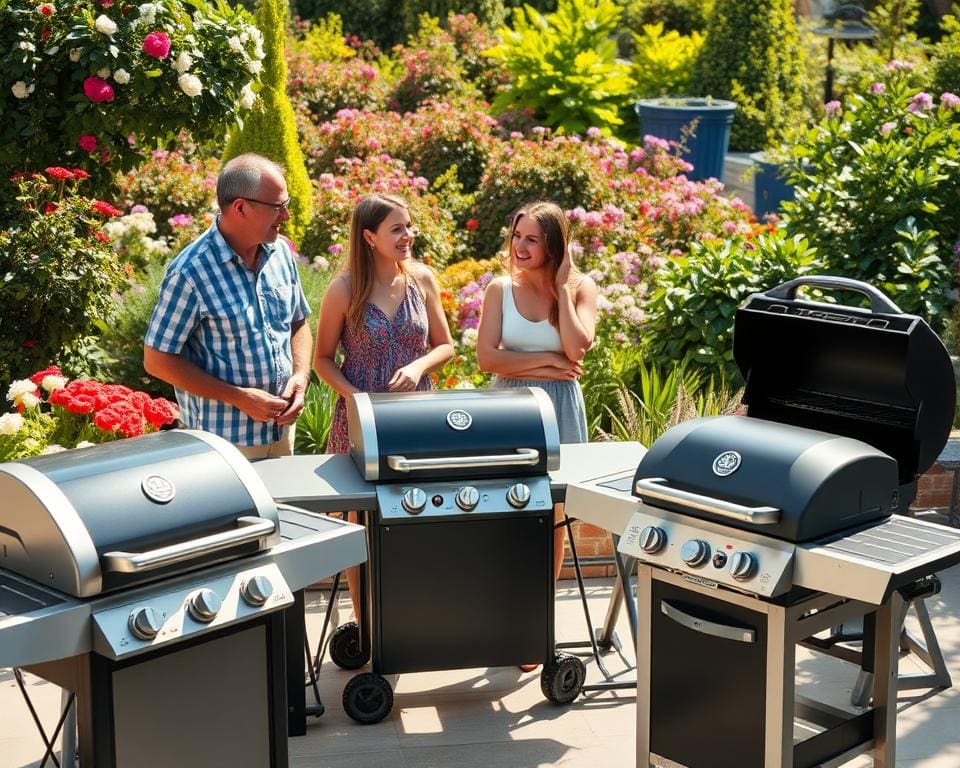

Choosing a BBQ starts with how you cook, not with the biggest grill or the highest price. Consider your preferred fuel, cooking style, budget and the number of people you usually serve. You should also assess your outdoor space, storage needs and how much cleaning you are prepared to do.
Charcoal BBQs provide a rich, smoky flavour but need more time and care. Gas models ignite quickly and offer simple temperature control. Electric BBQs suit balconies and compact patios, while hybrid and wood-pellet models give you more cooking flexibility. Each option creates a different experience and has its own maintenance needs.
Measure the area where you plan to use the BBQ. A large freestanding model may work well in a spacious garden, but a compact grill could be safer on a terrace or balcony. Check property rules, tenancy restrictions and local fire-safety guidance before you buy. This BBQ buying guide can help you compare the main options.
Next, match the cooking area and materials to your needs. Then compare useful features, such as temperature controls, warming racks, storage shelves, side burners, wheels and easy-clean systems. Stainless steel is simple to maintain, while cast iron holds heat well but needs regular oiling.
Safety is essential from the start. Place your BBQ outdoors on a stable, level and heat-resistant surface. Keep it away from buildings, fences, overhanging branches and other flammable materials. Follow the manufacturer’s instructions when storing and connecting gas cylinders.
Choosing the right BBQ fuel type for outdoor cooking
Your choice of fuel affects heat, cooking time, flavour and clean-up. Think about the food you enjoy, the space you have and how much preparation you want before the meal. Your local rules may limit charcoal or gas use, especially on balconies and in shared gardens.
Charcoal BBQs for authentic flavour
Choose a charcoal BBQ if you enjoy traditional outdoor cooking and a rich, smoky flavour. Lumpwood charcoal comes from real wood, lights quickly and can reach high temperatures for searing. It can create hot embers for slower cooking, too.
Charcoal briquettes contain compressed sawdust and binders. They burn for longer and give a more even heat, which can help during extended cooking sessions. Some briquettes contain additives that may affect the flavour, so check the packaging before buying. You can compare charcoal choices for your BBQ before making a decision.
Premium options such as Japanese Binchotan burn cleanly and hold heat well. Kamado Joe Big Block XL Lump Charcoal can last for up to 18 hours and may be reused three times when handled safely. Premium charcoal costs more, with products ranging from about £5.99 to £57.00.
Charcoal needs more preparation than gas or electric cooking. Use a chimney starter and natural firelighters to light the coals evenly. Wait until the charcoal has a grey coating before cooking. Filling about two-thirds of the grill can provide a useful cooking area. A guide of 1 kg of charcoal for 1 kg of meat can help with larger meals.
Control the heat through the vents. Open vents allow more oxygen to reach the coals, raising the temperature. The depth and layout of the charcoal create hotter and cooler zones. A grill with direct and indirect areas gives you more control over searing, roasting and slower cooking.
The smoke level depends on the charcoal, food, cooking method and any wood chips you add. Apple wood gives pork and poultry a gentle sweetness. Hickory creates a deeper smoke, while mesquite suits red meat when used with care. Alder works well with seafood and vegetables, and pecan gives poultry a mild, nutty note. Use wood chips only as directed by the BBQ manufacturer.
Wind and rain can make charcoal harder to light and manage. You need to watch the temperature more closely, and ash must be removed only after the BBQ has cooled fully. Never use a charcoal BBQ indoors, inside a tent or in an enclosed space. Burning charcoal produces carbon monoxide.
Gas BBQs for convenient garden cooking
A gas BBQ suits you when you want fast ignition and simple temperature control. Most garden models use propane or butane cylinders. The correct fuel depends on the BBQ, regulator and manufacturer’s instructions.
Multiple burners let you create separate heat zones. You can sear food over a hot burner and cook delicate items over a cooler area. Turning off one burner can create indirect heat for a whole chicken or a larger joint.
Check the burner output, layout and ignition system before buying. Several independently controlled burners usually give more precise control than one burner. Gas BBQs heat quickly, restart easily between batches and work well for regular family meals.
Gas cooking can give you less smoky flavour than charcoal. A smoker box or approved wood chips may add extra aroma, but only use accessories that suit the appliance. Gas models can be larger and more expensive than basic charcoal BBQs.
Inspect the hose, regulator and connections for damage. Test for leaks using the method recommended by the manufacturer. Keep the cylinder upright in a well-ventilated place away from ignition sources. Never use a gas BBQ indoors or in an enclosed area.
Cylinder size, connector type and regulator design vary between models. Confirm compatibility before you buy or exchange a cylinder. This check helps prevent fitting problems and supports safer cooking.
Electric BBQs for balconies and compact spaces
An electric BBQ can suit a small garden, balcony or compact patio. It may be useful where charcoal and gas models are restricted. Electric cooking needs no charcoal or cylinder, and many models start with a simple switch.
Check your building, landlord, leasehold or balcony rules before use. Electric BBQs still need good ventilation and should be used outdoors unless the manufacturer states that indoor use is safe.
Review the power rating, cable length and socket type. Use a suitable outdoor-rated socket and keep cables away from water, hot surfaces and walking routes. Do not use extension leads or electrical parts against the manufacturer’s instructions.
A thermostat can keep the heat steady, which helps with smaller meals. Some electric BBQs may not reach the same searing temperature as charcoal or gas. Cold and windy weather can reduce performance.
Electric models often suit smaller households because they store easily and set up quickly. A removable drip tray and dishwasher-safe parts can make cleaning simpler. Cooking areas are often smaller, and you may not get the open-flame or smoke-cooking experience of other fuels.
Keep an electric BBQ attended while it is switched on. Make sure the power supply is safe before each use, and protect the appliance from rain as directed by the manufacturer.
Hybrid and wood-pellet BBQ options
Hybrid BBQs combine two cooking methods, most often gas and charcoal. They can suit you if you want gas for speed and charcoal for deeper flavour. Designs vary. Some have separate gas and charcoal areas, while others use one chamber with different fuel arrangements.
Check how easily you can switch between fuels and whether both systems can operate safely. Hybrid models may cost more, weigh more and need extra maintenance. Their larger footprint may not suit a small patio.
Wood-pellet BBQs burn compressed wood pellets in an electronically controlled system. An auger feeds the pellets into the fire, helping maintain a steady temperature. These cookers are popular for smoking, roasting and slow cooking.
Pellet flavour depends on the wood. Oak gives a balanced profile, apple adds a gentle sweetness and hickory brings a stronger smoky note. Use food-grade cooking pellets, not pellets made for heating.
Pellet BBQs need electricity for the controls and auger. Check that you have a safe outdoor power supply. Some models take longer to reach high searing temperatures than dedicated gas or charcoal BBQs.
Keep pellets dry and empty the ash as instructed. Clean grease from the cooking chamber, and inspect the hopper and auger during routine maintenance. Follow the manufacturer’s fuel and safety guidance for every hybrid or pellet model.
Finding the right BBQ size, materials and cooking capacity
Choose the cooking area for the number of people you usually serve. A compact BBQ can work well for one or two people. A larger model suits family meals and regular entertaining. Do not buy the biggest grill only for one or two gatherings each year.
Check the primary cooking area, not just the total figure in the product details. A warming rack, side shelf or upper level can raise the advertised size. These spaces may not offer the same heat or room as the main grate.
Think about the food you cook. Burgers and sausages need less room than a whole chicken or a large joint. Vegetables, skewers and delicate foods need space too. A broad grate gives you more choice when preparing several dishes.
A two-zone layout can be more useful than the largest possible grate. You can sear food over direct heat, move it to a cooler area and let it finish cooking. This method works well for thick steaks, chicken and larger cuts.
Portability matters if you need to move the BBQ after each use. Look for sturdy wheels, lockable castors, practical handles and a manageable weight. For a small patio or balcony, measure the assembled width, lid clearance and storage footprint before buying. The Cadac Safari Chef 30 is suited to compact outdoor cooking, while the Cadac Citi Chef 50 offers more room for garden meals.
Material choice affects care, heat control and service life. Stainless steel resists corrosion and is easy to clean, though its quality varies by grade and thickness. Powder-coated steel has a hard finish, but exposed areas can rust if the coating is damaged. Cast iron holds heat well and gives strong searing performance. It is heavy and needs seasoning or protection from moisture.
Porcelain-enamelled grates and fireboxes can resist corrosion and make cleaning easier. Chipped enamel may expose the metal below. Inspect the hinges, handles, shelves, fasteners and frame joints before purchase. These details can reveal whether the BBQ is built for regular use.
A well-fitting lid helps retain heat and supports indirect cooking. It protects the interior between uses too. A built-in thermometer gives useful guidance, though its reading may differ from the temperature at grate level. A digital probe can provide a closer check when precise cooking matters.
- Check the manufacturer’s warranty and its length.
- Confirm that replacement grates, burners and other spare parts are available.
- Look for clear care instructions and easy access to service parts.
A repairable BBQ may offer better long-term value than a cheaper model that is hard to maintain. Side shelves, a stable trolley and storage cupboards give you space for preparation and serving. They increase the total footprint, so keep walkways clear and place the BBQ away from walls and combustible materials. For ideas on useful barbecue equipment, consider which accessories will support your usual cooking style.
BBQ features to consider before you buy
Start with temperature control. Gas burners should adjust smoothly, while charcoal models need dependable vents for steady heat. An electric BBQ should have a precise thermostat. Good control helps you sear, roast, smoke and cook delicate food with less guesswork. Look for direct and indirect cooking options, such as divided charcoal baskets, separate burners, heat deflectors or adjustable vents. A lid thermometer is useful, but a digital probe often gives a more accurate reading of the cooking chamber or food.
Check the cooking surface and included accessories. Removable grates, warming racks, griddle plates, planchas and pizza stones can widen your menu. Make sure accessories fit securely, and check whether they are included or sold separately. A gas side burner is useful for sauces, boiling water or side dishes, but it adds cost and takes up space. If you mainly cook simple meals, you may not need one. For compact spaces, electric grills for indoor and outdoor offer convenient, lower-smoke cooking.
Easy cleaning can save time after every meal. Choose a removable drip tray, grease cup and accessible firebox. Dishwasher-safe parts and non-stick surfaces are helpful, but you should still follow the care instructions and remove grease often to reduce flare-ups. Also inspect the ignition system. Push-button and electronic ignition are convenient, yet you should check battery access and whether manual lighting is possible. Lockable wheels, foldable shelves, utensil hooks, cabinet storage and a weather-resistant cover make storage and movement easier.
Safety should guide your final choice. Stable legs, heat-resistant handles, secure lids, protected controls and clear space around the BBQ all matter. Gas models need safe hose routing and suitable cylinder storage. Electric models require tidy cables and outdoor-rated connections. Smart controls and app monitoring can help during long cooks, but they never replace supervision. Before buying, measure your space, compare fuel costs and cooking capacity, inspect the build, check warranty and spare-part support, and price covers and accessories.