
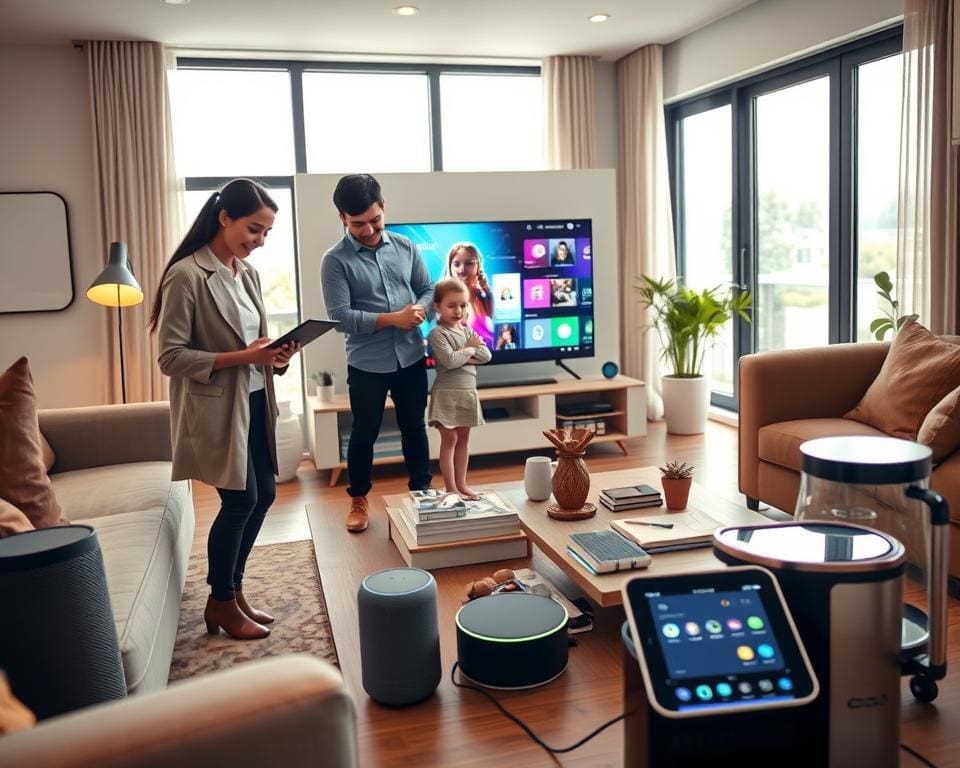
Smart devices are quietly reshaping routines across British homes, transport and workplaces. Connected appliances, wearables, sensors and voice assistants such as Amazon Alexa, Google Assistant and Apple Watch now help people make faster decisions, automate chores and stay better informed. This piece explores the smart devices impact on daily life with an inspirational tone and practical examples.
We will define the technology that powers these changes, from the Internet of Things UK developments to the platforms that bring devices together. Expect clear scenarios showing IoT everyday life in action — from Nest and Hive thermostats managing heating to Philips Hue lighting setting mood and Ring cameras improving security.
Context matters: rising broadband and 5G coverage in the UK, lower sensor costs and stronger consumer demand for convenience and energy efficiency have accelerated adoption. The article will quantify smart home benefits and measurable gains such as time saved, energy efficiency and cost reductions, while also examining trade-offs around privacy and security.
By the end, readers will understand how smart devices change everyday life, see real-world examples and grasp the balance between convenience and risk. The aim is to leave you inspired and informed about the practical choices available today.
How do smart devices change everyday life?
The rise of connected gadgets is reshaping routines in British homes, on the move and at work. This section defines core concepts, outlines typical smart device scenarios and highlights measurable gains such as time saved and energy efficiency.
Defining smart devices and the Internet of Things (IoT)
Smart devices are networked products that sense their environment, process data and communicate with other devices or the cloud. They range from thermostats to wearables like Fitbit and Apple Watch. The Internet of Things definition describes the ecosystem that links these devices, platforms and services so they can act together.
Technical enablers include sensors, microcontrollers, Wi‑Fi, Bluetooth, Zigbee and Z‑Wave, plus cloud platforms and machine learning that deliver automation and predictive features. Brands such as Amazon Echo (Alexa), Google Nest and Philips Hue illustrate how ecosystems evolve. British Gas Hive and smart meters from UK energy suppliers show local adoption. Interoperability remains a challenge between Alexa, Google and Apple HomeKit, with Matter aiming to unify standards.
Everyday scenarios: homes, transport and workplaces
Homes use smart thermostats to schedule heating and smart plugs to control appliances. Voice assistants speed simple chores. Cameras and door sensors add security and peace of mind.
Transport benefits from connected cars that share diagnostics and apps that offer real‑time route optimisation. E‑bikes and e‑scooters feed usage data to improve journeys. Public transport integration supports multimodal travel across cities.
Workplaces use occupancy sensors to manage meeting rooms and building management systems to cut waste. Asset tracking and productivity analytics reduce delays and keep teams focused. Urban pilots for smart street lighting and smarter waste collection show how cities adapt at scale.
Measurable benefits: time saved, energy efficiency and cost reductions
- Time saved: Automation trims routine tasks. Voice commands, pre‑heated ovens and robot vacuums free hands and minutes.
- Energy efficiency: Smart thermostats and smart meters enable behaviour changes and load shifting. Case studies suggest real reductions in gas and electricity use, driving energy savings smart tech delivers.
- Cost reductions: Early alerts from connected boilers cut repair bills. Verified smart security systems can lower insurance costs. Dynamic tariffs and better monitoring support long‑term savings.
Beyond direct savings, the benefits of smart devices include improved sleep, fewer interruptions and personalised nudges that support healthier habits. IoT examples UK show tangible impact across daily life, proving that small changes add up to meaningful gains.
Transforming the modern UK home: convenience, comfort and control
Smart technology is reshaping British homes. Devices that learn routines, manage energy and secure property create daily convenience and measurable savings. This brief guide looks at heating, voice control in living spaces and security that links neighbours and devices.
Smart heating and energy management for British households
Heating accounts for a large slice of UK household bills. Most homes use central heating and gas boilers, so reducing waste makes a big difference. Smart heating UK systems such as the Hive thermostat and Nest thermostat UK learn schedules and respond to occupancy sensors and geofencing to stop heating empty rooms.
Energy savings of 10–20% are often cited by manufacturers and independent studies, depending on behaviour and insulation. Integration with smart meters and time-of-use tariffs allows homeowners to shift load to cheaper periods. That capability supports demand-side response programmes and can work with installers like British Gas.
Grants and energy-efficiency incentives sometimes apply for upgrades, making smart heating an accessible option for more households.
Voice assistants and hands-free living: kitchen, entertainment and accessibility
Voice control has moved beyond novelty into everyday use. In the voice assistants kitchen, Amazon Echo and Google Nest devices run timers, read recipes and add items to shopping lists without touching screens. Households stream music on Spotify or BBC iPlayer using simple commands.
Accessibility gains are clear. Voice commands help older people and those with limited mobility by placing calls, setting medication reminders and controlling lights and heating. Advances in on‑device processing and privacy features from Apple and Google mean more speech data stays local to the device.
Smart setups can automate morning routines, sync calendars and suggest meal ideas using connected appliances and speakers.
Smart security and peace of mind: cameras, locks and neighbourhood integration
Smart security UK spans cameras from Arlo and Ring to doorbells such as Google Nest Doorbell and encrypted alarm systems. These devices offer live feeds, two-way audio and instant alerts to a homeowner’s phone.
Smart locks from Yale and August allow remote locking, keyless entry and temporary access codes for tradespeople. Automated lighting and verified alerts deter intruders and assist insurance verification, sometimes lowering premiums.
Integration with neighbourhood watch tech and community apps strengthens local safety. Users must consider weatherproofing, reliable broadband for CCTV streaming and UK data protection rules when choosing systems.
For an overview of everyday benefits and practical tips, consult this short guide on how connected devices improve daily living: smart home improvements.
Health, wellbeing and lifestyle: personalised care and smarter routines
Smart devices are reshaping how people in the UK manage daily health and long‑term care. Wearables, connected home tech and telehealth combine to deliver personalised feedback, gentle nudges and easier access to clinicians. These tools support healthier routines while fitting into busy lives.
Wearables and health tracking
Popular trackers such as Apple Watch health models, Fitbit and Garmin log steps, heart rate, ECG strips, SpO2 and sleep stages. Continuous monitoring reveals trends over weeks and months, which can flag early warning signs for users and clinicians.
For people with chronic conditions, remote data from connected glucose monitors and cardiac rhythm reports helps GPs and specialists spot changes faster. The NHS has run pilot programmes that link patient devices with clinic systems, improving follow up and reducing avoidable appointments.
Behaviour change features in apps use goal‑setting, social challenges and timely nudges to boost activity and build healthier habits. Users report better consistency when trackers give clear targets and simple rewards.
Remote care and telemedicine
Video consultations, messaging platforms and remote care devices form the backbone of telemedicine UK services. These tools cut travel and waiting times while giving clinicians access to patient‑generated data for high‑risk monitoring.
Private providers and NHS services are expanding digital consultations and remote monitoring kits. This helps manage long‑term conditions, enables early interventions and keeps pressure off hospitals during peaks in demand.
Interoperability remains a challenge. Integrating wearable and home data into NHS records requires standards, clear workflows and regulatory oversight for medical devices in the UK.
Smart home features that support mental wellbeing and daily routines
Smart lighting systems such as Philips Hue mimic natural light cycles to aid sleep onset and wakefulness. Smart thermostats and noise‑masking speakers create calm spaces that support better sleep tracking and rest.
Automation can simplify mornings: blinds open, kettles start and favourite music plays, cutting friction from daily routines. Reminders for hydration, stretch breaks and medication help reduce sedentary habits for those working from home.
Devices that make video calls easier, offer automated check‑ins and manage medication schedules boost social contact for older adults. These features strengthen support networks and help reduce isolation.
Research links steady routines and good sleep with improved mood and resilience. Smart home wellbeing tools can reinforce positive patterns while users balance screen time and use digital wellbeing settings to avoid overload.
Privacy, security and societal implications of smart device adoption
Smart device privacy sits at the heart of modern home tech. Devices gather audio, video, biometrics, location and behavioural patterns that help with convenience but raise questions about who owns and controls that data. UK law, via the Data Protection Act 2018 and UK GDPR, requires clear consent, data minimisation and secure processing by data controllers and processors.
IoT security flaws are often simple to fix yet commonly overlooked: default passwords, unpatched firmware and exposed cloud APIs leave cameras and microphones vulnerable. Practical steps—regular firmware updates, strong unique passwords, two‑factor authentication and segregating IoT devices on a guest network—reduce risk. Choose vendors with documented security practices and update cadences to strengthen everyday defences.
Public policy and standards are catching up. Guidance from the Department for Digital, Culture, Media & Sport, ETSI standards and the Product Security and Telecommunications Infrastructure Act will shape device guarantees and consumer protections. Matter interoperability promises easier, more secure device cooperation, while more on‑device processing can limit continuous cloud uploads and improve privacy outcomes.
The wider societal picture matters as much as technical fixes. Smart home surveillance and always‑listening assistants influence how neighbours, renters and families interact, and the benefits often flow to those with better broadband and higher incomes. To make smart living fairer, support for community access, repairable devices and manufacturer take‑back schemes will be crucial. With ethical IoT principles, informed users and robust safeguards, smart technology can enhance wellbeing and efficiency across the UK. Read more on practical smart device choices in this guide.