
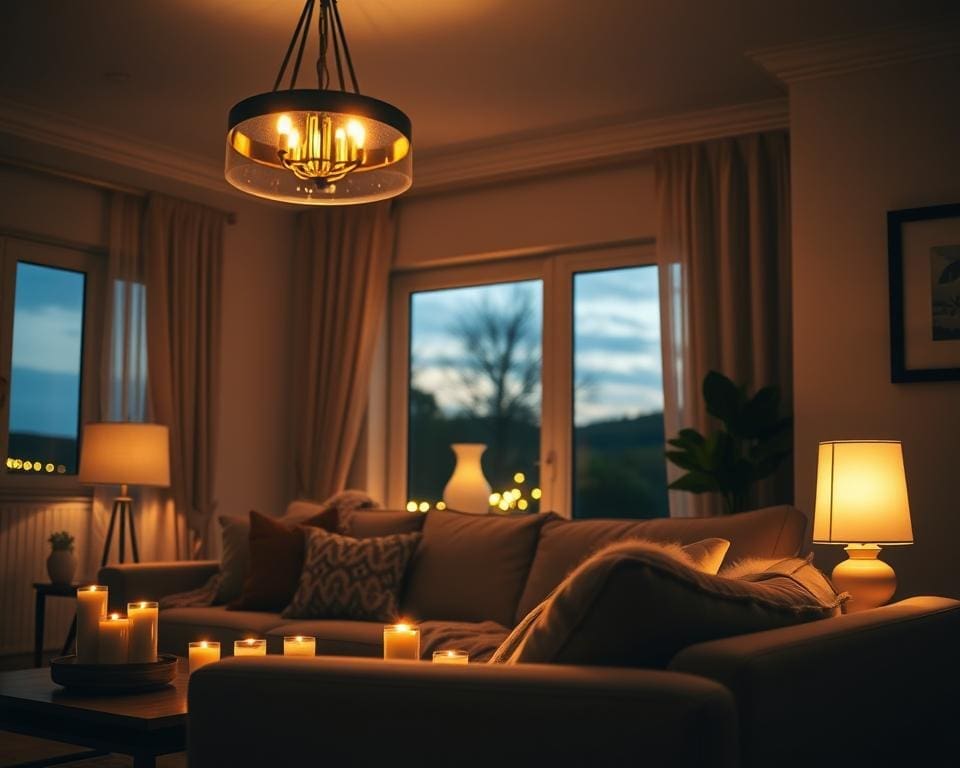
Lighting shapes how we feel at home. Scientific studies link light to circadian rhythms, mood and spatial perception. Colour temperature, brightness and direction can make a small room feel roomy or a large space feel cosy, so understanding lighting and mood is practical as well as aesthetic.
Interior designers use layered lighting — ambient, task and accent — to switch a living room from energetic to relaxing. This approach shows why lighting choices UK homeowners make matter for wellbeing, productivity and energy bills.
Market trends show rapid adoption of LED and smart systems such as Philips Hue, IKEA TRÅDFRI and LIFX. These products let households tune scenes, save energy and experiment with how do lighting choices influence home atmosphere without costly refits.
In short, thoughtful bulb selection, fixture placement and smart controls offer an affordable, high-impact way to transform mood and style across kitchens, bedrooms and living areas.
How do lighting choices influence home atmosphere?
Lighting shapes how a room feels and how we behave in it. Thoughtful lighting plans help balance comfort, function and style. This section explores mood lighting, practical layouts and real examples that show how light transforms a home.
Mood and psychological effects of light
Colour temperature affects emotion. Warm vs cool lighting matters: 2,700–3,000K tones calm and encourage intimacy, while 4,000–6,500K tones boost alertness and focus. Research in sleep and circadian science shows that blue-rich, cool light in the evening can suppress melatonin and disturb sleep, while morning exposure to cool light helps wakefulness.
Environmental psychology links brightness and contrast with comfort. Higher illuminance can feel energising, low-level diffuse lighting feels cosy. UK studies on light and wellbeing UK stress that daylight access is vital for mood and mental health; artificial light should supplement, not replace, natural light.
Room function and lighting plans
Good lighting plans start with role definitions: ambient lighting for general use, task lighting for reading or cooking, and accent lighting to draw the eye. Tailoring these roles to room function is central to room-specific lighting UK.
Standards recommend practical targets: roughly 300–500 lux for kitchen worktops, 100–200 lux for living spaces, and 150–300 lux for bedrooms depending on activity. Use task lighting to avoid shadows, place adjustable fittings for reading corners, and add accent lights to create visual hierarchy.
Layered lighting is essential in multi-use rooms. A kitchen-diner benefits from zoned circuits, under-cabinet strips for prep, pendant over the island and dimmable ambient fixtures for evening mood lighting.
Case studies and product examples
Before and after lighting case studies reveal clear shifts in atmosphere. In one living room, replacing a single halogen downlight with layered lighting — a warm ambient pendant, a floor lamp and an LED picture light — softened the space and improved usability.
Kitchen case studies show practical gains when swapping old bulbs for 4,000K LED strips under cabinets and a high-CRI ceiling panel. Task lighting improved visibility and food presentation. Recommended bulbs include high-CRI GU10 LEDs from Sylvania or Megaman for spots, and Philips Hue white ambiance for tunable white control.
Product choices range from budget smart bulbs by IKEA and Sengled to designer pieces by Tom Dixon and Flos. Affordable lighting products UK often deliver smart control and decent colour while premium fixtures offer superior finish and longevity. For kitchens and galleries choose CRI 90+ and warm dimmable LEDs in living areas, checking compatibility with UK dimmers and fittings.
Choosing the right bulbs and fittings to set the tone
Lighting shapes mood and function. Choose bulbs and fittings that match the room’s purpose, your décor and long-term lighting value. Read packaging for lumens, lifetime, beam angle and dimmer compatibility. Look for CE or UKCA marks and IP ratings for wet rooms.
Understanding colour temperature and CRI
Start with the Kelvin scale explained simply: lower values (2,200–3,000K) feel warm and amber, mid-range (3,000–4,000K) sit neutral and higher (4,000–6,500K) read as cool or daylight. For living rooms and bedrooms, aim for 2,700–3,000K. Kitchens and bathrooms suit 3,000–4,000K. Utility zones may need 5,000–6,500K for clear task light.
Colour accuracy matters. CRI lighting values tell you how true colours will appear under a lamp. A CRI of 80+ is fine for most domestic uses. Choose 90+ where artwork, make-up or food prep require fidelity. Brands such as Osram and Philips list CRI UK values on packaging so shoppers can compare.
Fixture styles that complement interior design
Fixture design alters ambience as much as bulb choice. Warm metals like brass create a cosy, classic feel. Black or raw metal suits industrial schemes. Pale wood and matte white favour Scandinavian lighting and minimal interiors.
Pendants can act as focal points. Consider pendant lights UK over dining tables for drama. Pair an E27 Edison-style warm LED with a dimmer for dining zones. Adjustable task lamps, such as anglepoise styles, work for desks. Integrated LED coves suit modern minimal rooms.
Follow UK trends for mixed-metal palettes and tactile finishes. Check that traditional fixtures UK comply with UK wiring rules. For bathrooms and kitchens choose IP44 or above where splashes are likely.
Energy efficiency and long-term value
Compare LEDs vs halogen using cost per lumen and lifetime metrics. LEDs deliver the highest efficiency and long life, typically 15,000–50,000 hours, with instant full brightness and dimmability when gear is compatible. Halogens give good colour but waste energy and face phase-out. CFLs are now less common due to mercury and slow warm-up.
Assess cost per lumen and expected lifetime to judge long-term lighting value. Energy-efficient bulbs UK reduce bills by up to 80% versus incandescents and halogens. Factor in warranties from Philips, Osram or GE Lighting and decide between replaceable LED lamps and integrated fixtures.
- Check lumen-per-watt for true efficiency.
- Confirm dimmer compatibility for mood control.
- Choose reputable brands for aftercare and guarantees.
Lighting design strategies to transform rooms
Thoughtful lighting strategies lift a room from ordinary to memorable. Start by mapping activities, set lux targets for each area and place fixtures to avoid glare and heavy shadows. This planning stage makes it easier to balance ambient, task and accent layers for practical comfort and dramatic effect.
Layering light for depth and flexibility
Begin with general illumination that gives even coverage across lighting zones. Use recessed fittings or a sympathetic central pendant to establish a base level of light. Targeted task lights then support reading, cooking and work without raising overall brightness.
Finish with accent fittings to add dimension. Adjustable track spots, wall washers and recessed eyeball fittings produce depth and texture. Practical workflows recommend mock-ups and trial runs so you can refine positions and beam angles before final installation.
For mood control, fit compatible dimmers UK and consider multi-zone circuits. Choose dimmers rated for LED loads to avoid flicker and maintain smooth fades. In dining or living spaces a pendant plus dimmer creates intimate evenings; in a home office a bright task lamp plus warmer ambient setting reduces eye strain.
Highlighting architectural features and artwork
Accent lighting techniques bring out coves, alcoves and material texture. Uplighting can emphasise cornices, while wall washers reveal brick and plaster finishes without harsh shadows. Directional spotlighting works well for frames and sculptures.
Use picture lights UK and low-UV LED sources for protection of valuable artwork. Aim for 30–50 lux for general accent and higher lux for detailed pieces, paying attention to beam angles and CRI when colour fidelity matters. Timers, motion sensors or lighting automation limit exposure time and help preserve sensitive works.
Choose products with proven quality from brands like Philips and Sylvania for reliable performance. Adjustable GU10 LED track spots and quality picture lights give precision control for spotlighting and fine detail.
Smart lighting for dynamic ambience
Smart lighting UK systems let you schedule scenes, change colour and control zones remotely. Use lighting automation to create wake-up routines with cool morning light and evening warm-down scenes for relaxation. Remote control adds convenience and security when you are away.
Consider ecosystems such as Philips Hue for broad integration, review compatibility and read a Philips Hue review to understand bridge and app features. Colour-changing bulbs UK and panels from Nanoleaf or LIFX add dramatic options where colour plays a role in mood. Check network needs, hub requirements and ongoing costs before committing.
Integrate voice assistants like Amazon Alexa, Google Assistant or Apple HomeKit for hands-free scene changes. Smart schedules, combined with sensible placement of lighting zones, give you practical control and creative freedom to transform each room.
Practical tips and product reviews for British homes
Start small and test changes room by room. Swap cool bulbs for warm 2,700–3,000K LEDs in the living room to soften the mood, then add a statement pendant from Graham & Green or a floor lamp to create pools of light. For impartial guidance consult lighting product reviews UK and try John Lewis or B&Q return policies when sampling bulbs.
In kitchens prioritise bright task lighting: 3,000–4,000K recessed panels or LED strips under cabinets give clean, useful light for food prep. Choose CRI 90+ strips from LEDVANCE/Osram or fixtures recommended by Beko and Bosch for clarity. Look at kitchen lighting UK reviews to compare lumen output, beam angle and durability.
Bedrooms benefit from calming, dimmable warm LEDs. Use bedside lamps and filament-style warm bulbs in E27 or E14 bases from Sylvania or Philips, and fit dimmer switches or Philips Hue white ambiance for tunable warmth. Read bedroom lighting UK notes in product guides to judge build quality and warranty.
Always check packaging for Kelvin, lumens, CRI and beam angle, and prefer products with UKCA marking and 2–5 year warranties from Philips, Osram, IKEA or Megaman. Small swaps — a new bulb, a mirror, or lighter curtains — often change atmosphere instantly. For budget picks consider IKEA and B&Q; for showpiece fittings look at Tom Dixon or Flos. Experiment with one room at a time: bulbs and lamps usually deliver the best immediate results.