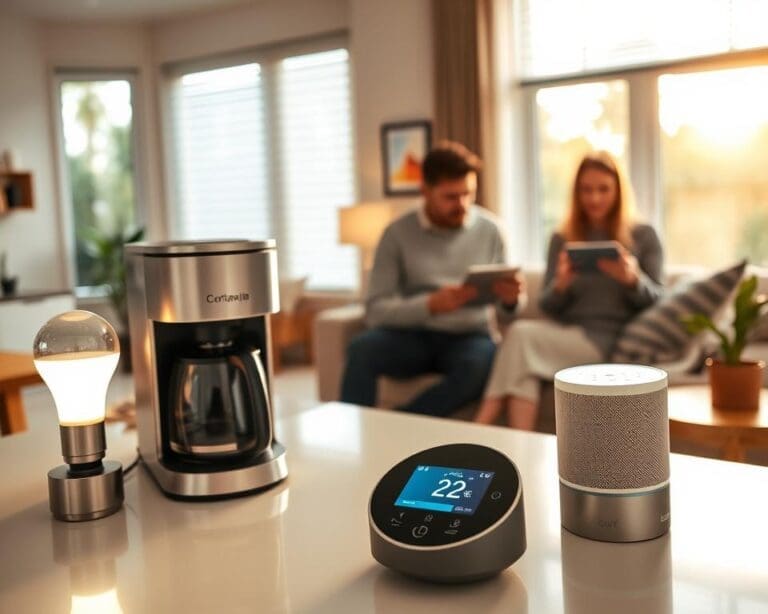
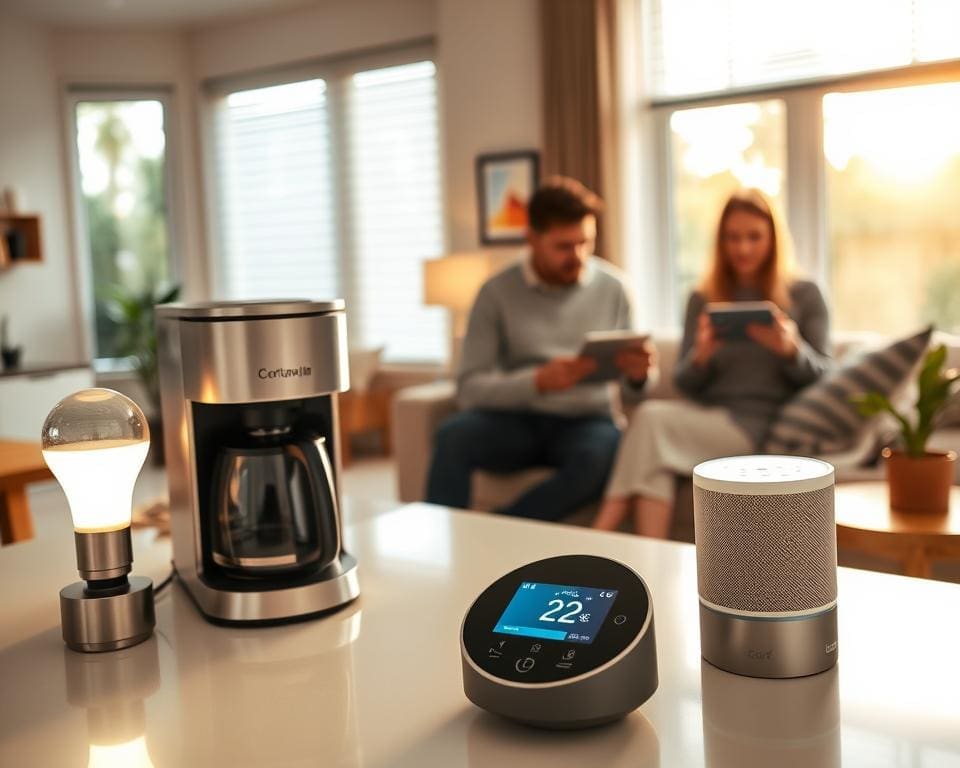
The Internet of Things is turning ordinary houses into responsive, efficient living spaces. Networks of sensors, smart appliances and cloud services connect to offer automation, remote control and data‑driven insights. This short introduction explains at a high level how those pieces work together to deliver IoT smart home benefits and connected home advantages for UK households.
Core capabilities include real‑time sensing, remote control from smartphones, and automation via rules and routines. Devices collect usage data and apply machine learning for personalisation. Common communication protocols in the UK market such as Wi‑Fi, Zigbee, Z‑Wave, Bluetooth Low Energy and Thread enable devices to talk to one another, while hubs and smart speakers like Amazon Echo, Google Nest Hub and Apple HomePod often act as the control centre.
Practical examples make the improvements tangible: Nest and Ecobee learning thermostats adapt heating schedules, Philips Hue and LIFX lighting create scenes, Ring and Arlo cameras provide video monitoring and Yale and August offer smart lock control. These Internet of Things home improvements deliver seamless everyday automation, enhanced security and safety, and energy efficiency that can cut bills over time.
For UK homeowners, there are additional considerations. Compliance with UK GDPR, variable broadband reliability across regions and potential integration with smart meters and energy suppliers all influence adoption. Given current energy prices and net‑zero ambitions, the incentives to invest in smart home technology UK are strong.
Later sections will expand on routines, security and energy savings with concrete examples and outcomes, showing how connected home advantages translate into everyday convenience and long‑term value.
How do IoT devices improve smart homes?
IoT devices turn ordinary houses into responsive homes that adapt to daily life. Smart home automation ties lighting, heating and appliances into routines and scenes that reduce chores and lift comfort. Small changes, such as an evening movie scene that dims Philips Hue lights and sets the AV system, make daily life feel effortless.
Routines can be triggered in many ways. Timers run scheduled tasks each morning or night. A geofencing smart home setup can sense your phone and start a “Good morning” routine that raises blinds, starts a kettle via a TP-Link Kasa smart plug, and sets a comfortable thermostat level.
Sensor triggers respond to motion, doors or ambient light to cut false actions when devices sit in the wrong place. Voice commands through Amazon Alexa, Google Assistant or Siri Shortcuts let you start scenes hands‑free. Event triggers such as a water leak can shut off the mains to prevent damage.
Each trigger type has strengths and limits. Geofencing needs reliable GPS and user consent. Sensors need proper placement to avoid false positives. Voice control helps accessibility but relies on network and microphone permissions.
Personalisation and adaptive behaviour
Smart systems learn from use. Nest thermostats adapt heating to your patterns. Lighting can change brightness with ambient light and time of day. Security systems learn usual movements and cut down false alarms.
IoT interoperability makes devices from different brands work together. A Samsung SmartThings hub can link Philips Hue lights with a Yale smart lock. Apple HomeKit can coordinate an Ecobee thermostat and Eve sensors. The emerging Matter standard aims to simplify links across Thread, Wi‑Fi and Ethernet.
Practical steps raise the odds of smooth operation: check Matter or platform compatibility, keep firmware updated and pick a central hub or voice assistant as a bridge. For guidance on how IoT will reshape home automation, see this short primer on developments in the field: IoT and home automation.
- Custom profiles let each household member set temperature and lighting to taste. Presence detection via phone or an Apple Watch can apply personalised smart home profiles when someone arrives.
- Multi‑user settings support parental controls, quiet hours and tailored access for carers or guests.
- Machine learning features offer suggestions, such as a thermostat proposing a schedule change, so you make fewer manual adjustments.
Start small: build one routine, test sensor placement and choose devices with clear integration paths. Regular updates and mindful data settings protect privacy and keep automation running reliably.
Enhanced security and safety features with connected devices
Connected devices change how households stay safe. They offer immediate awareness, automated actions and clear records. Homeowners in the UK can use these tools to deter intruders, speed response times and protect family wellbeing with practical setups.
Real‑time monitoring and alerts
Modern smart cameras from Ring, Arlo and Google Nest Cam deliver 1080p, 2K or 4K live feeds, two‑way audio and person detection. Mobile push notifications provide snapshot previews and short clips for quick assessment.
Set motion zones to cut false alarms, enable local storage where privacy matters and be mindful of bandwidth for continuous HD streaming on typical UK broadband. Video doorbell alerts help neighbours and owners act fast when something looks wrong.
Integrated entry and access control
Smart locks from Yale, August and Nuki allow remote lock and unlock via an app, time‑limited PINs for cleaners and Bluetooth or keypad entry for tradespeople. Auto‑lock features and routines, such as locking on an “Away” scene, make daily life simpler.
Audit trails and access logs record who entered and when. Those logs support tracking deliveries, verifying tradespeople visits and checking when children return home. Retention periods and privacy choices vary by vendor; choose providers with clear policies.
Health and safety monitoring
Smart smoke detectors like Nest Protect and Honeywell models send phone alerts, offer voice warnings in rooms and interconnect with other devices. CO alarms and water leak detection sensors add vital layers of protection for common household risks.
Automated workflows can close a smart valve, switch off a boiler with a relay or turn lights on to illumine escape routes. A smoke alarm can unlock smart locks for faster exit. Reliable power and resilient internet or local processing keep these actions dependable.
- Use a mix of cloud and local‑processing devices for redundancy.
- Choose encrypted connections (TLS) and enable two‑factor authentication.
- Position sensors to avoid recording neighbours and respect Data Protection Act rules on video and audio.
Energy efficiency, convenience and long‑term savings
Smart thermostats and zoned heating now make a real difference to bills and comfort. Devices such as Google Nest, Tado and Hive learn routines, enable remote control and work with smart radiator valves to warm only occupied rooms. Adaptive schedules, eco modes and Home Energy Management Systems (HEMS) cut unnecessary heating while keeping homes comfortable, which is vital given UK heating use and costs.
Integration with weather forecasts and occupancy sensors further reduces waste. Thermostats adjust setpoints when rain or milder temperatures are due, and PIR or radar sensors stop heating empty rooms. These measures avoid over‑heating and ensure pre‑heating happens only when needed.
Lighting and appliance control add extra savings and convenience. Philips Hue, IKEA TRÅDFRI and LIFX bulbs can respond to daylight and presence, dimming or switching off automatically to prevent lights being left on. Energy monitoring smart plugs from TP‑Link Kasa or Eve Energy show appliance‑level consumption, reveal standby losses and allow scheduling to exploit cheap tariffs.
Real trials show measurable results: smart thermostats UK studies report typical heating savings of 8–15%, while smart lighting and plug management can cut electricity for lighting and standby by notable amounts. Actual savings vary with property type, heating system and user habits, but lower use also reduces household emissions. Combining smart controls with insulation, solar PV or batteries further supports home carbon footprint reduction and load shifting.
Long‑term value comes from both cost and comfort. Upfront device costs are offset over time through reduced bills and increased property appeal. To reduce energy bills with IoT, start with a smart thermostat and basic energy monitoring, then add lighting and appliance controls. Check compatibility with UK boilers, choose products with clear reporting, use tariffs and schedules, and keep firmware updated for best performance.