Energy-efficient appliances UK offer a simple route to save money energy appliances while cutting carbon. This section explains how smarter design and modern controls reduce the amount of electricity and gas used for everyday tasks.
Firstly, efficient models use fewer kilowatt hours (kWh) per cycle and shorter run times. That lower electricity and gas consumption per use directly reduces bills. Improved insulation, precision heating and faster wash cycles all mean less energy is needed for the same result.
Secondly, newer appliances tackle standby and phantom loads. Smart controls, better firmware and low-power modes keep background draw to a minimum, so devices stop wasting energy when not in active use.
You will also see how measurement helps accountability. Labels show annual energy consumption and estimated lifetime running costs. Simple payback calculations—purchase premium divided by yearly running-cost savings—make it easy to judge value.
Every household can benefit, though savings depend on usage patterns, fuel prices and appliance type. Renters, homeowners and landlords can all reduce household energy bills by choosing the right models.
Rising energy prices in the UK and a push towards net zero make eco-friendly appliances financially and environmentally compelling. Brands such as Bosch, Samsung, LG, Vaillant and Worcester Bosch now offer high-efficiency options that combine performance with lower running costs.
In the sections that follow, the article will unpack energy ratings, real-world savings for fridges, washing machines and boilers, buying guidance and practical steps to maximise savings.
How do energy-efficient appliances lower household costs?
Understanding labels makes saving simple. Since 2021 the UK reintroduced the A–G energy label with a QR code that links to product data. The home appliance label shows annual energy consumption in kWh/year, noise levels, capacity and other key metrics. ECO-design and energy labelling rules force manufacturers to publish measured consumption so shoppers can compare like for like.
Understanding energy ratings and labels in the UK
Look for energy ratings UK and energy labels UK when you shop. EPC appliance labels help when comparing different technologies. For boilers and heating, ErP rules and seasonal efficiency figures remain important. Modern condensing boilers and heat pumps list efficiency percentages and COP values so you can assess boiler efficiency at a glance.
Use the label to compare same-capacity models. Check annual energy consumption and load-based metrics such as kWh per wash. These figures make appliance running costs transparent before you buy.
How reduced energy consumption translates to bill savings
Turning kWh into pounds is straightforward. Multiply appliance kWh use by your electricity price (pence per kWh) to estimate cost per year. For gas, use p/kWh for gas. This method works with current prices from Ofgem or your supplier.
Remember usage patterns affect outcomes. Frequency of use, load size and regional tariffs change results. Time-of-use plans like Economy 7 or smart tariffs let you shift loads and lower appliance running costs further.
Examples: savings from efficient fridges, washing machines and boilers
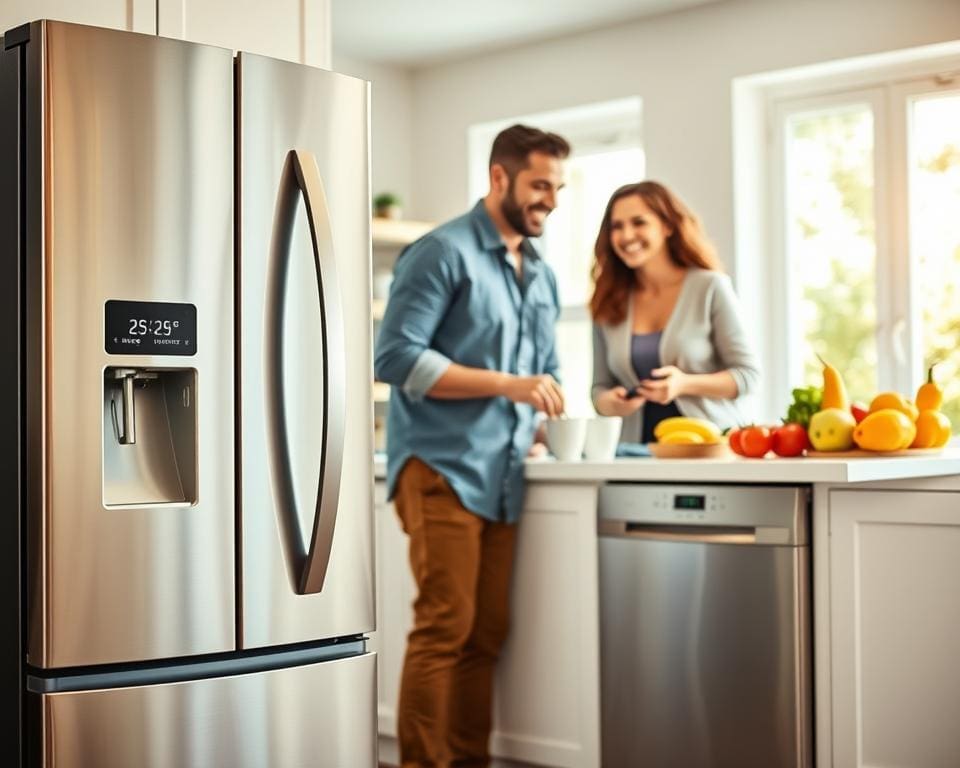
Fridges offer clear wins. A modern high-efficiency fridge might use 100–150 kWh/year. An older model could consume 400–600 kWh/year. Those differences translate into tangible fridge energy savings on annual bills when you plug in local electricity rates.
Washing machines cut both water and power costs. Many new designs use inverter motors and heat-pump technology. A contemporary A-rated machine can save 50–100 kWh/year depending on habits. Choosing 30°C cycles rather than 60°C multiplies washing machine energy savings.
Heating upgrades deliver large gains. Older boilers often ran at 60–70% efficiency. Modern condensing boilers exceed 90%. Air-source heat pumps achieve COPs of 2.5–4. Replacing a non-condensing boiler with a Worcester Bosch or Vaillant condensing unit or fitting a heat pump reduces gas and electricity use substantially.
Long-term cost benefits versus upfront purchase price
Total cost of ownership beats sticker price. Add purchase price, running costs and maintenance across an expected 10–15 year lifespan. Efficient models typically repay the premium in 2–7 years through lower annual running costs.
Lifecycle gains extend beyond money. Less frequent repairs, longer useful life and stronger resale appeal matter. Retailers such as Currys and AO.com often run take-back schemes that ease disposal and support recycling, cutting environmental impact and sometimes offering small trade-in benefits.
Choosing the right energy-efficient appliances for your home
Start by auditing what you already own. Note each appliance’s age, estimated energy use and how often you run it. Record typical usage in simple terms: cycles per week for washing machines, hours per day for fridges and peak shower times. Use utility bills, smart meter reads or plug-in monitors such as efergy or TP-Link Kasa to get real numbers.
Match choices to household size and lifestyle. A large family benefits from bigger-capacity, energy-efficient washing machines and dishwashers that reduce cycles. Singles or couples often save more with compact, low-consumption models. Use this information when choosing energy-efficient appliances so you buy what you actually need.
Assessing household needs and usage patterns
Follow a simple step-by-step method. 1) Audit current appliances by age and likely consumption. 2) Log typical usage patterns across a week. 3) Identify the high-consumption devices: fridge-freezer, tumble dryer, electric shower and electric heating. This makes comparisons clearer when you shop.
Collect easy-to-find data. Check past utility bills, read your smart meter or use a plug-in monitor for a week. These small steps quantify savings and inform decisions about appliance sizing and replacement timing.
Comparing models: features that influence running costs
When you compare appliance running costs, look beyond the headline rating. Use the energy label’s annual consumption figure and compare like-for-like capacities. Features that reduce running costs include inverter motors, heat-pump technology, variable-speed compressors, eco-programmes and effective insulation.
Smart connectivity and low-power standby modes let you schedule cycles during cheaper energy periods. Consult independent reviews from Which? and lab test results to see real-world consumption and reliability before you commit.
Importance of correct sizing and installation
Appliance sizing matters. Oversized boilers cycle and lose efficiency. Undersized units run hard and use more energy. Use manufacturer sizing tools or ask Gas Safe-registered engineers for gas boilers and Oftec specialists for oil units to get the right match.
For refrigeration and laundry, choose capacity to suit your household. Bigger models with good insulation can be economical, but avoid unnecessary extra volume. Proper installation is essential: correct flues, condensate drainage and commissioning keep efficiency high. For heat pumps and boilers, use MCS-certified or competent installers and follow Building Regulations for best results.
Government incentives, grants and schemes in the UK
Look into the ECO scheme and local authority support when budgeting. Eligible households may get help under the Energy Company Obligation, while area-based retrofit programmes offer further assistance. Check whether a boiler replacement grant or other targeted help applies to you.
VAT reliefs and manufacturer or retailer trade-in offers from Currys or AO can lower upfront costs. Use GOV.UK, Ofgem, your local council and charities such as Citizens Advice to check eligibility for UK grants energy efficiency schemes and to confirm current rules.
Consider green finance options if you need to spread costs. Green loans, cashback cards and energy-efficiency finance products can make investments more manageable while you benefit from lower running costs over time.
Practical steps to maximise savings from energy-efficient appliances
Small behaviour changes deliver big wins. Wash clothes at 30°C when fabric care allows, run dishwashers and washing machines only at full load, and air-dry laundry where possible. These energy-saving habits reduce consumption and help maximise appliance savings without extra cost.
Use smart appliance usage to shift demand to cheaper hours. If you are on an Economy 7 or smart tariff, schedule washing and charging overnight with timers, smart plugs or apps from Hive, Nest and Tado. Turn off standby power and use energy monitors to track real consumption rather than relying on assumptions.
Routine checks keep appliances efficient. Follow appliance maintenance tips such as cleaning fridge coils, descaling kettles and washing machines, replacing HVAC filters and checking door seals. Have boilers serviced annually by Gas Safe-registered engineers and replace worn thermostats or leaking valves to restore performance.
Plan replacements strategically and link upgrades to wider home improvements. Prioritise high-return swaps — old boilers, refrigerators over 10–15 years and inefficient electric storage heaters — and sequence purchases to balance upfront cost and cumulative savings. Combine these changes with loft insulation, upgraded glazing or solar PV and battery storage to further reduce energy bills UK and support net zero goals.