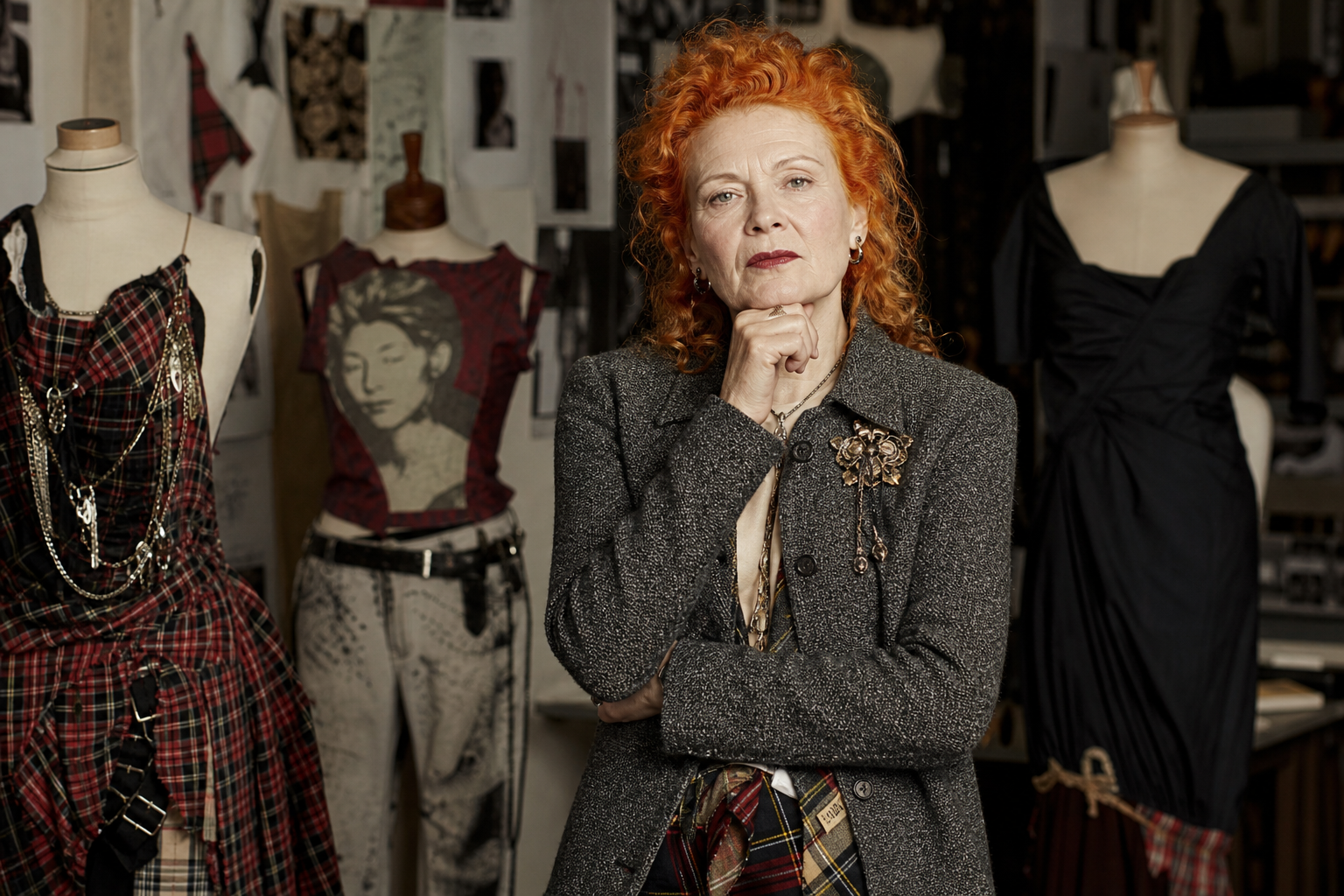

Vivienne Westwood did not merely design clothes; she engineered a visual language for rebellion. By blending historical tailoring with an anarchic spirit, she transformed the fringes of London's underground scene into a global aesthetic movement. For B2B professionals in the fashion, retail, and branding sectors, understanding her impact is essential for grasping how subcultural disruption can scale into a luxury empire.
The Genesis of the Punk Aesthetic
The story of punk fashion begins at 430 King's Road, Chelsea. In the mid-1970s, Vivienne Westwood and her partner Malcolm McLaren created a boutique that served as the epicentre for a new, aggressive form of self-expression. At the time, mainstream fashion was dominated by the remnants of hippie idealism and conservative tailoring. Westwood sought to dismantle these norms.
She approached clothing as a form of political communication. By using materials that were traditionally considered "ugly" or "industrial," she challenged the notion of what constituted beauty. This period was less about creating a commercial product and more about creating a provocation. The boutique, which went through various names like SEX and Seditionaries, became a laboratory for social experimentation.
How Did Vivienne Westwood Change Punk Fashion?
To answer the core question of how did Vivienne Westwood change punk fashion, one must look at her ability to weaponise the garment. Before Westwood, rebellion was often associated with a lack of effort or a rejection of fashion entirely. Westwood inverted this by making rebellion highly curated and visually loud.
She introduced the concept of "deconstruction." This involved intentionally ripping fabrics, leaving seams exposed, and using safety pins not just for repair, but as ornamental jewellery. By taking everyday objects and stripping them of their original utility, she mirrored the punk movement's desire to strip society of its hypocrisies.
The Integration of Fetish Wear
One of Westwood's most daring moves was bringing BDSM and fetish gear into the daylight of the street. She integrated rubber, PVC, and leather straps into everyday attire. This was a calculated move to shock the bourgeoisie and challenge sexual taboos. By placing these items in a retail environment, she shifted them from the shadows of the underground into a bold statement of autonomy and power.
The Use of Provocative Imagery
Westwood understood the power of the graphic tee. She utilised screen-printing to display controversial imagery, including political slogans and shocking portraits. These garments acted as walking billboards for the punk philosophy. This approach taught the industry that clothing could be a direct medium for social commentary, a precursor to the modern "statement" clothing seen in contemporary streetwear.
The Evolution from Streetwear to High Fashion
As the initial shock of punk faded, Westwood did not simply repeat her early successes. She transitioned her disruptive energy into the world of haute couture, proving that the spirit of punk could exist within the confines of luxury. This transition is a masterclass in brand evolution, showing how a niche subculture can be elevated to a prestige market without losing its core identity.
She began to study the history of dress, particularly the 18th and 19th centuries. By combining the rigid structures of the corset and the bustle with the raw energy of punk, she created a "New Romantic" aesthetic. This fusion of the ancient and the avant-garde allowed her to critique the fashion establishment from within.
The impact of this evolution can be seen in several key areas:
- The Corset: She reimagined the corset not as a tool of female oppression, but as an outer garment of empowerment and strength.
- Tartan: She took the traditional symbol of Scottish heritage and shredded it, turning a mark of nobility into a symbol of anarchy.
- The Platform Shoe: Her "super elevated" footwear challenged traditional proportions and added a theatrical, almost surrealist element to the punk silhouette.
The Business Legacy of Disruptive Design
From a B2B perspective, Westwood’s career demonstrates the viability of the "anti-brand." While most luxury houses build their identity on exclusivity and timelessness, Westwood built hers on volatility and change. She proved that a brand could maintain loyalty by constantly challenging its own customers.
Her approach to sustainability also set a precedent long before "eco-fashion" became a corporate buzzword. In her later years, she used her platform to advocate for the environment, urging consumers to "buy less, choose well, make it last." This shift from promoting consumption to promoting curation is a critical lesson for modern retailers facing a climate crisis.
The enduring influence of her work is evident in the way modern designers handle "distressed" clothing. Every pre-ripped jean or raw-hemmed shirt sold in high-street stores today owes a debt to the original deconstructionist techniques pioneered by Westwood in the 1970s.
Frequently Asked Questions
What was the role of Malcolm McLaren in punk fashion?
Malcolm McLaren acted as the strategist and manager who helped bring Westwood's designs to the public. He provided the conceptual framework and the connection to the Sex Pistols, ensuring the clothing had a sonic and cultural accompaniment.
Why did Vivienne Westwood use safety pins in her designs?
Safety pins were used to symbolise a "do-it-yourself" ethos and the beauty of the broken. They represented a rejection of polished, mass-produced perfection in favour of something raw, improvised, and intentionally jarring.
How did she influence modern luxury brands?
Westwood proved that subcultural elements like street art and fetish wear could be scaled into luxury products. Many current houses now use "streetwear" as a core pillar of their high-fashion collections because of her early experiments.
What is the significance of tartan in her work?
Tartan represented the establishment and traditional British identity. By tearing and distorting this fabric, Westwood visually represented the act of dismantling the class system and mocking traditional authority.
Did Vivienne Westwood consider herself a punk?
While she was the architect of the punk look, she viewed herself more as a provocateur and an artist. Her work evolved far beyond the 1970s, blending punk energy with historical research and political activism.