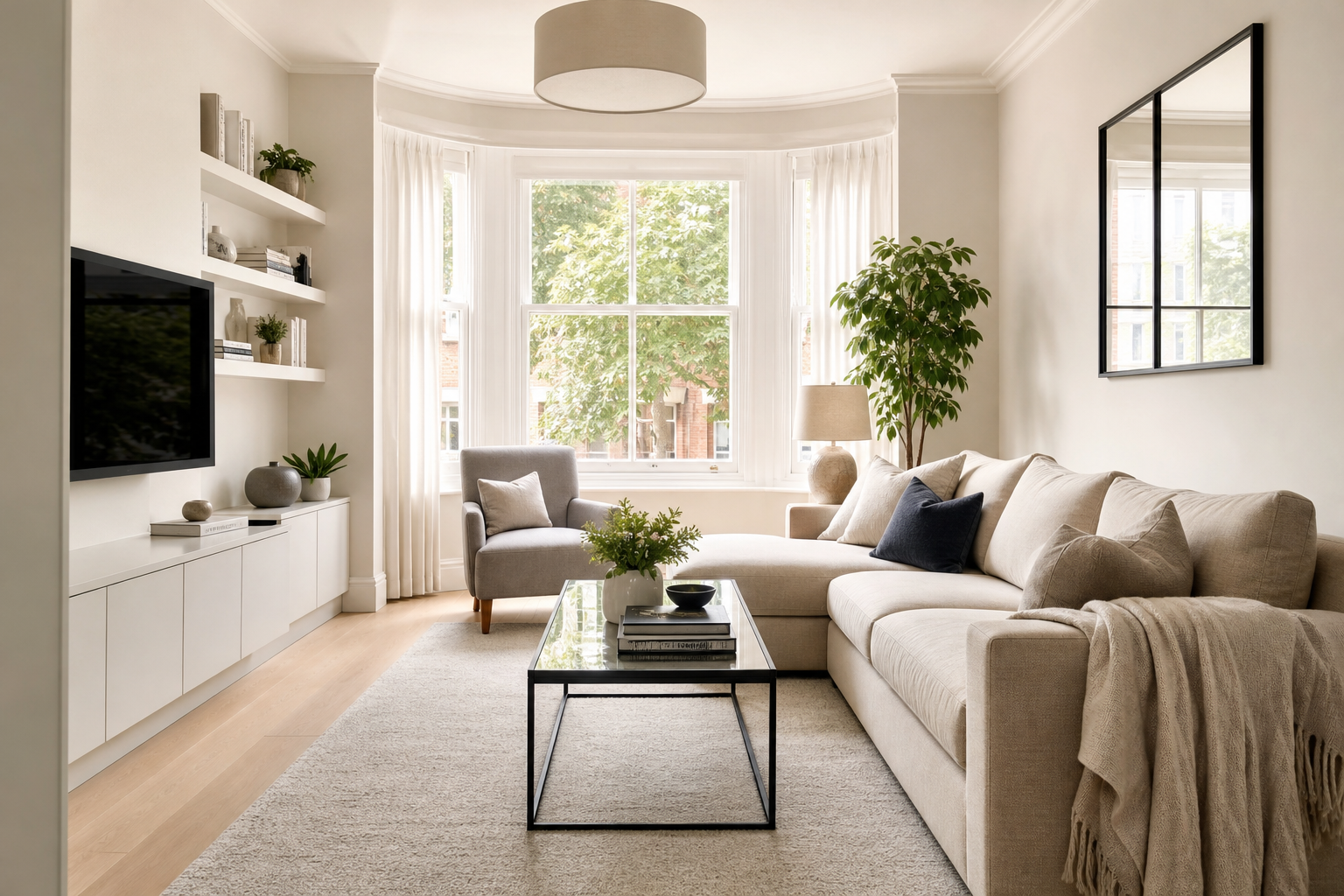

In compact homes, show flats, serviced apartments and rental properties, a small living room can influence how people judge the whole space. How Can You Make a Small Living Room Feel Bigger? The answer is rarely one trick. It is a careful mix of layout, light, scale, storage and visual calm. For businesses involved in interiors, property marketing or accommodation, these choices can help rooms photograph better, work harder and feel more comfortable without structural changes.
Why Small Living Rooms Feel Smaller Than They Are
A room feels cramped when the eye meets too many interruptions. Heavy furniture, dark corners, blocked windows and cluttered shelving all reduce the sense of depth. In a business setting, such as a furnished rental or compact staff apartment, these issues can make an otherwise practical room seem less valuable than it is.
How Can You Make a Small Living Room Feel Bigger? Start with Layout
Layout is often the highest-impact decision because it changes movement, sightlines and usability. Avoid pushing every item hard against the wall by default. A little breathing space behind a sofa or armchair can create shadow and depth, which makes the room feel less boxed in.
Where possible, keep the route through the room simple. People should not have to weave around furniture to reach a window, balcony door or kitchen area. In open-plan schemes, a rug can define the seating zone without building a barrier. This is particularly useful in managed properties, where flexible living space must suit different occupants.
Choose Furniture with Visible Floor Space
The more floor you can see, the larger the room tends to feel. Choose pieces that stand on slim legs rather than solid bases, as visible floor beneath furniture extends the apparent footprint. This principle is useful for procurement teams because it guides specifications without demanding bespoke products.
- Sofas with raised legs and narrow arms
- Nesting tables instead of several separate side tables
- Wall-mounted media units where the wall type allows
- Ottomans with hidden storage rather than bulky extra chairs
Scale Pieces to the Room, Not the Catalogue
Oversized furniture is one of the quickest ways to shrink a living room. Commercial buying can make this harder, because standard ranges look efficient on spreadsheets. Yet a compact two-seat sofa may serve the room better than a generous three-seater, especially when paired with a movable pouffe or occasional chair. Measure circulation space before choosing style, and consider how the room will look in photographs as well as in daily use.
Use Light, Colour and Reflection with Care
Light does not need to mean plain white walls everywhere. Pale neutrals, warm off-whites, soft greys and muted greens can all help bounce daylight while still feeling designed. The key is consistency. When walls, curtains and large furniture sit within a close tonal range, the boundaries blur and the room feels calmer.
Mirrors can help, but placement matters. A mirror opposite a window can reflect light, while one facing a crowded shelf may simply double the clutter. Glossy finishes have a similar risk. Used sparingly, reflective surfaces add lift; used everywhere, they can make a room feel busy and less premium.
Storage, Clutter and Multi-Use Living
For many B2B projects, storage is the difference between an attractive installation and a room that stays attractive after handover. A small living room often supports relaxing, working, eating and hosting. If those activities leave chargers, paperwork, cushions and remote controls in view, the space soon feels smaller.
Built-in joinery is not always needed. Freestanding storage can work well if it is shallow, tall and visually quiet. Doors hide more than open shelves, while baskets inside cabinets give users somewhere easy to place everyday items. In rented or short-stay settings, simple storage rules are easier to maintain than highly styled displays.
Materials, Lines and Details That Add Space
Small rooms benefit from long, clean lines. Low media units, full-length curtains hung close to the ceiling, and vertical bookcases can each guide the eye beyond the immediate seating area. This does not require a minimalist look. Texture, fabric and timber still matter, but they should support the room rather than compete for attention.
Pattern is best used with discipline. One larger rug can make a seating area look more generous than several small mats. Curtains in a colour close to the wall can reduce visual breaks. Artwork should be proportionate: a single medium or large piece often feels cleaner than a scatter of small frames.
Practical Mistakes to Avoid
Even strong schemes can be undermined by a few common choices. In commercial interiors, these mistakes often appear when budget, durability and speed take priority over proportion. They are understandable, but they are also avoidable.
- Choosing one central ceiling light and leaving corners dim
- Selecting dark, heavy curtains that cover part of the window when open
- Filling every surface with decorative objects or branded material
- Using furniture sets that match perfectly but ignore the room’s shape
Layered lighting is particularly important. A floor lamp, table lamp and wall light can make corners feel active after dark, which extends the perceived room size. For show homes or serviced accommodation, lighting also affects the quality of photography, but it should still feel natural in person.
Frequently Asked Questions
Can mirrors really make a small living room feel bigger?
Yes, when positioned to reflect daylight or an open view. Avoid reflecting clutter, as this can make the room feel busier.
What colour is best for a compact living room?
Soft neutrals usually work well, but consistency matters more than one colour. Keep large surfaces close in tone.
Should small living rooms avoid large furniture completely?
Not always. One well-scaled larger piece can feel calmer than several small items, provided circulation remains comfortable.