
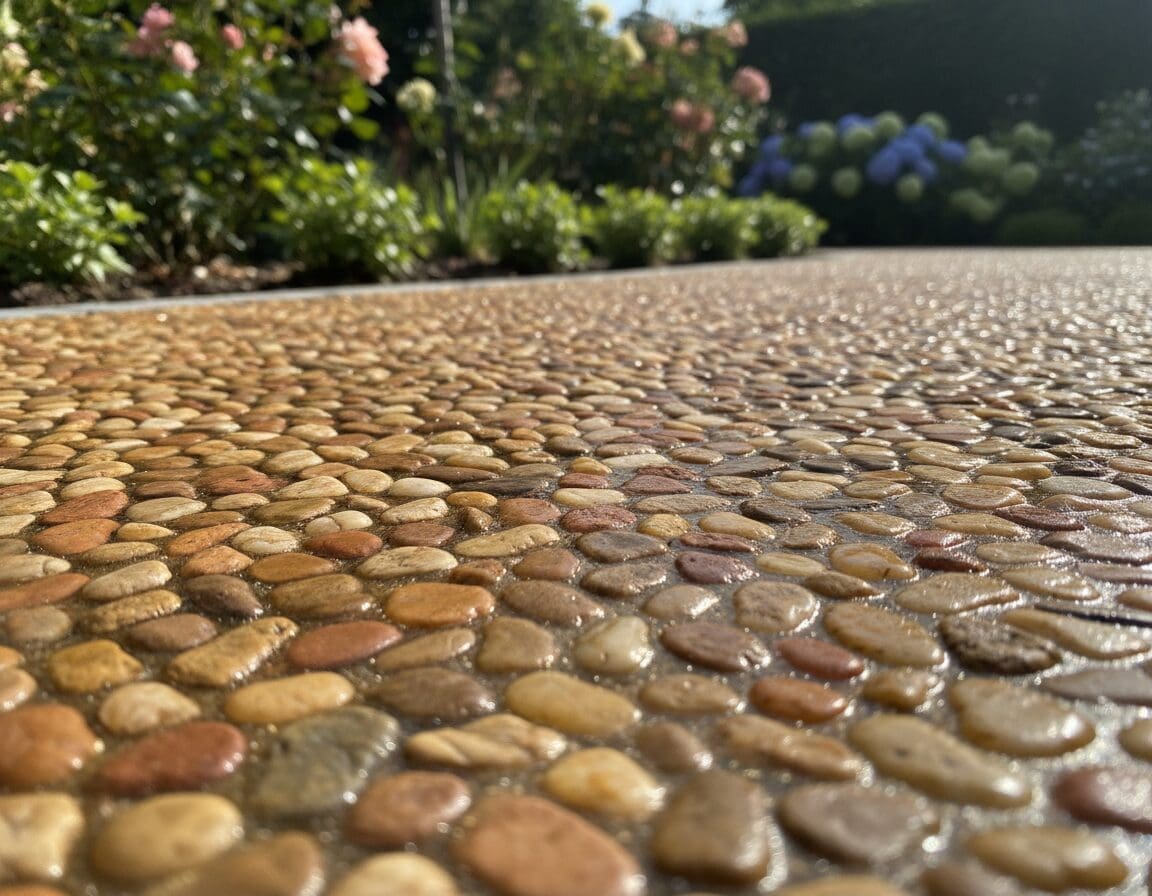
Resin bound gravel is a permanent surfacing system that mixes natural aggregates with a clear, UV‑stable resin to form a smooth, durable layer over a prepared sub‑base. This resin solution for binding stones creates an integrated finish, unlike loose gravel that migrates or resin bonded systems that leave a loose top layer.
The primary benefits are clear. Homeowners get a long lasting resin bound gravel finish that is slip‑resistant and comfortable underfoot. The surface is smooth enough for wheelchairs and bicycles, yet textured for good traction in wet British weather.
Typical uses include driveways, garden paths, patios and commercial walkways. When installed on a suitable sub‑base, the system will tolerate light vehicular loads and often lasts 10–20+ years with minimal upkeep.
Visually, resin bound gravel offers an immediate lift to kerb appeal. A wide palette of natural stone colours helps the surface complement both contemporary and traditional homes across the UK.
Practical advantages include reduced standing water and lower ice buildup thanks to its porous, permeable nature. For busy households, a gravel binder for driveways and paths cuts maintenance compared with loose stone and provides a neat, enduring appearance.
What makes resin bound gravel a durable and attractive choice for driveways and paths
Resin bound gravel blends natural stone with advanced polymers to create a surface that feels organic yet performs like engineered paving. The result is a long lasting resin bound gravel finish that keeps colour and texture while standing up to daily use. Small aggregates such as granite or flint are mixed with UV-stable polyurethane or hybrid resins to lock the stones in place and resist abrasion.
Long lasting resin bound gravel finish and wear resistance
The chemistry and grading of the mix determine wear performance. High-quality resins combined with well-graded aggregates form a compressed, interlocked layer that resists freeze–thaw damage and UV degradation. Trade bodies recommend UV-stable formulations to prevent yellowing and preserve aesthetics.
When laid over an engineered sub-base, surfaces will carry cars and light commercial vehicles. Installers tailor thickness and aggregate size to suit driveways, paths and patios. A sealed surface offers improved resistance to oil and organic stains while preserving the natural stone look for years.
Permeable gravel surface system: benefits for drainage and planning regulations
A resin bound surface is permeable by design. Rainwater soaks through the aggregate matrix into the sub-base and then into the ground or drainage network. This reduces surface runoff and helps manage local flood risk.
Using a permeable gravel surface system can aid compliance with Sustainable Drainage Systems (SuDS) guidance and local council requirements for permeable driveways. Proper edge restraints and a well-designed sub-base are vital to keep percolation rates high and to avoid surface clogging.
Low maintenance and stain resistance for busy households
Routine care is simple: sweep regularly and use low to medium pressure washing when needed. The polymer matrix gives good resistance to common spillages such as petrol and cooking oils. Prompt cleaning with suitable conservational cleaners keeps the surface looking fresh.
Compared with block paving or loose gravel, this approach reduces chores like re-pointing, weed control and gravel migration. Homeowners with children, pets and frequent vehicle use find the low upkeep and durable finish particularly appealing.
Practical installation options: pour on gravel binder, DIY and professional solutions
Choosing the right installation method shapes the life of a surface. Homeowners in the UK can select a quick pour-on approach or a full resin bound mix. Each route suits different sites, budgets and expectations.
Pour on gravel binder systems involve laying decorative gravel and pouring a liquid binder over the top. This method is often presented as a fast option and can work for small, decorative areas. It can be used for repairs where minimal structural load is expected.
Resin bound mixing combines resin and aggregate before laying. The blend is trowelled or power‑screeded onto a prepared base to create a smooth, permeable finish. For driveways and high‑use paths, this method gives superior durability and long‑term performance.
Deciding between the two depends on load, traffic and drainage requirements. For heavy use, choose resin bound mixing. For low‑load decorative areas, a pour on gravel binder may be acceptable if the base is sound.
DIY gravel binder for landscaping asks for clear planning. Gather a resin kit that is UV‑stable, graded aggregate, Type 1 MOT sub‑base, edge restraints, mixer, trowels and PPE such as gloves and a respirator.
Prepare the site by excavating to depth, compacting the Type 1 sub‑base and fitting durable edging. Install a geotextile if needed and ensure falls to drains or soakaways. Careful preparation helps stabilise loose gravel surfaces and prevents future movement.
Mix resin and aggregate to manufacturer ratios in a forced‑action mixer for consistency. Lay the mix quickly, screed to the required depth and allow the surface to cure fully before use. Light sweeping after curing reveals any pinholes that need topping up.
First‑time DIYers should trial a small area and respect health and safety. Use good ventilation, PPE and follow product safety sheets. If uncertainty remains, consult a professional installer to avoid costly mistakes.
Choosing a reputable installer matters when quality and guarantees are priorities. Look for clear credentials, insurance, written quotations and a portfolio of recent work with before and after photos.
When assessing theresinbondedslabcompany.co.uk examine case studies, product specifications and accreditations. Ask for details on the sub‑base specification, site access needs and a realistic timeline. Request written guarantees covering workmanship and materials.
Obtain multiple quotes and compare the full scope. Check whether removal of old surfacing, waste disposal and edging are included. Prioritise long‑term value rather than the lowest price to avoid premature repair costs.
Preparing sub‑bases and stabilising loose gravel underpins any durable finish. A compacted Type 1 sub‑base prevents settlement, rutting and water ingress that would undermine the resin surface.
Install strong edge restraints such as concrete kerbs or galvanised steel edging to contain the surface. Where existing loose gravel is present, removal and rebuilding the base usually gives the best result for driveways.
If in‑situ stabilisation is attempted, ensure binders penetrate adequately and drainage is addressed. Check compaction levels, moisture conditions and mixing ratios on site to secure a lasting finish.
Environmental and aesthetic advantages: how resin solutions enhance gardens and patios
Resin bound gravel is a practical way to marry environmental performance with beautiful garden design. Its permeable structure helps meet Sustainable Drainage Systems (SuDS) goals by letting rainwater soak through, reducing surface runoff and easing pressure on urban drains. Choosing an eco friendly gravel binder solution with responsibly sourced aggregates further reduces embodied energy compared with many manufactured paving options.
Specifying locally quarried stone or recycled aggregates lowers transport emissions and supports circularity. Modern resin solution for binding stones uses low‑VOC polyurethane or hybrid formulations that comply with UK health and safety standards. Installers should follow COSHH guidance for handling and disposal, which limits chemical risks and keeps long‑term impacts low.
The aesthetic range is broad: natural stone colours, bespoke blends and subtle textures allow seamless transitions from patios to paths. A resin bound finish creates joint‑free surfaces that sit neatly against planting, patio furniture and architectural details. Custom features such as inset borders, contrast strips or resin bound stepping stones add personality while keeping maintenance needs small.
Practically, fewer repairs and a reduced need for weed killers make resin bound gravel a sustainable choice throughout the year. Colour stability and anti‑moss properties preserve an inviting look during wet UK seasons. Homeowners should choose accredited suppliers, seek product data sheets on lifecycles, and discuss repair or reinstatement options so the surface can be maintained rather than replaced, making resin bound gravel a lasting, eco friendly gravel binder solution for garden paths and patios.