In the realm of interior design, mirrors serve as remarkable tools for amplifying the sense of space in small rooms. These reflective surfaces possess a unique ability to transform a diminutive environment into one that feels vast and open through the clever manipulation of light and perception. The psychological effects of light illusion created by mirrors can trick our minds into believing that a room extends beyond its actual dimensions, thereby promoting a feeling of openness in even the coziest of spaces.
This article will delve into the various mechanisms by which mirrors facilitate space enhancement, exploring how proper placement and types of mirrors can elevate your living areas. As we navigate through this guide, our aim is to equip you with practical tips and insights that will help you harness the power of mirrors to create a lighter, airier atmosphere within your small spaces.
The Power of Reflection in Interior Design
In the realm of interior design, the principles of light and space perception play a pivotal role in creating a captivating atmosphere. Understanding how light behaves within a room, along with the strategic use of mirrors, can significantly alter the perception of space. Through effective interior design strategies, one can enhance the openness and brightness of small rooms, transforming them into welcoming environments.
Understanding Light and Space
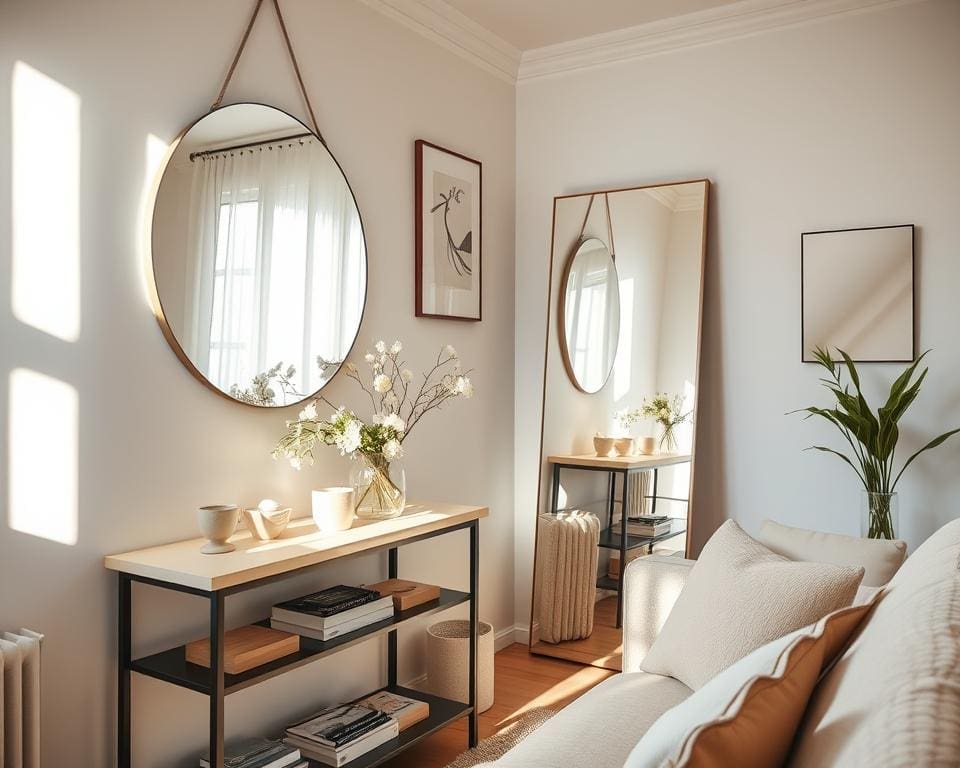
The interplay between light and space is essential for achieving an inviting look in any area. Natural light serves as a vital element, influencing how we perceive the dimensions and warmth of a room. By utilising mirrors, homeowners can manipulate light flow to create a sense of greater depth. When positioned thoughtfully, large mirrors can reflect outdoor views or artwork, thus enriching the overall aesthetic while fostering an illusion of expanded space.
Creating Illusions with Mirrors
Several effective techniques can enhance the feeling of spaciousness through the clever use of reflection. For example, placing a large mirror opposite a window allows natural light to bounce around the room, making it appear airier. Additionally, positioning mirrors next to light sources, such as lamps or candles, amplifies brightness and adds to the overall ambience. Small, clustered mirrors can also create focal points that draw the eye, further enhancing the feeling of openness. To discover more on leveraging mirrors in small spaces, check this resource for detailed insights.
How can mirrors make small rooms feel bigger?
Mirrors serve as transformative elements in interior design, especially in compact spaces. Choosing the right type of mirror is crucial for maximising their potential. Consider a range of options that fit your style and space constraints.
Choosing the Right Type of Mirror
When selecting mirrors for small rooms, various types come into play:
- Wall-mounted mirrors are ideal for limited floor space, offering sleek, modern options.
- Freestanding mirrors bring flexibility, allowing you to reposition them as needed.
- Decorative styles can enhance aesthetics while providing functionality, making them perfect for adding character.
Generally, larger mirrors tend to create a greater visual impact than smaller ones, making them more effective in enhancing space perception.
Mirror Placement Strategies
Strategic mirror placement can significantly alter how a room feels. Consider these approaches:
- Position mirrors opposite windows to reflect natural light, amplifying daylight.
- Place mirrors across from doorways for an inviting flow and enhanced depth.
- Accentuate corners with angled mirrors to optimise every inch of space.
Thoughtful positioning makes a remarkable difference in how expansive a room will feel.
Framing Your Reflections: Styles and Choices
The frame of a mirror can contribute to its overall effect. Opt for styles that complement both functionality and decor:
- Sleek metallic frames offer a modern touch.
- Wooden frames add warmth and a natural element.
- Intricately designed frames can create stunning focal points.
Using mirrors judiciously within these decorative styles not only enhances design coherence but also maximises their practical use.
Maximising Natural Light with Mirrors
To create an inviting atmosphere in small spaces, mirror positioning plays a crucial role in amplifying natural light. By strategically placing mirrors, you can harness daylight amplification, making rooms feel brighter and more spacious. These reflective surfaces not only allow light to bounce around but can also open up dark corners, creating a more balanced illumination throughout the area.
Positioning Mirrors to Amplify Daylight
To effectively capture and maximise natural light, mirrors should be positioned opposite windows. This placement allows them to reflect both the light streaming in and the beautiful outdoor views, blending the indoors with nature. Consider using large, vertical mirrors that draw the eye upwards, enhancing the perception of ceiling height and letting in maximum daylight. For more information on effective mirror placement, click here.
Using Mirrors to Brighten Dark Corners
Dark corners can detract from the overall aesthetic of a room. Clever mirror positioning can lighten these areas and lend a sense of depth. Small mirrors or mirrored accessories can be clustered in these spaces to create a layered effect, radiating light and diminishing shadows. Furthermore, consider incorporating decorative mirrors that come in innovative shapes or themes, serving as focal points while simultaneously enhancing brightness in formerly gloomy spots.
Decorative Mirrors: Style Meets Function
Decorative mirrors serve as more than just reflective surfaces; they play a crucial role in enhancing both style and functionality within a space. Mirrored furniture becomes a focal point in any room, elevating aesthetic arrangements while providing practical benefits. From tables and cabinets to statement art pieces, mirrored furnishings can amplify light and bring a sense of elegance, especially in smaller areas.
Mirrored Furniture and Accessories
Incorporating mirrored furniture into your interior can transform the overall design aesthetics of a room. Items such as mirrored coffee tables or luminous cabinets work harmoniously with decorative mirrors to create a cohesive look. This manipulation of surfaces can not only improve the perception of space but also add an element of sophistication without overwhelming the décor. The reflective quality of these pieces allows them to blend seamlessly with various styles, making them an excellent choice for any atmosphere.
Creative Mirror Arrangements for Aesthetic Appeal
When it comes to arranging mirrors, creativity reigns supreme. Consider clustering multiple decorative mirrors on a wall for a gallery-like effect, introducing depth and visual interest. Alternatively, geometric patterns can produce a striking display that enhances the unique features of your room. Each arrangement tells a visual story, contributing to the overall design aesthetics. Various styles, be it vintage, modern, or minimalist, lend versatility to how mirrors can be showcased in a home. For those looking to explore the dynamic effects of mirror placements, visit this source for further inspiration.
Practical Tips for Incorporating Mirrors
Incorporating mirrors into your interior design allows for remarkable space enhancement, especially in smaller rooms. Begin by assessing the room’s layout, ensuring that the mirrors reflect not just light but also help give an illusion of depth. Balance and proportion are crucial; opt for mirrors that fit harmoniously with other furnishings to avoid overcrowding the area. A single large mirror can create a chic focal point, while several smaller mirrors arranged artfully can add interest without overwhelming the space.
Another essential interior design tip is to maintain the cleanliness of your mirrors. Dust and smudges can diminish their effect, so regular upkeep will ensure a flawless reflection that maximises the natural light in the room. Consider utilising a simple glass cleaner and a microfiber cloth for optimal results, ensuring that your mirrors remain inviting and reflective of your aesthetic.
Don’t shy away from creativity; seasonal updates or changes to your mirror configurations can refresh your space. Experiment with different placements or styles that resonate with your evolving taste, providing both practicality and an opportunity for personal expression. Embrace adaptability in your designs, transforming your area into a sanctuary that feels spacious and vibrant, regardless of its size.