
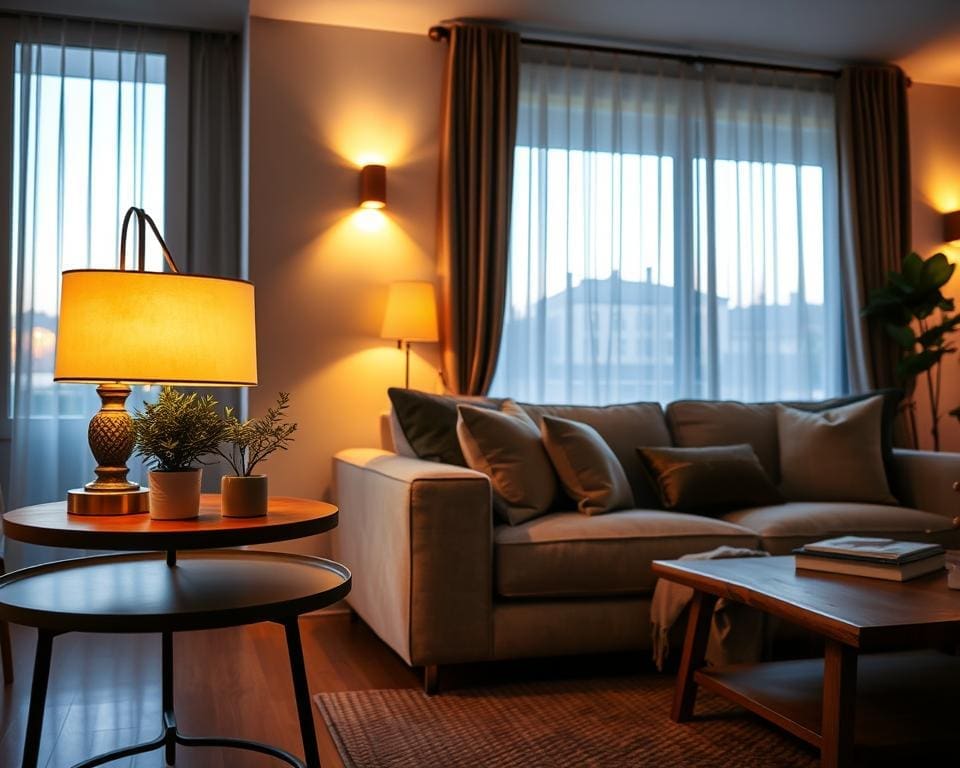
Layered lighting blends multiple light sources to shape mood, function and style. For homeowners and renters across the United Kingdom, from Victorian terraces to modern flats, understanding how can layered lighting improve ambience is the first step to a warmer, more adaptable home.
The layered lighting benefits are clear: better mood and wellbeing, improved interior aesthetics, clearer task lighting for cooking or reading, and energy savings when paired with LEDs and controls. Thoughtful lighting schemes can even add property value by making rooms feel more considered and comfortable.
Practical home lighting ideas start small. Low-cost changes such as table and floor lamps or swapping bulbs can immediately improve ambience with lighting. Moderate budgets allow for dimmers and track fittings, while higher investments bring integrated recessed lights and smart systems for dynamic control.
Key components of any scheme are ambient, task and accent lighting, together with colour temperature and intuitive controls. For reliable guidance on energy efficiency and safety, consult the Lighting Industry Association, government energy-saving advice and retailers such as John Lewis & Partners or David Mellor Lighting.
This article will next define layered lighting in detail, explore psychological effects and room-specific examples, outline design principles and technical choices, and finish with practical tips to transform your space.
How can layered lighting improve ambience?
Layered lighting transforms a room from a single flat wash into a flexible, welcoming space. By combining different light sources you gain control over mood, function and perception of scale. The approach helps you to define zones, reduce glare and create scenes that suit daily routines.
Defining layered lighting and its components
To define layered lighting, think of three complementary layers working together: ambient lighting, task lighting and accent lighting. Ambient lighting offers general illumination for movement and sight. Task lighting gives focused light for activities such as reading, cooking or applying make-up. Accent lighting draws the eye to art, texture or architectural details.
Common fixtures include ceiling-mounted fittings and recessed downlights for ambient lighting, desk lamps and under-cabinet LED strips for task lighting, and picture lights or directional spotlights for accent lighting. LEDs dominate the market for efficiency and longevity. For colour control and scenes you can choose smart bulbs from Philips Hue or IKEA TRÅDFRI. Check dimming compatibility when mixing fittings; trailing-edge and leading-edge dimmers are not always interchangeable.
Psychological effects of balanced light on mood and wellbeing
Research from lighting experts shows that light shapes circadian rhythm and alertness. Cooler, blue-enriched light supports focus during daytime. Warmer light promotes relaxation at night. Thoughtful layering uses temperature and intensity to match the body’s natural cycles.
Balanced schemes reduce eye strain and foster comfort. Properly tuned ambient, task and accent lighting makes spaces feel larger or cosier depending on the goal. This link between lighting and wellbeing helps a kitchen feel energised for meal prep and a bedroom feel calm for sleep.
Practical habits help. Use around 4000K for task-heavy daytime zones and 2700–3000K for evening living spaces. Employ gradual dimming and preset scenes to ease transitions throughout the day and support sleep hygiene.
Practical examples: living rooms, bedrooms and kitchens
Living rooms benefit from a warm ambient base from a pendant or recessed downlights. Add floor or table lamps beside sofas for task lighting when reading. Introduce accent lighting with picture lights or LED coving to highlight artwork and create focal points. Aim for 150–300 lux in general areas, using 2700–3000K LEDs with dimming for evening scenes.
Bedrooms should favour a cosy ambient glow and zonal task lighting at bedsides. Adjustable bedside lamps or wall-mounted swing-arm lights work well for reading. Consider low-level night lighting or motion-activated path lights for safe movement. Keep temperatures warm and use layered dimming to support relaxation.
Kitchens require bright, even ambient lighting plus concentrated task lighting over worktops and islands. Use under-cabinet LEDs and pendant lights for prep zones. Recessed downlights ensure general visibility while accent strips reveal open shelving. Choose 3000–4000K for task areas and manage glare on stainless steel surfaces with careful aiming and shielding.
- Safety note: consult a NICEIC-registered electrician for new circuits and follow UK building regulations for kitchens and bathrooms.
- Fixture tip: consider LED solutions for efficiency, with low-voltage halogen only for special accent effects and short-term use.
Design principles for effective layered lighting to enhance mood and style
Layered lighting turns a room from flat to full of life. Good lighting design principles treat light as a material. They use ambient, task and accent layers to create depth, comfort and visual interest.
Understanding the three layers: ambient, task and accent lighting
Ambient lighting provides the baseline lux for comfortable movement and even illumination. Task lighting boosts light where you need it for reading, cooking or crafting. Accent lighting highlights textures, art and architectural features.
Balance matters. Aim for ambient as the base level, task at 1.5–2× ambient where required and accent at roughly 3× ambient for focal points. This ratio creates hierarchy without harsh contrast.
Choose adjustable fixtures such as gimballed spots, swing-arm lamps and indirect uplighters. These reduce glare and allow softer transitions between layers. Mix finishes and styles so fittings complement the interiors they serve.
Choosing colour temperature and dimming to set atmosphere
Colour temperature lighting guides mood. Use 2700–3000K for warm, relaxing rooms. Pick 3000–3500K for neutral living areas and kitchens. Use 4000K+ for precise task zones or utility spaces. Remember lower kelvin means warmer light, higher kelvin means cooler light.
High CRI matters for accurate tones. Aim for CRI 90+ on artwork and textiles. For kitchens and bathrooms a minimum of CRI 80+ is sensible.
Dimming adds control. Use dimmable LED drivers and compatible switches to fade smoothly between scenes. Leading smart systems and standards—Zigbee, Z-Wave, Bluetooth mesh and Wi‑Fi—work with many products sold by John Lewis, Screwfix and Currys in the UK.
Create scenes for evening, reading and cooking. Use circadian-aware schedules to mimic daylight patterns and support wellbeing. Dimmers and lighting scenes help shift atmosphere for entertaining or winding down.
Placement strategies for depth, balance and visual comfort
Avoid direct glare at eye level. Place task lights to the side of the writing or reading hand to reduce shadows. Position accent lights close to objects and follow the 30-degree rule for artwork to prevent reflections.
Illuminate vertical surfaces as well as ceilings and floors to make rooms feel larger. Wall washers, uplighters and coving are effective for this. Combine ceiling, mid-level pendants and low-level table lamps to build layers.
Plan lighting around furniture and sightlines so scenes feel natural. Consider toe-kick LEDs behind cupboards, floor lamps near seating and pendants over dining tables to guide movement and focus.
Using controls and smart systems for dynamic ambience
Controls range from traditional dimmer switches and multi-gang scene plates to remotes, smartphone apps and voice assistants such as Amazon Alexa, Google Assistant and Apple HomeKit. These tools make it easy to recall favourite looks.
Smart lighting UK ecosystems like Philips Hue, LIFX, Ikea Home Smart and Hive offer scheduling, geofencing and occupancy sensors that save energy while adding convenience. Group lights and automate scenes for different tasks.
Check compatibility before installation. Match triac or trailing-edge drivers with the correct dimmer. Confirm neutral wire requirements for smart switches. Hire a qualified electrician for mains-level changes or new circuits.
- Tip: place accent fittings close to focal points for impact without overpowering the ambient layer.
- Tip: test colour temperature lighting in situ before finalising finishes and fabrics.
- Tip: use dimmers and lighting scenes to switch quickly between practical and relaxed modes.
Real-world tips and creative ideas to transform your space with layered lighting
Start small with low-cost lighting improvements to see immediate results. Swap old bulbs for warm dimmable LEDs (2700–3000K) and choose higher CRI where colour matters. Add plug-in table or floor lamps to build instant layers without rewiring, and fit LED strip lights under shelves, behind TVs or beneath kitchen units for discreet accent and task illumination.
For mid-range upgrades, fit dimmer switches and replace single pendants with multi-light fittings or semi-recessed units to spread ambient light more evenly. Consider adjustable recessed downlights on separate circuits to zone living areas and kitchens, and create coving or bulkhead lighting with concealed LED strips for a soft, indirect glow. These layered lighting ideas lift both mood and function.
High-impact approaches include commissioning a qualified lighting or interior designer and working with an electrician to install multi-zone, scene-capable systems. Integrate smart platforms such as Philips Hue or Lutron Caseta for whole-house scenes, circadian programming and voice control. Architectural solutions—track systems, wall washers, bespoke picture lights and integrated uplighters—dramatically reshape perception of space.
Styling tips: contrast warm table lamps with cooler task lights to create drama, and use accent lighting to reveal texture on brick, timber and wallpaper. Plan seasonal scenes for cosy winter evenings or bright summer entertaining. Always prioritise safety: check IP ratings for wet zones, use an NICEIC-registered electrician for mains work and follow Building Regulations Part P. Layered lighting is achievable in stages—define each room’s needs, pick one or two new layers to add, and refine as you go for thoughtful home lighting upgrades that suit any budget.