
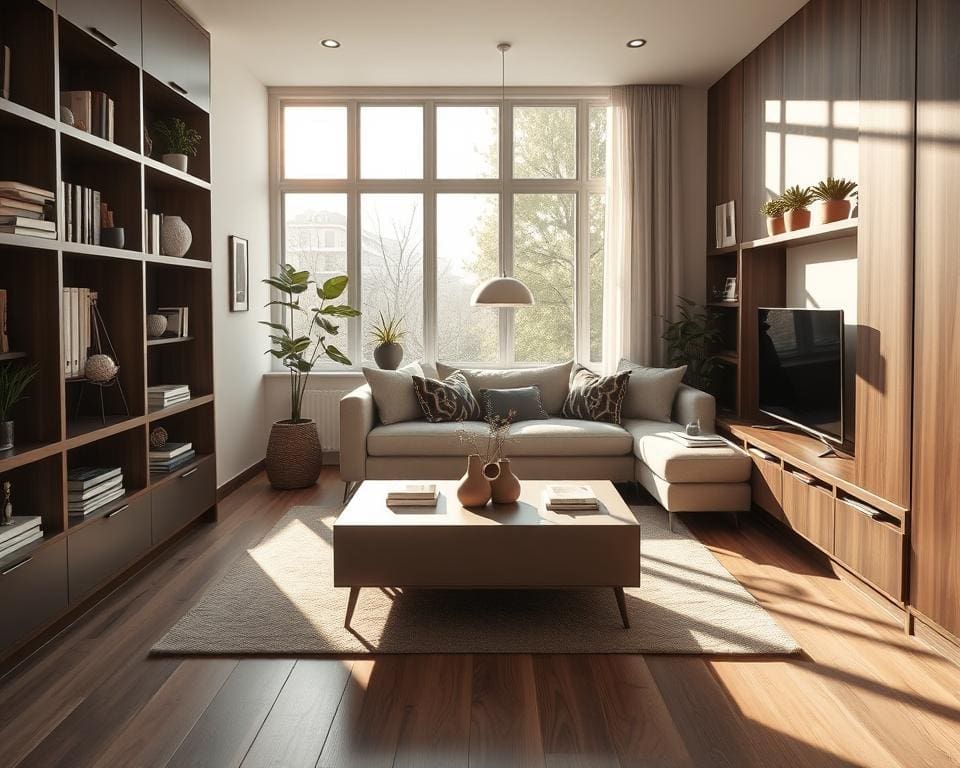
Built-in storage is a strategic, long-term response to limited square footage in UK homes. These fitted storage UK solutions include full-height wardrobes, under-stair cupboards, window seats with internal storage and bespoke joinery in kitchens. They turn awkward voids into practical zones and help maximise floor area in compact rooms.
By removing freestanding furniture, built-in units increase usable floor space and create a tidier visual flow. Good space-saving storage improves organisation and reduces clutter, which makes rooms feel larger and more inviting. For sellers and landlords, well executed fitted storage UK often adds appeal and can boost a property’s market value.
Built-in storage works well across typical British settings: Victorian and Edwardian terraces with deep alcoves, modern flats with tight layouts, and new-builds seeking distinctive features. In rented flats reversible solutions are a practical choice, while listed buildings need sensitive, compliant interventions. This article will set out practical design principles, material and hardware guidance, planning and cost considerations, measuring tips for awkward spaces, and real-life small home storage solutions to inspire homeowners, landlords and renovators.
How can built-in storage maximise small spaces?
Thoughtful built-in storage changes how a room feels and functions. Custom joinery replaces bulky freestanding furniture, opens floor space and uses the full height of a room. The result is a calmer, more efficient home that suits modern living in the UK.
Understanding the benefits of built-in storage
Permanent, customised solutions increase usable floor area by following wall lines and exploiting vertical volume. Tailored units reduce the footprint of storage and free circulation space in tight flats and terraces.
Organisational gains are immediate. Built-in compartments, shoe racks, hanging zones, deep drawers and pull-out trays cut down on rummaging and visual clutter. Research in interior design shows that orderly spaces read as larger and more restful.
Good fitted storage can raise a property’s appeal. Estate agents regularly note storage as a top priority for small-flat seekers. Well-specified fitted units in kitchens, bathrooms and bedrooms make homes easier to sell or let across Britain.
Design principles for maximising compact rooms
Use vertical storage wherever possible. Full-height units harness lofted volume and draw the eye upward, creating a sense of height even in low-ceiling rooms.
Choose multi-functional furniture to reduce the number of items in a plan. Seating with integrated storage, sofa beds with drawers and desks with concealed filing combine roles and keep floor space clear.
Ensure joinery sits seamlessly within the room. Align cabinets with skirting, architrave and window reveals. Flush doors and minimal hardware keep sightlines open and prevent the storage from reading as visual clutter.
Practical examples in UK homes
Under-stair storage works well in terraced houses. Clever use of the sloping void creates cupboards, pull-out pantries and shoe zones that reclaim hallway and kitchen space.
Window seat storage is ideal for small living rooms and compact kitchen-diners. A bench with hinged lids or drawers gives seating and hidden space for blankets, toys or seasonal items.
Built-in wardrobes UK solutions often replace freestanding chests and wardrobes. Shallow fitted wardrobes, typically 450–600mm deep, suit narrow British bedrooms while offering organised spaces for shoes, suits and folded clothes.
For inspiration, look to John Lewis & Partners for fitted bedroom concepts, IKEA’s ALGOT and PLATSA systems for modular budgeting and local bespoke joiners for fully customised work. Each option helps maximise space without compromising style.
Design strategies and materials to enhance space perception
Careful choice of finishes and fittings can change how a room feels. Light, neutral palettes such as soft whites, warm greys and muted pastels reflect daylight and increase perceived space. Carrying the same colour from walls into joinery reduces visual breaks and creates a seamless backdrop that makes small rooms breathe.
Use reflective surfaces with restraint. Satin or semi-matt paints and lacquered cabinetry bounce light into corners without the glare of full gloss. Mirrored doors or glass-fronted cupboards are useful where depth is limited, but avoid overuse in period interiors where high-gloss can look out of place.
Match flooring and joinery tones to blur the line between storage and floor. A cohesive palette makes edges less obvious and helps furniture feel built-in rather than bulky. This approach works well with finishes for small spaces, creating a calm, uninterrupted look.
Choose hardware that enhances flow and function. Concealed hinges keep sightlines clean, while soft-close drawers reduce noise and wear in busy households. Pocket or sliding doors free up swing space in narrow hallways and compact kitchens.
Customisable shelving systems and adjustable rails from reputable fittings such as Elfa or Häfele let homeowners adapt storage as needs change. Integrated LED strips under shelves and inside wardrobes improve usability and highlight depth, drawing attention to what storage holds rather than the room’s size.
Consider materials that suit the UK climate. Moisture-resistant finishes like PVC-faced MDF, marine-grade plywood and moisture-resistant MDF withstand condensation in bathrooms, kitchens and utility rooms. Such choices protect joinery and keep units working for longer.
Sustainable joinery should guide material selection. FSC-certified timber, low-VOC paints and durable hardware lower environmental impact and suit both modern flats and older terraces. Solid timber is ideal for high-wear areas, while engineered boards resist seasonal movement in Britain’s variable humidity.
For rental properties, pick robust, low-maintenance options. Rental-friendly fittings UK preferences tend to favour resilient surfaces and fast, reversible fixes that landlords and tenants both accept. Choose long-life components to reduce replacement cycles and maintain appearance.
Work with local suppliers and craftsmen who understand seasonal timber movement and insulation challenges in British homes. Skilled joiners design details that breathe with the house, improving durability and ensuring built-in storage feels like a natural part of the room.
Practical planning, costs and implementation tips for homeowners
Begin with a clear audit of possessions. Sort items into keep, donate or sell, store and discard. Count clothing, books and seasonal goods to work out shelf depth, hanging length and drawer numbers. Photograph cupboard contents to spot duplication and to inform the layout for planning built-in storage.
Identify priority zones by daily use: the hall, kitchen, bedroom and bathroom have different needs. Keep everyday items in easy-reach zones and assign higher or deeper spaces for seasonal or infrequently used goods. For measuring for fitted storage, take heights at several points, measure wall widths at top, middle and bottom, and note skirting, window reveals and radiator runs. Allow a tolerance of 2–5mm for uneven walls common in older UK houses.
Costs vary by approach. Ready-made fitted systems and semi-bespoke solutions from retailers such as IKEA or Benchmarx can start from a few hundred to a few thousand pounds per run. Mid-range bespoke joinery costs UK commonly fall between £1,500 and £6,000 depending on complexity, while high-end custom cabinetry can exceed £8,000 per room. Materials, hardware quality, integrated lighting and site complexity all affect the final figure.
Consult a joiner or architect for structural changes, awkward alcoves or when storage affects load-bearing elements. In listed building storage scenarios, speak with local planning or conservation officers early and favour reversible, minimal-impact solutions. Renters and cautious homeowners can use slim freestanding units, modular IKEA PLATSA or BRIMNES systems, a DIY window seat with storage or floating shelves fixed with non-damaging fittings.
Keep built-ins working well with routine maintenance. Declutter seasonally, clean tracks and hardware, and use suitable products for finishes — mild detergent for painted MDF and oil for raw timber. Repaint high-traffic edges periodically and tighten hinges or runners as needed. Record measurements, keep receipts and warranties for brands like Blum, Häfele and Grass, and photograph completed installations to ease future repairs or replacement of bespoke parts.