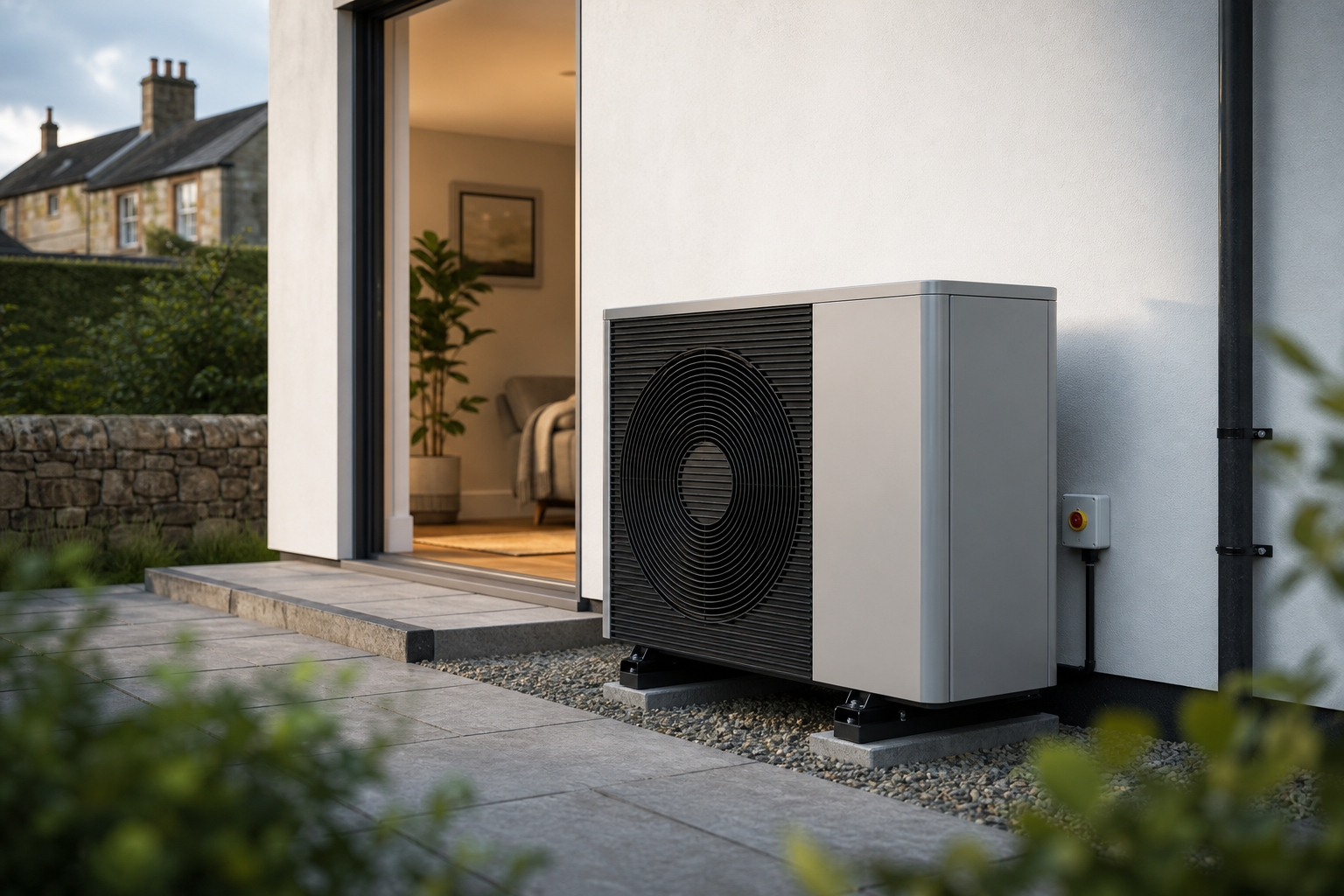

For many organisations, heating is a major running cost and a practical route to lower direct carbon emissions. Heat Pumps Explained: How Do They Work? is a useful question for facilities teams, landlords, consultants and finance managers because the technology can look unfamiliar, even though its principle is simple. A heat pump moves heat rather than creating it by burning fuel. In UK offices, warehouses, schools and mixed-use buildings, that difference affects plant design, electrical capacity, controls, maintenance and comfort.
Heat Pumps Explained: How Do They Work? In Simple Terms
A heat pump uses refrigeration science to collect low temperature heat from outside air, the ground or water, then lifts it to a useful temperature inside a building. It can also run in reverse for cooling, depending on the system. The process is powered by electricity and relies on a circulating refrigerant, a fluid chosen because it changes state at convenient temperatures.
The key point for business users is that a heat pump is not an electric heater in the usual sense. Direct electric heating turns electricity into heat. A heat pump uses electricity to drive a compressor and move existing heat, so its performance is judged by how much heat it delivers for each unit of electricity consumed.
The Main Components
Evaporator, Compressor, Condenser And Expansion Valve
Most heat pumps share four core components. The evaporator absorbs heat from the source and allows the refrigerant to boil. The compressor raises the pressure of that refrigerant vapour, increasing its temperature. The condenser releases heat into the building’s heating circuit, air system or hot water cylinder. Finally, the expansion valve reduces pressure so the refrigerant can cool and repeat the cycle.
Controls, Emitters And Storage
In commercial settings, the supporting equipment can be just as important. Weather compensation, buffer vessels, pumps, valves and building management system links all influence efficiency. Heat emitters also matter. Underfloor heating, fan coils and correctly sized radiators can work well when designed for lower flow temperatures. Thermal stores or hot water cylinders may be used where demand varies during the day.
The Heating Cycle Step By Step
A simple cycle helps explain what happens inside the unit:
- The evaporator draws heat from air, ground or water, even when the source feels cold.
- The refrigerant absorbs that heat and changes from liquid into vapour.
- The compressor squeezes the vapour, which raises its temperature significantly.
- The condenser transfers the heat into the building system, while the refrigerant turns back into liquid.
- The expansion valve drops the pressure, preparing the refrigerant for another pass.
This loop continues while there is demand for space heating or hot water. The colder the source and the hotter the required output, the harder the compressor works. That is why careful design, insulation, commissioning and controls can be as valuable as the heat pump unit itself.
Common Types Used In UK Businesses
Air source heat pumps are common because they are comparatively straightforward to site. Outdoor units extract heat from ambient air and can serve individual areas or central plant. Ground source systems use buried pipework or boreholes to access steadier ground temperatures, but they need suitable land, ground works and design expertise. Water source systems take heat from lakes, rivers, aquifers or closed water loops where these are available and permitted.
Businesses may also encounter exhaust air heat pumps, hybrid systems paired with boilers, and reversible units that provide heating and cooling. The right option depends on heat demand, available space, building fabric, noise constraints, planning context and the temperature needed by existing distribution systems.
Efficiency, Costs And Practical Limits
Heat pump efficiency is often described using coefficient of performance or seasonal performance. These measures compare useful heat output with electrical input. They are useful for assessing options, but real results depend on the complete installation. Poor controls, undersized pipework, high flow temperatures or weak maintenance can reduce performance.
For B2B decision-makers, capital cost is only one part of the case. Electrical supply capacity, tariff structure, plant room changes, roof loading, downtime, metering and landlord or tenant responsibilities may all shape the project. Some buildings need fabric improvements before a heat pump can operate efficiently at lower water temperatures.
Heat pumps are not a universal replacement that can be dropped into every system without review. Older buildings with high heat losses, process heat loads or very hot water requirements may need additional measures, staged upgrades or another technology alongside the heat pump. The assessment should start with demand, not with a preferred product.
Design Questions For Commercial Projects
Before specification, teams normally need a clear view of building use. A hotel, a care home, a distribution centre and an office have very different load profiles. Peak demand, occupancy, hot water use and future refurbishment plans all affect sizing and resilience.
Key questions include:
- What flow temperature is required on the coldest design days?
- Where can outdoor plant be located without causing noise issues?
- Is the electrical supply adequate for compressors and auxiliary equipment?
- How will the system be metered, controlled and maintained?
A good design also considers defrost cycles for air source units, access for engineers, drainage, refrigerant safety and business continuity during installation. In multi-site portfolios, standardisation can help, but each building still deserves its own heat-loss calculation and practical survey.
Frequently Asked Questions
Can heat pumps work in cold UK weather?
Yes. They can collect heat from cold air, ground or water, although efficiency changes with conditions. Correct sizing, emitter design and controls are important for reliable winter performance.
Do heat pumps always need larger radiators?
Not always. Some existing emitters are suitable, especially after insulation improvements. Others may need resizing because heat pumps usually perform best with lower flow temperatures.
Are heat pumps suitable for every commercial building?
No single heating technology suits every site. Heat pumps can be excellent in many commercial buildings, but high temperature loads, limited space, weak electrical capacity or poor fabric may require extra design work up front.