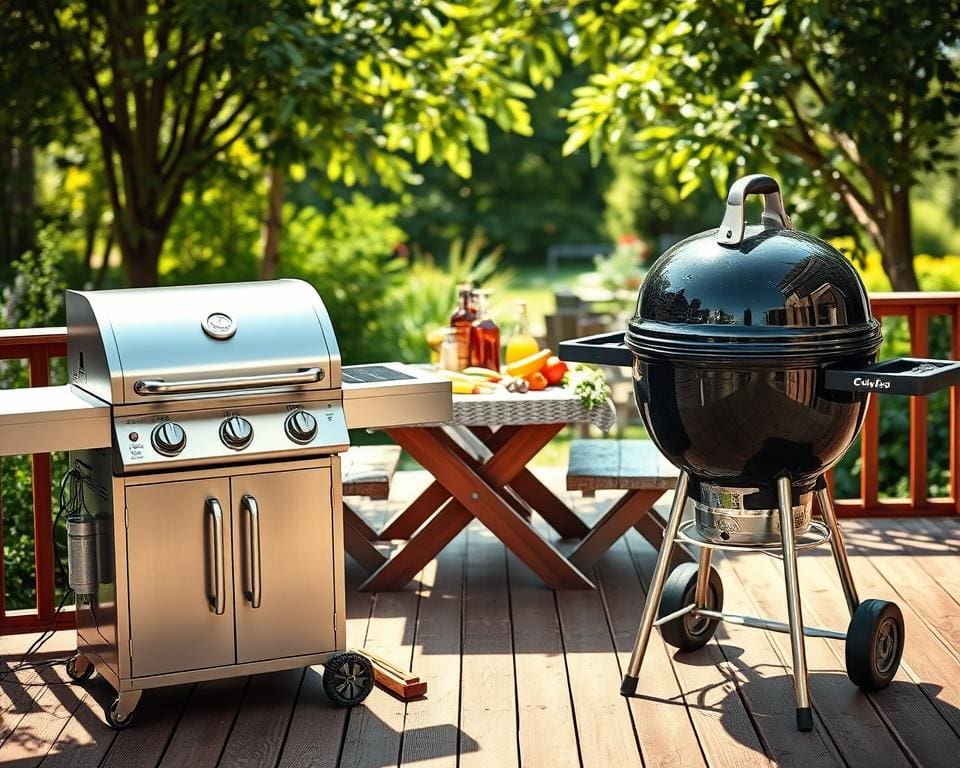

Choosing between a gas BBQ or charcoal BBQ depends on how you like to cook outdoors. Think about how often you barbecue, how much time you have, and whether you prefer quick meals or a slower, more traditional experience.
A gas BBQ gives you fast ignition, steady heat and simple temperature control. It suits busy weekdays and makes it easier to cook for several people. A charcoal BBQ takes longer to light, but hot coals create a rich, smoky flavour and a classic barbecue atmosphere.
This gas versus charcoal BBQ guide compares preparation time, heat control, cooking flexibility, running costs, cleaning and storage. It also covers safe positioning, gas bottle storage and charcoal disposal, which matter when you barbecue in a UK garden.
There is no single best BBQ for your garden. Your choice may suit quick family meals, relaxed weekend cooking or different barbecue cooking styles. For a wider look at sizes, features and prices, explore this practical BBQ buying guide.
This guide takes a clear approach to choosing a barbecue. It compares both fuel types first, then helps you match their strengths to your garden, cooking habits and lifestyle.
gas BBQ or charcoal BBQ: which is best for your cooking style?
Your choice depends on how you like to cook, how often you use the barbecue and how much time you have. Gas suits speed and control, while charcoal creates a slower, more hands-on experience. Both can support relaxed outdoor entertaining.
Choose a gas BBQ for quick, convenient cooking
Gas BBQs use burners supplied by a gas bottle, usually propane or butane. An integrated ignition system can light the burners quickly, so you avoid much of the preparation linked to charcoal.
Turn the controls, heat the cooking grates and start preparing food. This makes a gas model useful for busy households, frequent cooks and quick BBQ meals. It can suit a family tea, a midweek lunch or an unplanned gathering.
Heat control is simple. You can raise or lower the burner temperature with a control knob. This helps when food browns too fast or needs gentler heat. It can make convenient BBQ cooking easier when you are preparing meat, vegetables and bread at the same time.
A gas barbecue usually creates less smoke during ordinary cooking than a charcoal model. This can give you a cleaner, more controlled cooking area, especially when children are nearby or guests are waiting. The best gas BBQ for your needs will offer enough cooking space, clear controls and steady heat.
Choose a charcoal BBQ for smoky flavour and traditional cooking
A charcoal BBQ needs more preparation. You must arrange and light the fuel before cooking. Charcoal usually needs time to develop a layer of grey ash and reach an even temperature.
Lumpwood charcoal and briquettes can create a distinctive smoky barbecue flavour. The taste may vary with the fuel, cooking time, food and fat dripping onto the coals. Smoke and live heat give each meal a character that gas cannot match.
Charcoal suits relaxed cooking and traditional charcoal cooking. You may enjoy lighting the barbecue, tending the coals and moving fuel around the cooking area. It can turn outdoor entertaining into part of the meal, rather than a simple way to prepare food.
Charcoal produces more smoke and needs close attention to airflow and flare-ups. That care can add interest for barbecue enthusiasts. If you want the best charcoal BBQ for slow, sociable cooking, choose a model with good ventilation and enough room to move the fuel.
Gas BBQ and charcoal BBQ flavour, heat and temperature control
Fuel choice shapes both flavour and cooking control. A gas barbecue gives food a clean taste, so marinades, herbs and spices remain clear. Charcoal creates a noticeable smoky BBQ flavour, with a deeper aroma from hot coals and wood.
The final taste depends on the charcoal type, fuel quantity, airflow and cooking time. Fat dripping onto hot coals can cause flare-ups and bitter smoke. Read more about charcoal choices for your barbecue before lighting your grill.
Gas burners provide steady, repeatable heat across set areas of the grill. With two or more burners, you can lower the heat beneath delicate food and raise it for searing. Turning off one burner creates an indirect cooking area without moving the food.
This makes gas BBQ temperature control simple during a busy cook. You can adjust the flame quickly, limit heat under fish or vegetables, and keep the lid closed to retain warmth.
Charcoal needs closer attention. The coal quantity, arrangement, airflow and lid position all affect the temperature. Open vents supply oxygen and raise the heat. Closed vents reduce the airflow. This is the basis of effective charcoal BBQ heat control.
Arrange the coals beneath one side to create direct and indirect cooking zones. The hot side suits searing, while the coal-free side gives gentler heat. A barbecue with a lid improves heat circulation and supports covered roasting, larger cuts and whole poultry.
- BBQ for steaks: Gas offers repeatable searing, while charcoal brings stronger heat and a smoky edge.
- BBQ for vegetables: Gas gives delicate produce precise heat, while charcoal adds useful charring and depth.
- BBQ for fish: Gas provides stable, gentle heat. Charcoal works well when fish sits away from direct flames.
- Slow cooking BBQ: Both fuels work with a lid and indirect heat. Gas needs less adjustment, while charcoal rewards careful monitoring.
Burgers suit either barbecue. Charcoal can add char and smoke, while gas is practical when you are cooking several batches. Your results depend on the grill design, grate quality, cooking area and wind exposure, as well as your skill in managing heat.
Running costs, preparation time and barbecue maintenance
Your choice of fuel affects the price, cooking speed and amount of care your barbecue needs. Gas is ready in minutes and offers quick heat control. Charcoal takes more preparation, yet it can suit longer, slower cooking sessions.
Gas BBQ fuel costs and upkeep
Gas BBQ running costs depend on the bottle size, refill price, burner output and how often you cook. Cooking time matters too. A barbecue with good heat retention may use less fuel than a model that loses heat through a thin lid or open gaps.
Propane and butane have different properties and connection needs. Use only the fuel and regulator stated by the barbecue manufacturer. Follow the supplier’s instructions for every gas bottle refill. One bottle may last for several meals, yet cold weather, strong wind, long cooking sessions and full burner power can increase use.
Routine BBQ maintenance helps control fuel use and protects the appliance. Brush the grates after cooking and remove grease from the drip tray. Check the burner tubes and flame ports for food debris, grease or insects that could block the flame.
A grease management system guides fat into a tray or container. This can reduce flare-ups and make BBQ cleaning easier. Empty and wash the tray often. Built-up grease can catch fire during a hot cook.
Inspect hoses, regulators, connections and seals for cracks, wear or other damage. Do not use the barbecue if you suspect a gas leak. Keep bottles upright, secure and well ventilated. Good gas bottle storage means keeping them away from heat, flames and ignition sources. Never store a bottle indoors, in a cellar or in another below-ground space.
Charcoal BBQ fuel costs and cleaning requirements
Charcoal BBQ cost varies with fuel quality, pack size and brand. Lumpwood charcoal often lights faster and reaches a high temperature. Pieces differ in size, so the heat may be less even and the fuel may burn for a shorter time.
Charcoal briquettes have a more uniform shape. They can provide steady heat for longer, though they may take more time to become ready. Your fuel use depends on the size of the barbecue, cooking time, weather, wind and heat level. A large grill filled for a short meal may cost more to run than a smaller model suited to the number of people you feed.
Natural firelighters, chimney starters and other approved methods can help with set-up. Natural fire starters for charcoal may burn for 10 to 15 minutes. Masterbuilt natural starters can light around 2 lb of charcoal in 15 to 20 minutes, while a Bison Airlighter can light charcoal in under 20 seconds.
Place the firelighter beneath the fuel and wait for the flames to grow. Wax starters may need more time, with a BBQ Dragon Fan helping air reach the fire. A propane torch can prepare a large smoker in about 20 minutes. Let the charcoal become fully lit and covered with a suitable layer of ash before cooking.
Charcoal takes longer to recover heat after you open the lid or add food. This makes temperature changes less immediate than gas control. Never relight charcoal with petrol, paraffin or another unsuitable accelerant.
Allow the fuel to cool completely before removing ash. Put cold ash in a suitable non-combustible container and follow local disposal guidance. Clean the cooking grate and clear the ventilation openings. Regular BBQ cleaning reduces flare-ups and helps the grill hold a steadier heat.
Which barbecue is easier to use and maintain?
Gas is usually simpler for repeated cooking. You can ignite the burners, set the temperature and regain heat quickly after opening the lid. A high setting for 10 minutes can preheat the grill before food goes on.
Charcoal requires more fuel management and preparation. It can take longer to light, reach cooking heat and cool down. Ash removal adds to the cleaning routine, especially after frequent use.
Both types need regular BBQ maintenance and careful positioning. Use your barbecue outdoors, with plenty of ventilation. Never use a gas or charcoal BBQ inside a home, garage, shed, tent, caravan or other enclosed space. Carbon monoxide and fire risks can be fatal.
- Set the barbecue on a stable, level, non-combustible surface.
- Keep it away from buildings, fences, overhanging branches and flammable materials.
- Keep children and pets away from hot surfaces, flames and fuel.
- Do not pour water over a gas barbecue or a large amount of hot charcoal. Steam, splashing grease and sudden temperature changes can cause injury.
Good BBQ safety UK practice means cleaning as often as your cooking pattern requires. A well-kept grill gives you safer operation, fewer flare-ups and more consistent heat.
How to choose the right barbecue for your garden and lifestyle
When learning how to choose a BBQ, start with the space available. Measure your patio, garden or balcony, then allow room for safe movement, ventilation and access to the lid. A BBQ for a small garden should have a compact footprint and secure storage. Gas models also need space for the hose and bottle, while charcoal units need a dry place for fuel and ash. A portable BBQ suits occasional cooking and easy storage. Wheeled gas models offer movement, but their frame and bottle can make them heavy.
Match the cooking area to the number of people you usually feed. A small grill may suit two people, while a family BBQ needs more space and separate heat zones. Think about your usual meals, too. Steaks and burgers need strong heat for searing. Fish and vegetables benefit from steady control. Large joints and whole poultry need a lid and an indirect cooking area. These points form a useful BBQ buying checklist UK shoppers can use before comparing models.
Look for the best BBQ features that support your cooking habits. Multiple burners help you create hot and cool zones, while a side burner can heat sauces or side dishes. A warming rack keeps cooked food hot. A lid improves heat circulation and supports indirect cooking, and a thermometer helps you monitor the grill. Removable grease trays and accessible grates make cleaning easier. You can also extend evening gatherings with suitable garden lighting and outdoor fire tables.
A gas and charcoal combination BBQ may suit you if you want quick weekday meals and smoky food at weekends. However, it costs more, takes up extra space and requires care for both fuel systems. Choose gas for fast ignition, repeatable heat and regular cooking. Choose charcoal for deep flavour, high-heat searing and a traditional experience. Before buying, consider your space, storage, cooking group and comfort with hot coals. The right barbecue should fit your lifestyle as well as your garden.