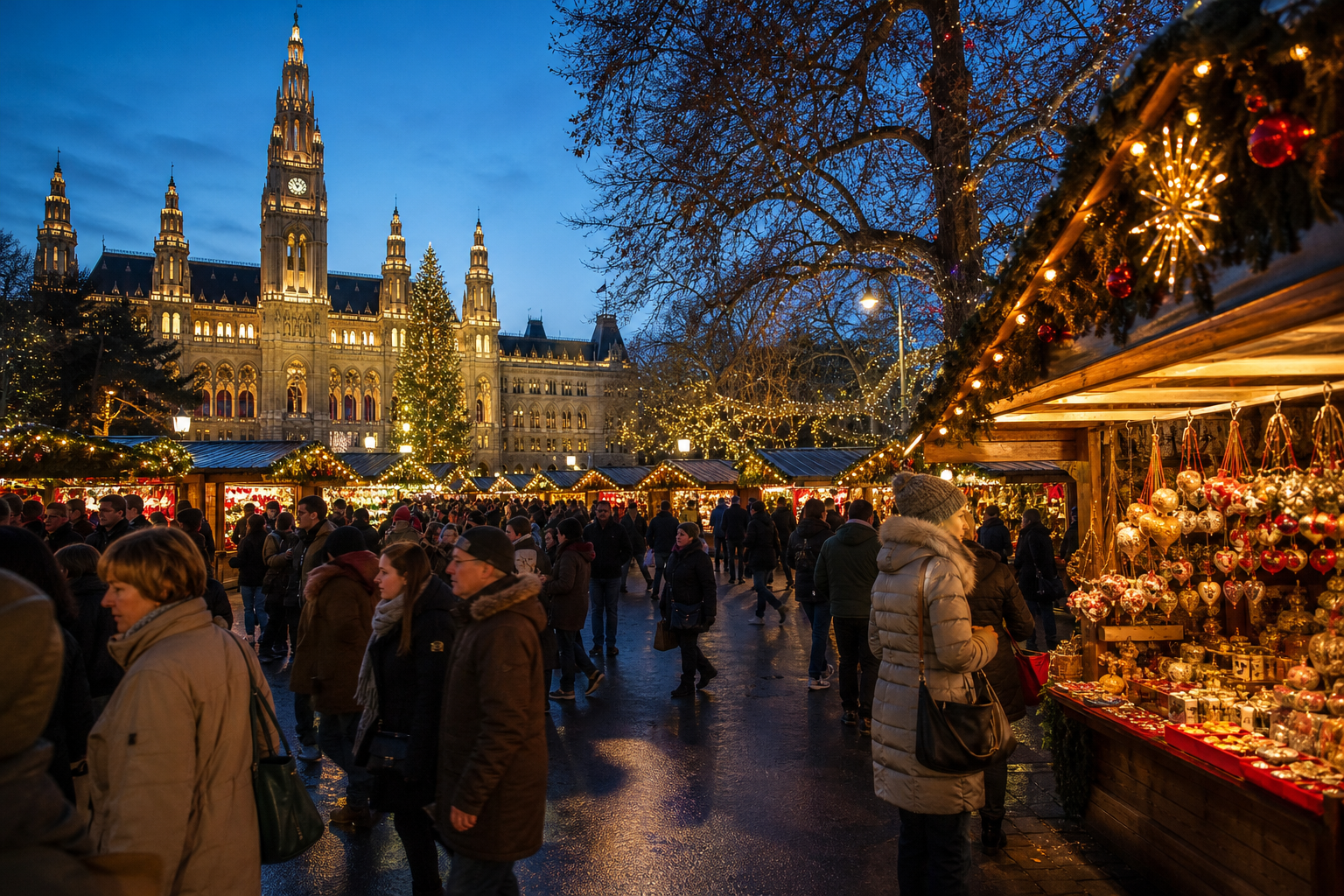

Exploring the Christmas markets of Vienna is a practical way to combine seasonal atmosphere, cultural depth and well-paced business travel. For UK companies planning client hospitality, incentive trips or team gatherings, the Austrian capital offers a polished festive setting without feeling overly formal. Its markets are spread across historic squares, palace courtyards and creative neighbourhoods, giving organisers several styles of experience within one compact city.
Why Vienna suits festive business travel
Vienna works well for business groups because it is easy to navigate, rich in culture and calm in tone. The city’s Christmas markets add warmth and colour, yet the wider setting remains professional. This balance matters for B2B travel, where guests may be moving between meetings, dinners, site visits and informal networking.
The markets also help create shared moments. A group can move from a museum visit to a market square, enjoy hot punch or roasted chestnuts, and continue conversations in a relaxed environment. For international teams, the setting feels distinctive without requiring detailed local knowledge.
Another advantage is variety. Some markets are grand and photogenic, while others feel more local and craft-led. This means organisers can shape an itinerary around the mood of the group rather than treating every market as the same experience.
Exploring the Christmas markets of Vienna by location
The best approach is to see Vienna’s markets as a network rather than a single attraction. Each location has its own character, pace and practical value for business visitors.
The market near Vienna City Hall is one of the most recognisable festive settings in the city. Its scale, lights and central location make it useful for first-time visitors and larger groups. It can be busy, but the visual impact is strong, especially in the evening.
Markets at palace locations, such as Schönbrunn and Belvedere, offer a more elegant backdrop. These settings are particularly suitable when the aim is to connect festive hospitality with Vienna’s imperial architecture and cultural identity. They also work well as part of a wider day including galleries, gardens or formal dining.
Neighbourhood markets, including those around Spittelberg or Freyung, often feel more intimate. They can be better suited to smaller groups, senior visitors or delegates who prefer crafts, design and conversation over crowds.
Useful market styles to compare include:
- Grand civic markets, ideal for atmosphere, lights and first impressions.
- Palace courtyard markets, suited to premium hospitality and cultural programmes.
- Neighbourhood markets, helpful for smaller groups and a more local feel.
- Craft-focused markets, valuable when guests are interested in design and handmade gifts.
Planning considerations for UK business groups
Corporate travel during the festive season needs careful timing. Vienna’s markets are popular, and evenings can become crowded, especially close to weekends. For business groups, early evening often works best: the lights are visible, the atmosphere is lively, and the schedule can still lead into dinner.
Weather should be taken seriously. Vienna in winter can be cold, and outdoor standing time may affect guest comfort. Shorter market visits, warm indoor breaks and clear meeting points help keep the experience enjoyable.
Transport is another practical point. Vienna’s public transport is extensive, but groups may still need private transfers for punctuality, accessibility or senior stakeholders. When several markets are included in one day, it is better to plan by district rather than crossing the city repeatedly.
For smoother group management, consider the following details:
- Set a visible meeting point before guests separate to browse.
- Build in time for queues at food and drink stalls.
- Check whether guests have dietary requirements before planning shared refreshments.
- Keep walking distances realistic, particularly in cold weather.
- Avoid overloading the schedule with too many markets in one evening.
Food, drink and guest experience
Food and drink are central to the Vienna market experience. Visitors will find seasonal pastries, savoury snacks, roasted nuts, hot drinks and regional specialities. For business guests, these details can create relaxed conversation, especially when people are meeting across departments, offices or markets for the first time.
The traditional mug culture is also part of the experience. Hot drinks are often served in reusable mugs with a deposit system, which is simple once explained. For groups, it is helpful to mention this in advance, as it avoids confusion at busy stalls.
Gift browsing can also support the wider purpose of a trip. Handmade decorations, ceramics, candles and food items provide natural talking points. They give guests time to slow down, compare finds and engage with the city beyond formal venues.
Balancing atmosphere with business objectives
A market visit should support the purpose of the trip, not dominate it. For an incentive programme, the markets may be the highlight. For a client event, they may work better as a warm pre-dinner experience. For internal meetings, they can offer a shared reward after a structured working day.
The editor’s view is that Vienna’s greatest strength is flexibility. It can feel grand, traditional, creative or intimate depending on the market chosen. That makes it easier for businesses to match the festive element to the tone of their brand, the seniority of attendees and the rhythm of the wider itinerary.
The most successful visits are not necessarily the longest. A focused 60 to 90 minutes in the right setting can be more memorable than several rushed stops. In B2B travel, clarity and comfort often create the best festive experience.
Frequently Asked Questions
When do Vienna’s Christmas markets usually take place?
Vienna’s Christmas markets usually run from mid-November into late December, though exact dates vary by location each year. Some festive activity may continue beyond Christmas, but organisers should always check current opening details when planning.
Which Vienna Christmas market is best for business groups?
There is no single best choice for every group. City Hall offers scale and impact, while palace and neighbourhood markets may suit smaller, more refined business gatherings with a stronger cultural or local focus.
Are Vienna’s Christmas markets suitable for client hospitality?
Yes, they can work well for client hospitality when the visit is planned with comfort, timing and group size in mind. A short market experience before dinner often feels polished but informal.
What should UK business travellers wear at the markets?
Warm layers, comfortable footwear and a smart winter coat are sensible choices. The markets are outdoors, and guests may be standing or walking for longer than expected in cold conditions.
Can the markets fit into a wider corporate itinerary?
Yes, the markets can sit alongside meetings, cultural visits, dinners and incentive activities. The key is to avoid over-scheduling and choose locations that match the group’s pace and purpose.