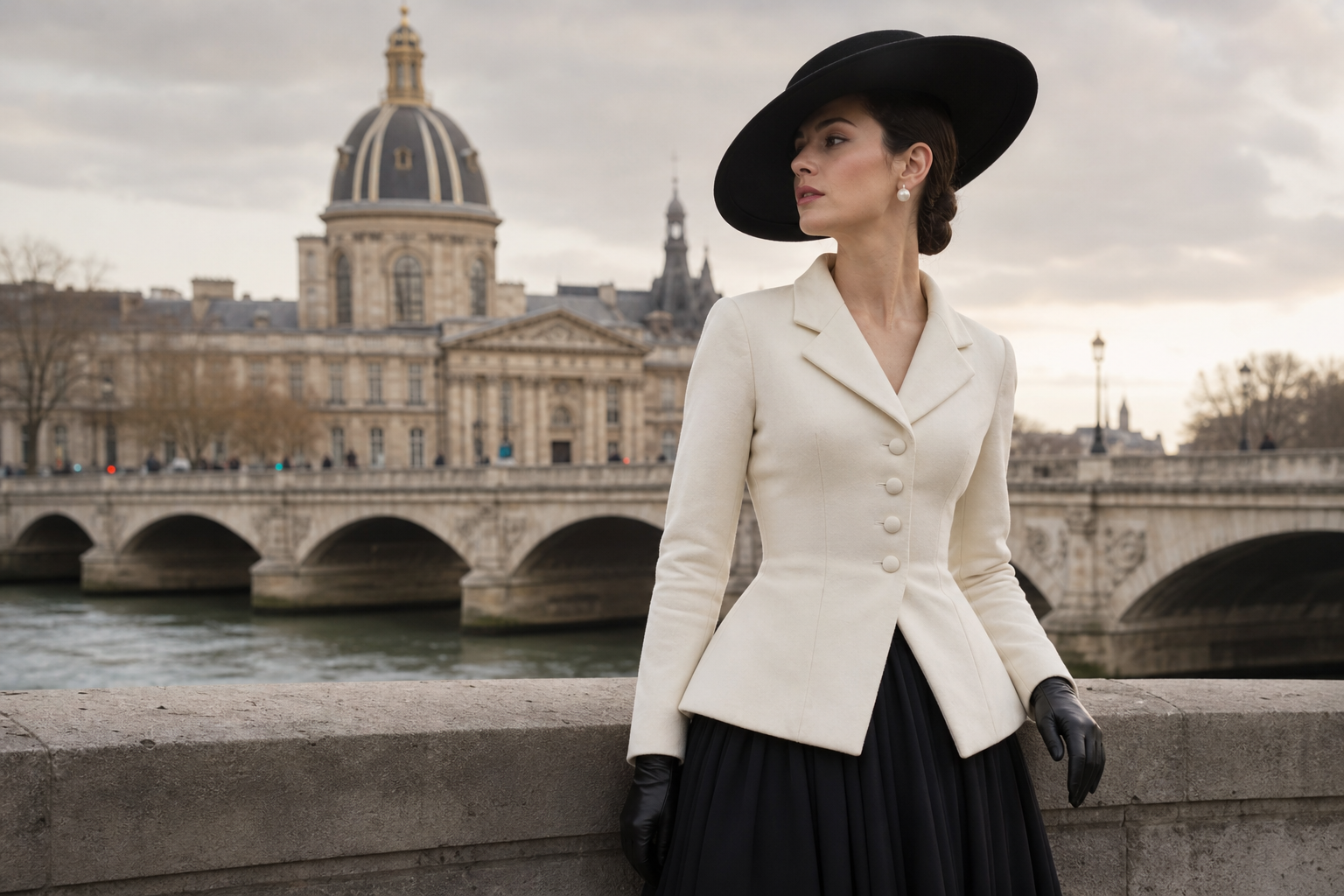

The landscape of modern luxury was irrevocably altered in February 1947 when Christian Dior debuted his first collection in Paris. At the heart of this revolution was a single garment that redefined the female silhouette and restored Paris as the global centre of haute couture. Dior's Bar Jacket: A Landmark in Fashion Design represents more than just a piece of clothing; it is a masterclass in architectural tailoring and a symbol of post-war optimism. For B2B professionals in the fashion, retail, and textile industries, understanding the construction and cultural impact of this piece is essential for grasping the evolution of luxury branding.
The Architecture of the New Look
The Bar Jacket was the centrepiece of the "Corolle" line, though the press quickly dubbed the entire aesthetic the "New Look". After years of wartime austerity, where fabric was rationed and silhouettes were boxy and masculine, Dior proposed a radical return to femininity. The jacket was designed to create an exaggerated hourglass shape, focusing on a cinched waist and padded hips.
Unlike the fluid garments of the era, the Bar Jacket functioned like a piece of sculpture. Dior utilised heavy fabrics and internal structures to force the fabric into a specific shape, regardless of the wearer's natural proportions. This shift from following the body to shaping the body marked a pivotal moment in garment construction.
Technical Construction and Materials
The structural integrity of the jacket relied on a sophisticated internal framework. Dior used layers of stiffened canvas and padding to achieve the desired volume. The precision of the tailoring ensured that the jacket remained rigid yet elegant, providing a stark contrast to the voluminous pleated skirts that typically accompanied it.
The choice of cream-coloured shantung silk for the original piece was intentional. The fabric's slight sheen and inherent stiffness helped maintain the architectural lines while conveying a sense of luxury and purity. This combination of rigorous engineering and opulent material set a new standard for haute couture production.
The Impact on Silhouette and Proportion
By narrowing the waist and expanding the hips, Dior shifted the visual focal point of women's attire. This was not merely a stylistic choice but a psychological one. The silhouette evoked a sense of luxury and abundance that had been absent during the conflict.
The proportions were designed to evoke the "flower woman," with the shoulders softly rounded and the waist tightly defined. This silhouette required a specific understructure, often including a waist cincher, which highlighted the symbiotic relationship between the garment and the foundation wear of the period.
Dior's Bar Jacket: A Landmark in Fashion Design and its Market Influence
From a business perspective, the Bar Jacket did more than change how women dressed; it changed how luxury houses operated. The immediate global success of the New Look demonstrated the power of a strong, cohesive visual identity. Dior proved that a single, iconic silhouette could drive demand across an entire brand ecosystem, from perfumes to accessories.
The jacket acted as a catalyst for the revival of the French textile industry. Because the New Look required vast quantities of fabric—sometimes dozens of metres for a single skirt—it stimulated production in mills across France. This created a ripple effect through the supply chain, benefiting weavers, embroiderers, and lace-makers who had struggled during the war years.
The Evolution of the Icon Across Eras
One of the most remarkable aspects of the Bar Jacket is its ability to be reimagined by subsequent creative directors. While the original 1947 version was a rigid statement of femininity, later iterations have adapted to the changing social roles of women and the evolving tastes of the luxury consumer.
Each designer who took the helm at Dior has used the Bar Jacket as a canvas to express their own vision while respecting the house's heritage. This process of "re-mixing" a classic is a core strategy in luxury brand management, ensuring that a heritage piece remains relevant to a contemporary B2B and B2C audience.
Modern Interpretations and Deconstruction
In recent decades, the Bar Jacket has moved away from its strict architectural roots. Designers have experimented with different materials, such as denim, leather, and technical fabrics, to make the piece more wearable for the modern professional. Some versions have removed the internal padding entirely, relying on clever cutting techniques to suggest the hourglass shape without restricting movement.
The jacket has also been deconstructed, appearing as a cropped blazer or integrated into a dress. These variations show how a landmark design can evolve from a rigid uniform of high society into a versatile piece of contemporary luxury.
Sustainability and the Future of Couture
As the industry moves towards more sustainable practices, the legacy of the Bar Jacket is being viewed through a new lens. The original philosophy of "slow fashion"—where a garment is crafted by hand over hundreds of hours to last a lifetime—is now more relevant than ever.
Modern luxury houses are exploring how to maintain the structural integrity of such iconic pieces using eco-friendly materials. The challenge lies in replacing traditional stiffeners and synthetic linings with biodegradable alternatives without sacrificing the precise silhouette that makes the Bar Jacket an enduring symbol of design excellence.
The Legacy of Tailoring Excellence
The Bar Jacket remains a primary reference point for any student of fashion design or professional in the garment industry. It teaches the importance of balance, proportion, and the courage to challenge the prevailing trends of the time.
- Precision Cutting: The jacket demonstrates how precise pattern-making can alter the human form.
- Material Innovation: It highlights the role of fabric choice in achieving structural goals.
- Brand Positioning: It serves as a case study in how a single product can define a brand's global identity for decades.
By blending the art of the couturier with the precision of an architect, Christian Dior created a garment that transcends fashion. It remains a testament to the idea that clothing can reflect the spirit of an age while simultaneously pushing the boundaries of what is possible in textile art.
Frequently Asked Questions
Why is the Bar Jacket considered so influential?
It broke the austerity of the 1940s by introducing an opulent, feminine silhouette that redefined global beauty standards and revived the French luxury industry.
What materials were used in the original 1947 version?
The original jacket was primarily crafted from cream shantung silk, supported by an internal structure of stiffened canvas and padding to maintain its shape.
How did the "New Look" affect the textile industry?
The New Look required significantly more fabric than wartime styles, which directly boosted production and employment within French textile mills and luxury workshops.
Is the Bar Jacket still produced today?
Yes, the Bar Jacket is a permanent staple of the house of Dior, frequently updated by current creative directors in various fabrics and modern cuts.
What defines the specific shape of the Bar Jacket?
The shape is defined by a narrow, cinched waist, padded hips to create volume, and a structured shoulder that forms a classic hourglass silhouette.