
Unexpected costs can quickly erode the budget of any corporate travel plan. For business travellers, the frustration of a surprise surcharge at the check-in desk is more than just a financial nuisance; it is a disruption to a professional schedule. Understanding how to avoid extra baggage fees at the airport requires a combination of strategic planning, an understanding of airline policies, and the right equipment. This guide provides a professional framework for managing luggage efficiently to ensure your next business trip remains cost-effective.
Understanding Airline Baggage Policies for Corporate Travel
Every airline operates with a distinct set of rules regarding weight and dimensions. In the UK market, the distinction between "budget" carriers and "full-service" airlines is stark. Budget airlines often charge for everything beyond a small under-seat bag, while legacy carriers may include one checked bag but impose strict weight limits.
The first step in cost avoidance is a thorough audit of your ticket class. Business class tickets typically offer generous allowances, but economy or "light" fares often exclude checked luggage entirely. It is essential to verify whether your corporate booking includes a baggage allowance or if you are expected to pay for it separately.
The Difference Between Cabin and Hold Luggage
Cabin luggage is designed for convenience and security, allowing you to keep essential documents and electronics with you. However, airlines are increasingly strict about the size of these bags. If a cabin bag exceeds the specified dimensions, staff may force you to check it in at the gate, often at a premium rate.
Hold luggage is intended for heavier items and clothing. While it removes the bulk from your person, it introduces the risk of weight penalties. Many airlines use calibrated scales that are more sensitive than home versions, meaning a bag that feels "just right" at home might be over the limit by the time it reaches the airport.
Managing Weight Limits Across Different Carriers
Weight limits are rarely uniform. Some airlines allow 23kg for checked bags, while others may limit you to 15kg or 20kg. When travelling on multiple airlines during a single trip, always adhere to the lowest common denominator. If one flight allows 23kg but your connecting flight only allows 20kg, packing to the 20kg limit prevents a costly surprise during the second leg of your journey.
Strategic Packing Techniques to Reduce Weight
Effective packing is a skill that separates the seasoned corporate traveller from the novice. The goal is to maximise space while minimising mass. By focusing on the utility of each item, you can significantly reduce the likelihood of exceeding your allowance.
- Invest in Lightweight Luggage: The weight of the suitcase itself can account for 3kg to 5kg of your total allowance. Switching to a high-quality polycarbonate or nylon shell can save significant weight.
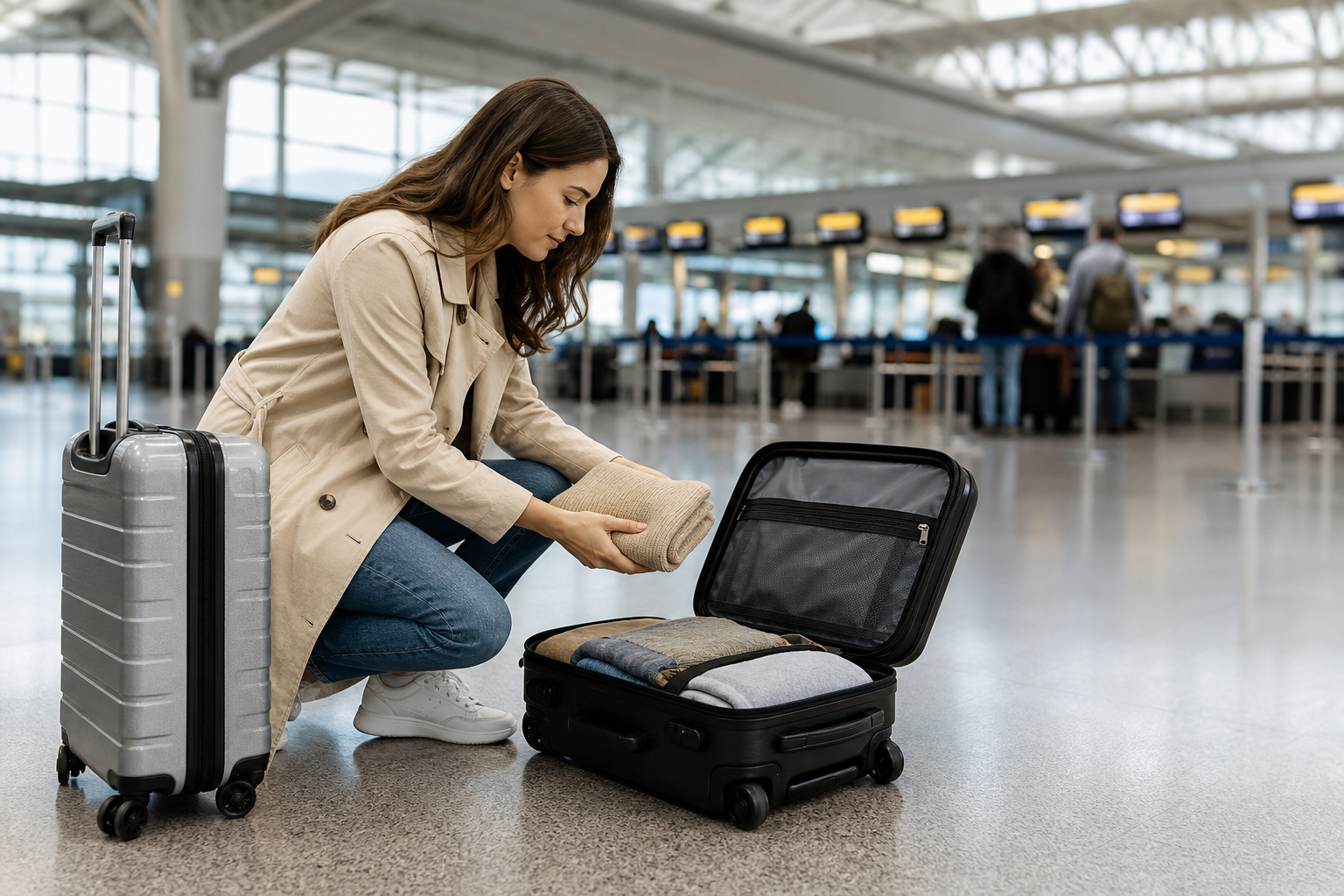
- Utilise Packing Cubes: These organisers compress clothing and prevent items from shifting, which helps in maintaining a compact bag shape that fits within airline dimensions.
- Wear Your Heaviest Items: On travel days, wear your heaviest shoes, blazer, or overcoat. This moves several kilograms from your luggage allowance to your person, where it is not weighed.
- Digitise Your Documents: Instead of carrying heavy folders and printed reports, use secure cloud storage and a tablet. This reduces physical bulk and the weight of paper.
How to Avoid Extra Baggage Fees at the Airport Through Pre-Planning
The most expensive way to handle luggage is to resolve issues at the check-in counter. Most airlines offer a significant discount if you purchase additional weight or bags online in advance. If you know your equipment or samples will push you over the limit, paying the fee during the booking process is far cheaper than paying the "gate fee."
Another effective strategy is to leverage corporate loyalty programmes. Many business travellers hold status with specific airline alliances. These memberships often grant additional baggage allowances as a perk. Ensure your loyalty number is attached to every booking to automatically trigger these benefits.
Using Digital Scales for Precision
Relying on guesswork is a primary cause of airport surcharges. A portable digital luggage scale is a small investment that provides immediate certainty. By weighing your bag at the hotel or office, you can remove non-essential items before arriving at the terminal. This removes the stress of the check-in queue and ensures you are compliant with the airline's rules.
Coordinating Shared Luggage for Teams
When travelling as a corporate team, it is often possible to distribute weight across multiple suitcases. If one colleague is travelling light while another is near the limit, shifting a few heavy items can prevent a collective overage. However, this requires coordination and an understanding of who is checking in first to ensure the total group allowance is utilised effectively.
Optimising Your Carry-On Strategy
The carry-on bag is your primary tool for avoiding fees. By strategically placing the heaviest, smallest items in your cabin bag, you keep the checked luggage weight low. Electronics, chargers, and heavy textbooks or manuals are ideal for the cabin, provided they fit within the size constraints.
It is also worth noting that "personal items"—such as a laptop bag or a briefcase—are often treated differently than "cabin bags." Many airlines allow one of each. By using a professional briefcase for your tech and a small rolling suitcase for your clothes, you effectively double your free carriage capacity.
Frequently Asked Questions
What happens if my bag is slightly over the weight limit?
Some airline staff may be lenient if you are only a few hundred grams over, but this is not guaranteed. If the agent is strict, you will either be asked to pay an excess baggage fee or remove items from your bag and carry them in your hands.
Can I pay for extra baggage at the airport instead of online?
Yes, you can pay at the airport, but it is almost always more expensive. Airlines charge a premium for last-minute additions because it affects their weight and balance calculations for the aircraft.
Do business class tickets always include free checked luggage?
While most business class fares include at least one or two free checked bags, some "Business Lite" or promotional fares may have restrictions. Always check the specific terms of your fare class before packing.
Is there a limit to how many personal items I can bring?
Most airlines allow one cabin bag and one small personal item, such as a handbag or laptop case. Bringing a third bag often results in a charge or a requirement to check one of the items into the hold.
How can I tell if my suitcase is the correct size?
The most reliable method is to use the sizer boxes located at the airport check-in area. If your bag does not slide easily into the metal frame, the airline has the right to charge you an oversized baggage fee.