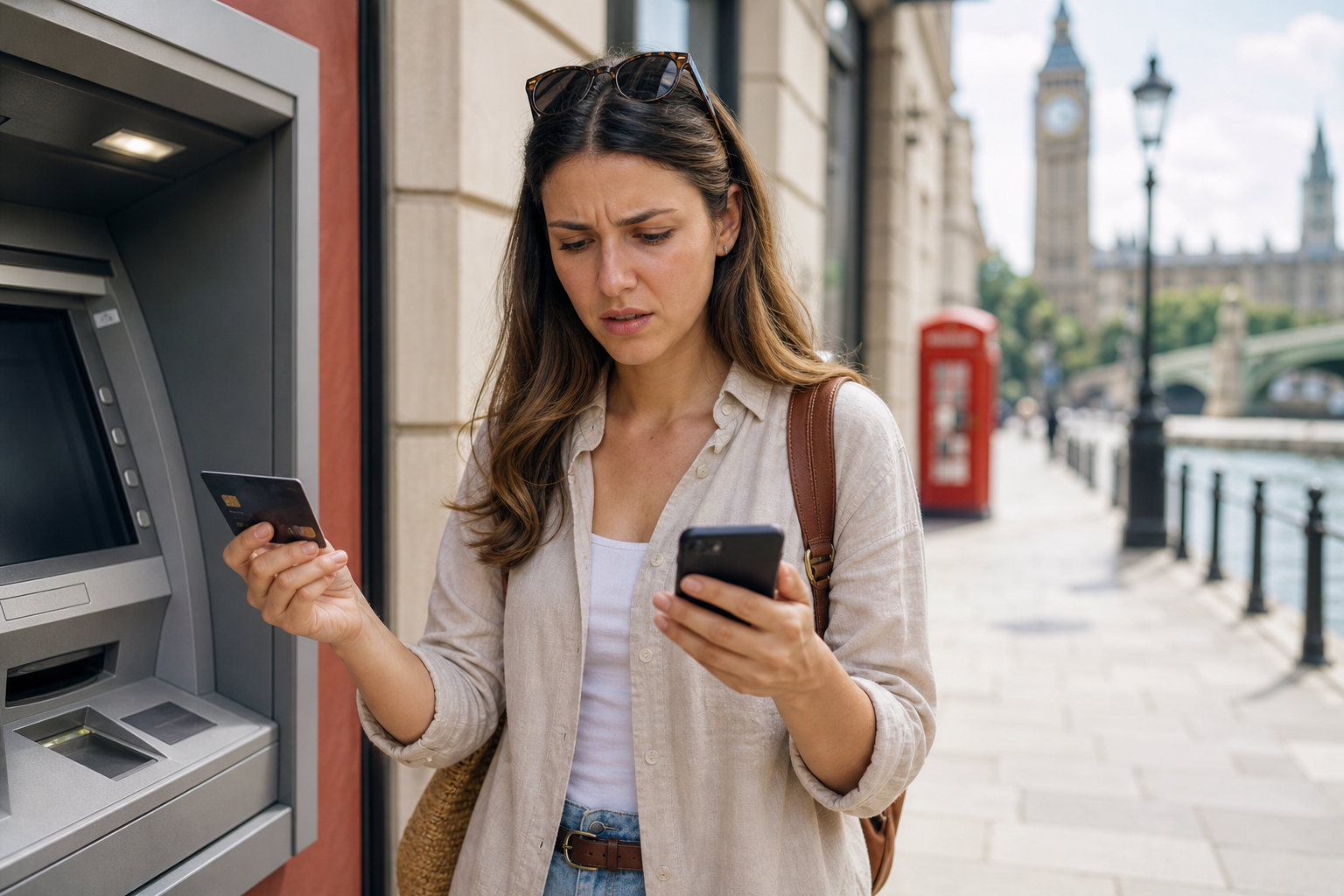

Discovering that your payment method has failed while you are in a foreign country can be a stressful experience, particularly for business travellers managing corporate expenses. Whether it is a declined transaction at a hotel check-in or a failed ATM withdrawal, understanding the immediate steps to resolve the issue is essential for maintaining a seamless trip. This guide outlines exactly what to do if your bank card stops working abroad to ensure you regain access to your funds quickly and securely.
Immediate Steps to Take When Your Card Fails
The first few minutes after a card is declined are critical. Before assuming the worst, such as fraud or a permanent block, it is important to rule out simple technical glitches. Often, a card failure is not a sign of a systemic issue but a momentary communication error between the local merchant and your home bank.
First, try a different payment terminal or a different ATM. If you are at a shop, ask if they have an alternative machine. If you are using an ATM, try another machine from a different banking network. Sometimes, specific networks have temporary outages that do not affect the card itself.
If the card continues to fail, check your mobile banking app. Most modern UK banks provide real-time notifications. If the bank has blocked a transaction due to suspected fraud, you will often see a notification asking you to confirm whether the purchase was legitimate. Tapping "Yes, I made this purchase" can often unblock the card instantly.
Common Reasons for Card Failures During International Travel
Understanding why a card stops working helps you communicate more effectively with your bank's support team. There are several common triggers that lead to international payment failures.
Security Triggers and Fraud Detection
Banks employ sophisticated algorithms to monitor spending patterns. A sudden transaction in a country you have never visited, or a high-value purchase that deviates from your usual habits, can trigger an automatic security freeze. This is a protective measure designed to prevent unauthorised use, but it can be an inconvenience for the legitimate cardholder.
Technical Limitations and Local Infrastructure
Not all payment terminals abroad are compatible with every card type. While Visa and Mastercard are globally accepted, some smaller merchants or older ATMs may struggle with specific chip technology or contactless standards. Additionally, some countries require a physical PIN for every transaction, meaning "contactless" options may be disabled by the local terminal.
Account Limits and Fund Availability
For B2B travellers, corporate cards often have strict daily or monthly spending limits. If you have had a series of high-cost business expenses—such as luxury hotels or client dinners—you may have hit a preset ceiling. Even if the account has sufficient funds, the card limit acts as a hard stop.
What to Do If Your Bank Card Stops Working Abroad: A Recovery Plan
Once you have identified that the issue is not a simple terminal error, you need a structured approach to recover your financial access. Following a logical sequence prevents panic and ensures you use the most secure channels for communication.
- Contact your bank via the official app: This is the fastest way to verify your identity and resolve security blocks.
- Use the international collect number: Every UK bank provides a specific number for overseas calls, usually found on the back of the card or the official website.
- Verify your travel notifications: Check if you forgot to set a "travel note" on your account, which informs the bank of your destination and dates of travel.
- Request an emergency cash transfer: If the card is physically damaged or stolen, ask your provider about emergency cash disbursement services.
When speaking with a representative, be prepared to verify your identity using security questions. Clearly state your current location and the specific transactions that were declined. If the issue is a spending limit, ask for a temporary increase to cover the remainder of your business trip.
Managing Corporate Expenses and Backup Options
For those travelling on behalf of a company, relying on a single piece of plastic is a significant operational risk. Diversifying your payment methods ensures that a single point of failure does not derail a business objective.
Digital wallets, such as Apple Pay or Google Pay, often operate on different authentication protocols than physical cards. If your physical chip is damaged, the digital token stored on your phone might still work. It is advisable to have at least two different payment methods from two different banking institutions.
Furthermore, consider the use of multi-currency accounts. These allow you to hold funds in the local currency of your destination, reducing the reliance on real-time currency conversion which can sometimes trigger fraud alerts. Keeping a small amount of local currency in cash is also a prudent fallback for situations where card infrastructure is entirely unavailable.
Preventing Future Payment Issues
Prevention is the most effective way to avoid the stress of a declined card. A few minutes of preparation before leaving the UK can save hours of frustration abroad.
Ensure that your passport and contact details are up to date with your bank. If the bank needs to reach you to verify a transaction, they will use the phone number and email address on file. If these are outdated, they may simply block the card to be safe.
Review your card's international usage settings. Some banks allow you to toggle "International Payments" or "ATM Withdrawals" on and off within the app. Ensure these are enabled for your destination. Finally, check the expiry date of your card; receiving a replacement card while you are in the middle of a business trip is a logistical nightmare.
Frequently Asked Questions
Why did my card work yesterday but stop working today?
This often happens when a bank's fraud system identifies a pattern of spending that looks suspicious over several days. While the first few transactions may pass, a cumulative total or a specific type of merchant can trigger a security hold.
Can I use a digital wallet if my physical card is blocked?
In many cases, if the entire account is frozen for security reasons, the digital wallet will also fail. However, if the physical card's chip is damaged, the digital version will continue to function normally.
How long does it take for a bank to unblock a card?
If you can verify your identity through a mobile app or a phone call, the unblocking process is usually instantaneous. If the bank requires a formal review or a replacement card, it could take several business days.
Will my bank charge me for calling them from abroad?
While the bank does not charge you for the call, your mobile provider likely will. Using the bank's official app for chat support or using a local Wi-Fi connection for a VoIP call is usually the most cost-effective method.
Should I carry a backup credit card from a different provider?
Yes, carrying a backup card from a different banking group is highly recommended for B2B travellers. If one banking network experiences a systemic outage or a specific account is frozen, the second card provides an essential safety net.