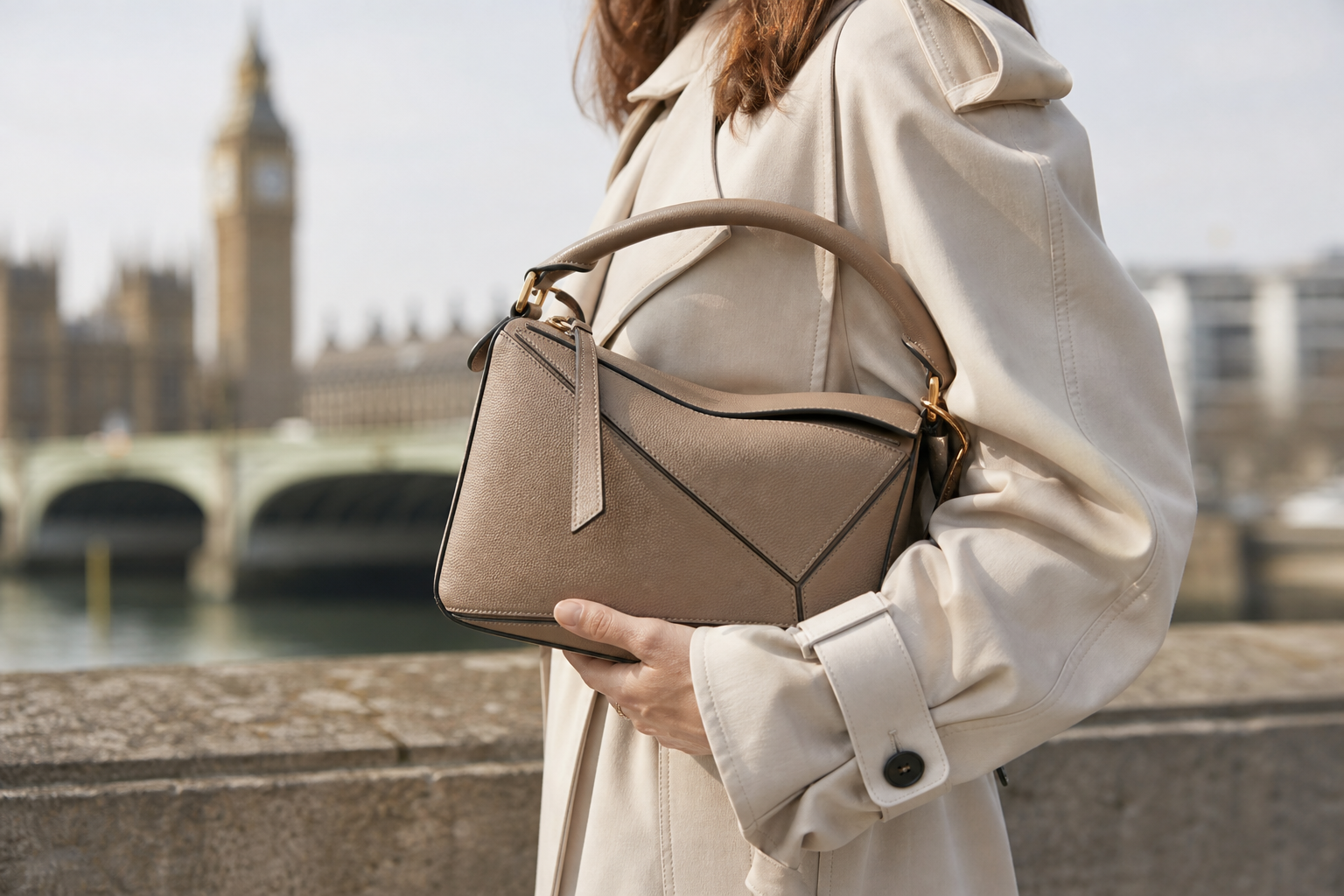

In the competitive landscape of luxury leather goods, few designs achieve instant global recognition without relying on loud logos or repetitive patterns. The Loewe Puzzle Bag is a masterclass in architectural design, blending traditional Spanish craftsmanship with a modern, avant-garde silhouette. For B2B professionals in the luxury retail and fashion sectors, understanding the specific design cues that drive this bag's desirability is essential for grasping current market trends in "quiet luxury."
The Architectural Geometry of the Design
The most immediate answer to what makes the Loewe Puzzle Bag so recognisable is its unique construction. Unlike traditional handbags that rely on a single piece of leather for the body, the Puzzle Bag is composed of several geometric panels stitched together. This creates a three-dimensional, cubist effect that mimics a physical puzzle.
This approach to design departs from the standard "bucket" or "tote" shapes. By using precise lines and angular cuts, the bag creates a visual rhythm that catches the eye from any angle. The seams are not merely functional; they are a core part of the aesthetic identity. This geometric precision ensures that the bag remains distinct even when viewed from a distance, making it a benchmark for structural innovation in the luxury market.
The Concept of Foldability
A defining characteristic of the Puzzle Bag is its ability to fold completely flat. This is not a gimmick but a result of the meticulous engineering of the leather panels. The bag can transition from a structured carry-all to a flat piece of leather, a feature that appeals to the modern, mobile professional.
Material Integrity and Texture
Loewe is renowned for its leather quality, and the Puzzle Bag showcases this through the use of supple, grained calfskin. The way the leather bends at the seams without losing its shape is a testament to the brand's heritage. The texture adds a tactile dimension to the visual geometry, ensuring the bag feels as premium as it looks.
The Influence of Jonathan Anderson’s Vision
The Puzzle Bag was introduced under the creative direction of Jonathan Anderson, who sought to redefine the house's identity. His goal was to create a piece that felt timeless yet contemporary. By focusing on form over branding, Anderson tapped into a growing consumer preference for understated elegance.
The design philosophy centres on the idea of "functional art." In a B2B context, this shift is significant because it moved the luxury conversation away from status symbols (logos) and towards design merit. The bag does not need a prominent monogram to be identified; its shape is the logo. This strategy has allowed Loewe to capture a sophisticated demographic that values intellectual design over overt displays of wealth.
Key Visual Markers of Authenticity
For those operating in the luxury resale or retail space, identifying the specific markers of the Puzzle Bag is crucial. The recognition factor is built into the smallest details, which serve as a silent signature for the brand.
- The Cubist Panelling: The specific arrangement of trapezoidal and rectangular leather pieces that form the body.
- The Integrated Handle: A sturdy, rounded top handle that blends seamlessly into the geometric structure.
- The Discrete Branding: The "Loewe" logo is typically embossed subtly on the interior or a small leather tab, rather than displayed on the exterior.
- The Hardware Placement: Precision-engineered zips and clasps that maintain the bag's structural integrity when folded.
These elements combine to create a product that is instantly identifiable to the trained eye. The synergy between the leather's grain and the sharp angles of the panels creates a silhouette that is impossible to mistake for another brand.
Market Positioning and the "Quiet Luxury" Trend
The rise of the Puzzle Bag coincides with the broader industry shift towards "quiet luxury." This trend prioritises high-quality materials and exceptional craftsmanship over visible branding. In the B2B fashion sector, the Puzzle Bag serves as a primary example of how a product can achieve high market penetration through design innovation alone.
When analyzing what makes the Loewe Puzzle Bag so recognisable, one must consider its versatility. It functions equally well as a professional briefcase alternative or a casual weekend accessory. This versatility increases its lifecycle and resale value, making it a stable asset in the luxury secondary market. The bag appeals to a client base that views fashion as an investment in art and utility.
The Role of Craftsmanship in Brand Recognition
The recognition of the Puzzle Bag is inextricably linked to the perception of Spanish leatherwork. Loewe’s history as a leather collective allows it to execute complex designs that other houses might find too risky or difficult to mass-produce. The precision required to ensure that every panel aligns perfectly is immense.
If the stitching were slightly off or the leather too stiff, the "puzzle" effect would vanish, and the bag would look cluttered rather than curated. This level of execution creates a "quality halo" around the product. When a customer sees the specific way the leather folds and creases at the joints, they are seeing the result of decades of artisanal expertise.
Frequently Asked Questions
Why is the Puzzle Bag considered a timeless investment?
The bag avoids trendy logos and relies on a unique architectural shape that does not go out of style. Its high resale value and versatile utility make it a sustainable choice for luxury consumers.
How does the Puzzle Bag differ from other Loewe models?
While other Loewe bags may focus on softer shapes or traditional totes, the Puzzle Bag is defined by its geometric panelling and its ability to fold flat.
Is the Puzzle Bag suitable for professional business environments?
Yes, its structured appearance and understated branding make it an excellent choice for B2B professionals who require a sophisticated yet modern accessory for the office.
What materials are typically used in the construction of the bag?
Loewe primarily uses high-grade calfskin leather, which provides the necessary durability and flexibility for the bag's complex folding mechanism and geometric structure.
How can one tell a genuine Puzzle Bag from a counterfeit?
Authentic bags feature perfect alignment of the geometric panels, high-quality stitching without fraying, and the specific weight and feel of premium Spanish calfskin leather.