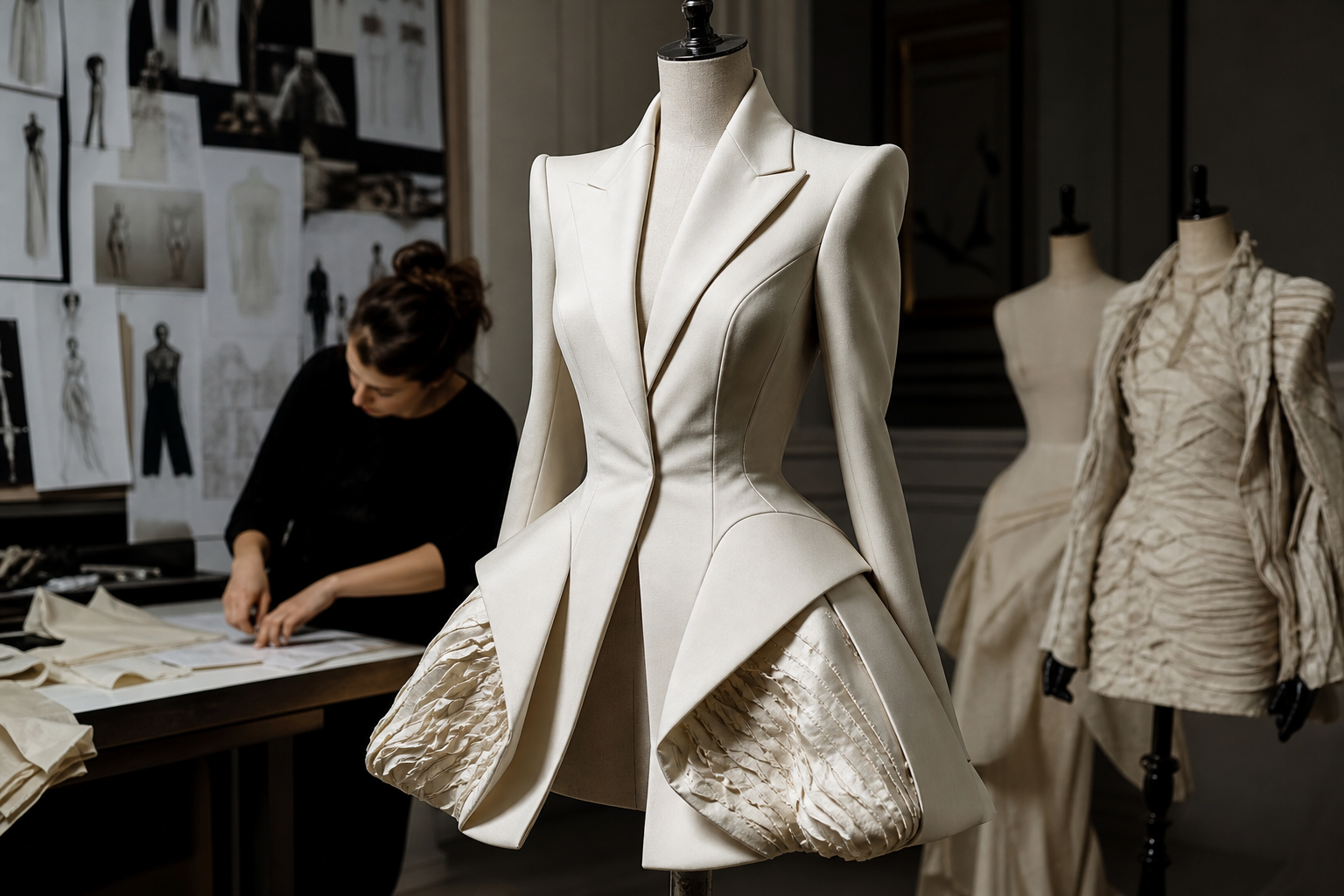

The landscape of contemporary menswear and womenswear owes a significant debt to the provocative vision of Lee Alexander McQueen. While many remember him for his avant-garde runway spectacles, his true mastery lay in the rigorous discipline of Savile Row. By blending traditional British craftsmanship with a rebellious, conceptual spirit, he redefined how we perceive the structure of a garment. Understanding Alexander McQueen's influence on modern tailoring allows B2B fashion professionals and designers to appreciate the balance between technical precision and artistic expression in today's luxury market.
The Foundation of Savile Row Mastery
Before he became a global phenomenon, McQueen apprenticed at Anderson & Sheppard on Savile Row. This period was critical because it instilled in him an obsession with the "architecture" of clothing. Unlike designers who sketch a vision and leave the construction to a pattern cutter, McQueen understood the internal mechanics of a jacket—the canvas, the padding, and the precise tension of a stitch.
This technical grounding meant that even his most extreme silhouettes were rooted in reality. He did not simply distort the body; he used tailoring to sculpt it. This approach shifted the industry's perspective, proving that high fashion could be both conceptually daring and technically flawless. For modern brands, this serves as a reminder that innovation is most effective when it is built upon a foundation of traditional skill.
Redefining the Silhouette through Innovation
McQueen challenged the conventional proportions of the human form. He moved away from the standard "natural" fit, instead introducing exaggerated shoulders, cinched waists, and the iconic "bumster" trousers. These choices were not merely for shock value; they were explorations of gender, power, and identity.
The Power of the Hourglass and the Shoulder
One of the most enduring legacies of his work is the manipulation of the shoulder line. By creating sharp, architectural shoulders, he imbued his garments with a sense of authority and armour. This influence is clearly visible in today's power dressing, where structured blazers are used to convey confidence in professional environments.
Deconstruction and Reconstruction
McQueen often took apart classic garments to understand their essence before rebuilding them into something new. This process of deconstruction allowed him to play with asymmetry and unexpected fabric placements. Modern tailoring frequently employs these techniques to create "relaxed" yet structured looks, blending the formality of a suit with the ease of streetwear.
Alexander McQueen's Influence on Modern Tailoring and Gender Fluidity
The boundaries between masculine and feminine tailoring have blurred significantly in recent years, a trend that can be traced back to McQueen's early experiments. He frequently applied the rigid rules of menswear to women's clothing and introduced softness and fluidity into men's silhouettes.
By integrating these elements, he paved the way for the current era of gender-neutral fashion. Today's B2B apparel manufacturers are seeing a rise in demand for versatile pieces that ignore traditional gender binaries. The ability to maintain a sharp, tailored edge while incorporating fluid drapes is a direct result of the path McQueen forged. This synthesis of opposites—hard and soft, masculine and feminine—remains a cornerstone of luxury design.
Technical Contributions to the Luxury Sector
Beyond the aesthetic, McQueen influenced the production standards of the luxury sector. He demanded a level of precision that pushed ateliers to their limits. His work highlighted the importance of the "bespoke" mindset, even within ready-to-wear collections.
The following elements represent his most concrete contributions to the technical side of tailoring:
- Precision Pattern Cutting: The use of complex geometric shapes to create three-dimensional forms that fit the body like a second skin.
- Material Experimentation: Combining traditional wools and tweeds with unconventional materials like leather, lace, and synthetic polymers.
- Internal Structuring: The development of innovative internal supports that allow a garment to hold a dramatic shape without compromising the wearer's movement.
These advancements have enabled modern designers to create garments that are visually striking yet functional, ensuring that high-concept fashion remains wearable for the elite consumer.
The Legacy in Contemporary Brand Strategy
For businesses operating in the fashion space, the McQueen legacy is a lesson in brand positioning. He successfully married the "dark" and the "beautiful," creating a brand identity that was unmistakable. This duality is now a common strategy for luxury houses seeking to attract a younger, more edgy demographic while maintaining their prestige.
The influence extends to the way collections are presented. McQueen treated the runway as a narrative space, turning a clothing line into a theatrical experience. This shift toward "experiential retail" and storytelling is now standard practice for B2B marketing agencies working with luxury fashion brands. The garment is no longer just a product; it is a piece of a larger emotional story.
Frequently Asked Questions
How did Savile Row training affect his design style?
His time at Savile Row provided the technical expertise required to manipulate fabric with extreme precision. This allowed him to create avant-garde shapes that remained structurally sound and perfectly fitted.
What is the most recognizable tailoring element of his work?
The sharp, exaggerated shoulder and the sculpted waist are his most iconic contributions. These elements created a powerful, architectural silhouette that redefined the concept of the modern suit.
Did he influence modern menswear specifically?
Yes, he introduced a level of daring and emotional expression to menswear that was previously unseen. He blended traditional British tailoring with subversive elements, encouraging men to experiment with form and fabric.
How does his work relate to current gender-neutral fashion?
McQueen frequently swapped tailoring codes between genders, using masculine structures for women and feminine fluidity for men. This experimentation laid the groundwork for today's gender-fluid approach to luxury apparel.
Why is his influence still relevant to B2B fashion professionals?
His work demonstrates the value of combining traditional craftsmanship with bold innovation. For manufacturers and designers, this balance is essential for creating high-value products that stand out in a competitive global market.