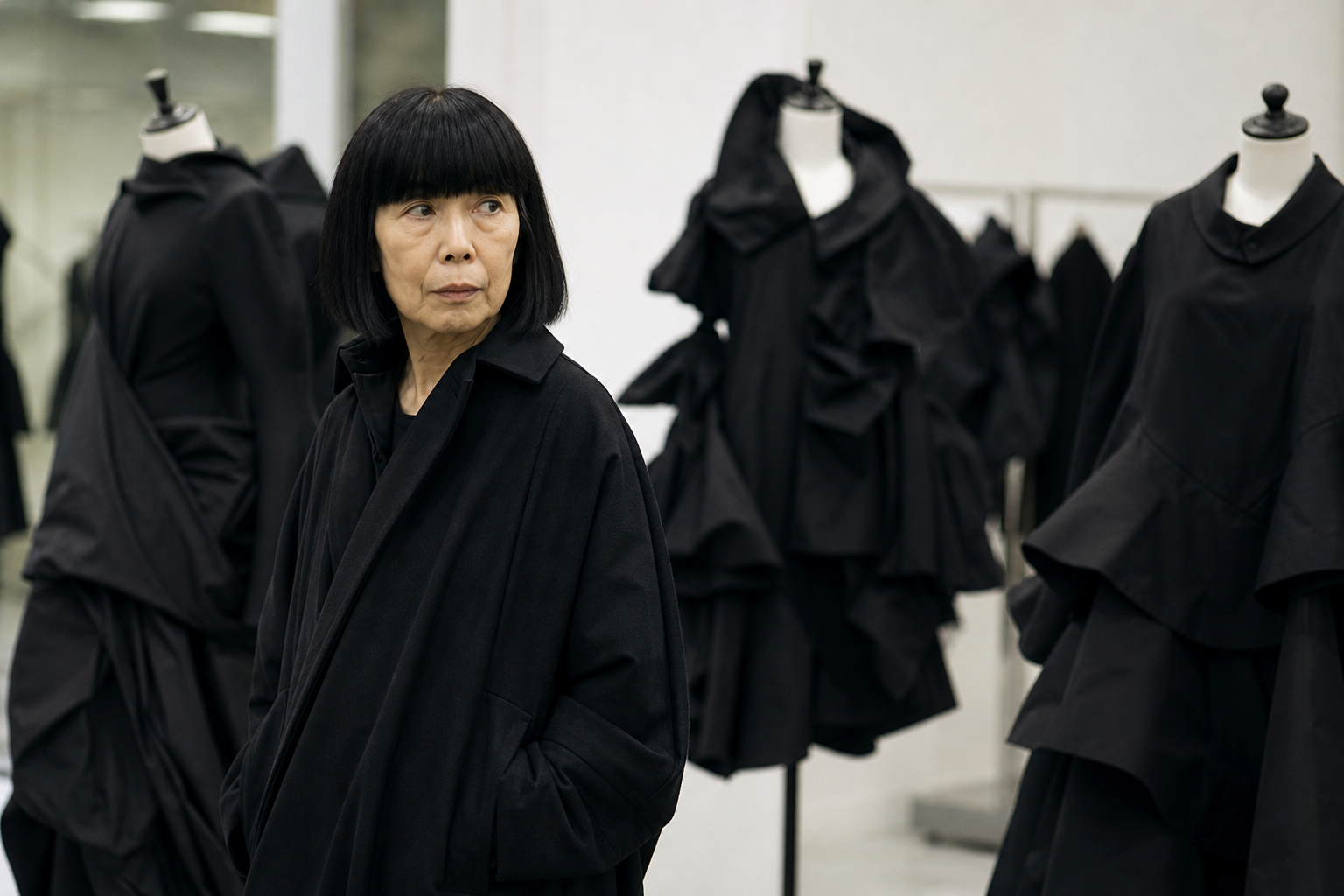

Rei Kawakubo is not merely a fashion designer; she is a philosopher of form and space. As the founder of Comme des Garçons, she has spent decades challenging the very definition of what constitutes a garment. For B2B professionals in the luxury retail and textile sectors, understanding her impact is essential because she shifted the industry's focus from aesthetic beauty to conceptual exploration. By dismantling traditional silhouettes, she paved the way for the modern avant-garde movement.
Redefining the Silhouette and the Human Form
The core of Kawakubo's importance lies in her refusal to follow the natural lines of the human body. While traditional Western fashion historically sought to enhance or idealise the figure through tailoring, Kawakubo introduced the concept of "anti-fashion". She treated the body as a canvas or a structural support rather than a shape to be flattered.
Her approach often involves adding volume in unexpected places or removing structure where it is typically required. This disruption forces the viewer to reconsider the relationship between the wearer and the clothing. In the business of high fashion, this shifted the value proposition from "flattery" to "artistic expression", allowing other designers to experiment with asymmetry and oversized proportions without fear of commercial failure.
The Concept of Deconstruction
Deconstruction is perhaps Kawakubo's most lasting legacy. Instead of presenting a polished, finished product, she often showcased garments that appeared unfinished. This included exposed seams, raw edges, and intentional holes. By doing this, she highlighted the process of creation, making the construction of the garment part of the design itself.
Challenging Gender Norms
Long before gender-fluid fashion became a mainstream marketing trend, Kawakubo was blurring the lines between masculine and feminine attire. Her collections frequently featured oversized shapes that obscured the gender of the wearer. This intellectual approach to dressing removed the restrictive boundaries of gender-specific tailoring, influencing how luxury brands now approach unisex collections.
The Impact of the "Hiroshima Chic" Aesthetic
When Rei Kawakubo first arrived in Paris in the early 1980s, her work caused a seismic shift in the industry. At a time when glamour was defined by power suits and opulent fabrics, she introduced a palette of predominantly black, oversized shapes, and distressed textiles. This aesthetic was famously dubbed "Hiroshima Chic" by some critics, reflecting a stark, post-industrial sensibility.
This movement was critical because it introduced a new intellectualism to the runway. It proved that luxury did not have to be synonymous with wealth or prestige; it could be synonymous with austerity and thought. For the supply chain and textile manufacturers, this created a demand for innovative fabric treatments, such as boiled wools and distressed synthetics, which had previously been ignored by the haute couture world.
Why Is Rei Kawakubo Important to Avant-Garde Fashion?
To answer the central question of why is Rei Kawakubo important to avant-garde fashion, one must look at her role as a catalyst for creative autonomy. She did not just create clothes; she created a system where the conceptual idea takes precedence over the commercial garment. Her influence is visible in the work of countless designers who prioritise the "idea" over the "wearability" of a piece.
Her importance is further cemented by her ability to balance extreme experimentation with a viable business model. Through the diversification of the Comme des Garçons brand—ranging from high-concept runway pieces to accessible fragrances and wallets—she demonstrated that avant-garde art could sustain a global corporate empire. This provided a blueprint for other independent designers to maintain their creative integrity while scaling their operations.
Innovation in Retail and Brand Experience
Kawakubo's influence extends beyond the sewing machine and into the realm of spatial design and retail strategy. She pioneered the "guerrilla store" concept, which involved opening temporary shops in unconventional locations with minimal investment in traditional décor. This approach prioritised the experience and the exclusivity of the find over the polished nature of a flagship store.
This strategy fundamentally changed how luxury brands think about pop-up retail and limited-edition drops. By treating the retail space as an extension of the art, she turned shopping into a curated gallery experience.
The Dover Street Market Model
The creation of Dover Street Market represents the pinnacle of her retail philosophy. Rather than a traditional department store, it is a "beautiful chaos" where different brands are given autonomy over their own spaces. This collaborative environment encourages cross-pollination between different designers and artists.
Strategic Brand Tiering
Kawakubo mastered the art of the "pyramid" business model. She uses her most extreme, non-commercial runway pieces to build brand equity and intellectual prestige, which then fuels the sales of more wearable lines. This strategic layering allows the brand to remain avant-garde at its core while remaining profitable in the mass-luxury market.
Key Contributions to Modern Design
To summarise her impact, several concrete contributions stand out as pillars of the avant-garde movement:
- The Introduction of Asymmetry: Moving away from the mirrored left-right balance of traditional tailoring.
- The Elevation of Black: Transforming a colour associated with mourning or service into a symbol of intellectual sophistication and rebellion.
- Material Experimentation: Using industrial materials and distressed fabrics to challenge the definition of "luxury" textiles.
- Spatial Disruption: Redefining the retail environment as an installation rather than a point of sale.
Frequently Asked Questions
What is the main philosophy of Rei Kawakubo?
Her philosophy centres on the idea of "beginning again" and creating things that have never existed before. She avoids following trends, focusing instead on challenging conventional notions of beauty and form.
How did Comme des Garçons change the fashion industry?
The brand introduced a conceptual approach to clothing that prioritised artistic expression over the human silhouette. This shifted the industry toward deconstructionism and the acceptance of asymmetry in luxury wear.
Is Rei Kawakubo's work considered wearable?
While her runway collections are often sculptural and conceptual, they serve as artistic statements. However, the brand produces various commercial lines that translate these avant-garde ideas into wearable, high-end clothing.
What is the significance of the colour black in her work?
Kawakubo used black to strip away the distraction of colour, forcing the viewer to focus on the shape, texture, and structure of the garment. It became a uniform for the intellectual avant-garde.
How does she influence current luxury retail trends?
Through the creation of Dover Street Market and guerrilla stores, she pioneered the concept of experiential retail. This approach treats the store as a curated exhibition rather than a simple commercial space.