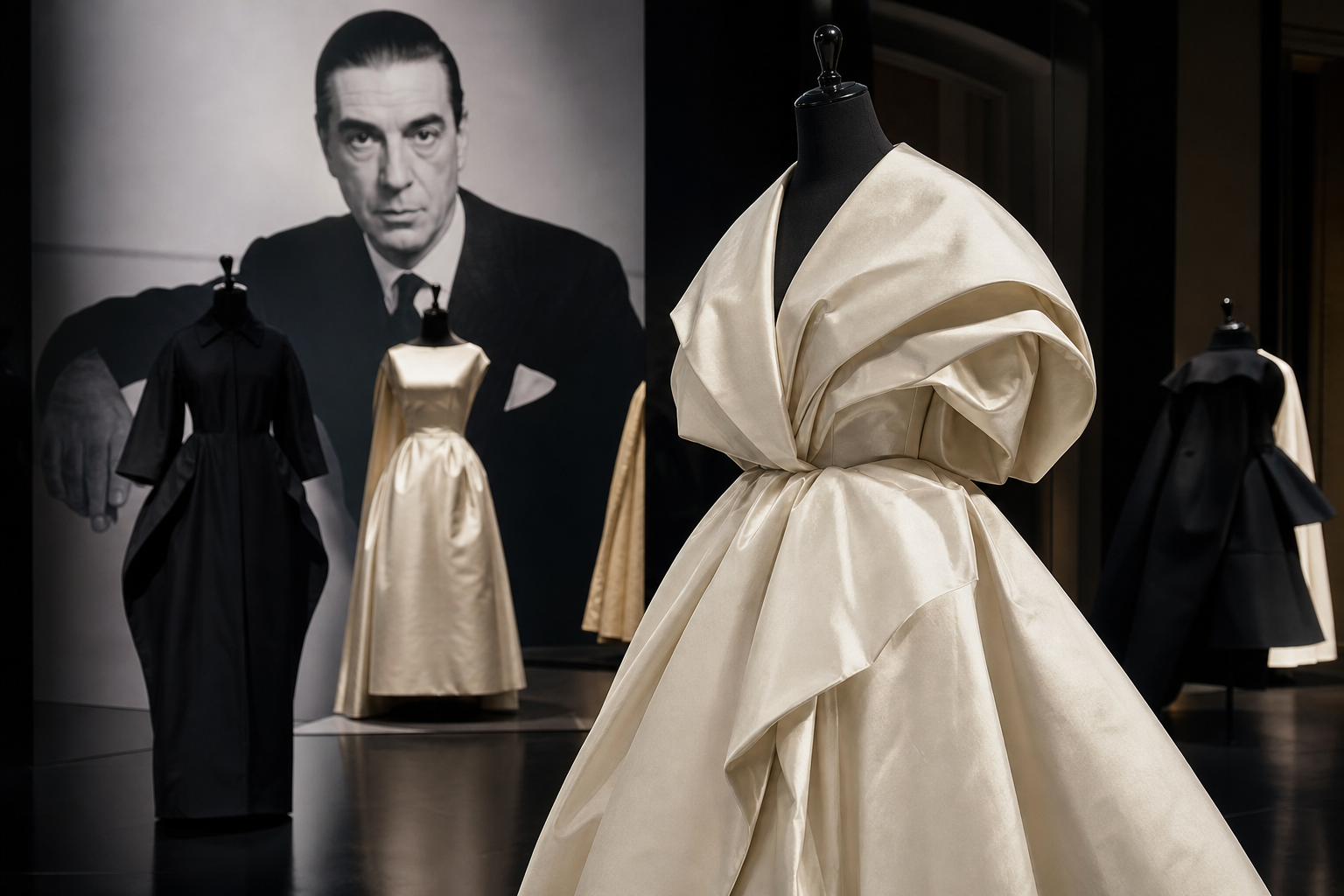

Cristóbal Balenciaga was not merely a fashion designer; he was an architect of fabric. While many of his contemporaries focused on the fleeting trends of the mid-20th century, Balenciaga dedicated his career to the mastery of form, volume, and structure. His approach redefined the female silhouette, moving away from the restrictive constraints of the era toward a more liberated, sculptural aesthetic. Understanding the influence of Cristóbal Balenciaga on haute couture provides essential insights for B2B professionals in the luxury sector, as his principles of quality and innovation continue to underpin modern high-end garment production.
The Architectural Approach to Design
Balenciaga differed from other couturiers because he possessed a comprehensive technical understanding of dressmaking. He could sketch, cut, and sew a garment from start to finish, a rarity among the creative directors of his time. This technical proficiency allowed him to experiment with the relationship between the body and the fabric, treating the cloth as a medium for three-dimensional art.
Rather than relying on corsetry to shape the wearer, he manipulated the fabric itself to create volume. This shift changed the trajectory of luxury fashion, moving the focus from the "hourglass" figure to a more abstract exploration of space. His work proved that elegance could be achieved through precision and structural integrity rather than restrictive undergarments.
The Mastery of Fabric and Texture
A significant part of his success lay in his collaboration with textile mills. He sought materials that could hold a shape independently of the body. One of his most notable contributions was the promotion of gazar, a stiff silk fabric developed specifically for his needs. This material allowed him to create the dramatic, sweeping lines and crisp edges that became his signature.
The Evolution of the Silhouette
Throughout the 1950s and 60s, Balenciaga introduced a series of revolutionary shapes that challenged the status quo. He moved away from the cinched waist, introducing a variety of looks that prioritised movement and ease. This evolution was not about comfort in the casual sense, but about a sophisticated liberation of the form.
Key Innovations and Iconic Shapes
The influence of Cristóbal Balenciaga on haute couture is most evident in the specific silhouettes he pioneered. These designs were not merely aesthetic choices; they were engineering feats that altered how the industry viewed the female form. By decoupling the garment from the natural waistline, he opened the door for the avant-garde movements that followed in the later decades of the century.
Several of his most impactful designs include:
- The Sack Dress: A straight, loose-fitting garment that eliminated the waistline entirely, sparking controversy before becoming a staple of modern minimalism.
- The Baby Doll Dress: A trapeze-like shape that flared from the shoulders, offering a playful yet sophisticated volume.
- The Balloon Jacket: A rounded, voluminous outer layer that demonstrated his ability to create structure without internal bracing.
- The Cocoon Coat: A curved silhouette that enveloped the wearer, blending the lines between the garment and the body.
These innovations shifted the focus of luxury apparel from seductive curves to intellectual geometry. For the B2B luxury market, this transition marked the beginning of "conceptual" fashion, where the value of a piece was derived from its artistic vision and technical execution.
The Legacy of Craftsmanship in Modern Luxury
Balenciaga’s commitment to perfectionism set a benchmark for the entire haute couture industry. He viewed the atelier as a sanctuary of craft, where the quality of the stitch was as important as the overall design. This obsession with detail ensured that his garments were not only visually striking but also structurally sound, lasting for generations.
In the contemporary business landscape, this legacy manifests in the renewed emphasis on "quiet luxury" and artisanal production. The industry has seen a return to the values Balenciaga championed: the prioritisation of material quality over visible branding and the celebration of the skilled hand.
Mentorship and Professional Influence
Beyond his own designs, Balenciaga influenced a generation of designers. Hubert de Givenchy, one of the most prominent names in French fashion, viewed Balenciaga as a mentor. The exchange of ideas between these two masters helped solidify the aesthetic of the mid-century Parisian couture scene. By teaching others the importance of structural rigor, Balenciaga ensured that his philosophy would persist long after he closed his house in 1968.
Impact on Ready-to-Wear
While he operated strictly within the realm of haute couture, his structural innovations eventually filtered down into the ready-to-wear market. The shift toward oversized silhouettes and architectural tailoring seen in modern luxury brands can be traced directly back to his experiments with volume. The ability to create a garment that retains its shape regardless of the wearer's proportions is a direct inheritance from his technical breakthroughs.
The Business of Pure Artistry
From a B2B perspective, Balenciaga’s career offers a case study in brand positioning through exclusivity and uncompromising quality. He famously avoided the commercial pressures of mass production, choosing instead to maintain a strict level of control over his output. This strategy created an aura of prestige that elevated the brand to a status of near-mythology.
By focusing on the "purest" form of couture, he demonstrated that a brand could achieve global influence not through volume of sales, but through the sheer impact of its innovation. This approach remains a core strategy for many ultra-luxury houses today, where the "halo effect" of a couture collection drives the desirability of more accessible products.
Frequently Asked Questions
How did Balenciaga change the female silhouette?
He moved away from the restrictive, waist-cinching styles of the time, introducing voluminous shapes like the sack dress and cocoon coat that prioritised structural form over the natural body line.
What was the significance of gazar fabric in his work?
Gazar provided the necessary stiffness and structure that allowed Balenciaga to create architectural shapes that stood away from the body without needing heavy internal supports.
Who were the designers most influenced by his work?
Hubert de Givenchy was perhaps the most notably influenced, but his architectural approach to volume has impacted almost every modern designer who focuses on avant-garde tailoring.
Why did Cristóbal Balenciaga close his fashion house in 1968?
He felt that the rise of ready-to-wear fashion was incompatible with the slow, meticulous standards of haute couture, and he chose to retire rather than compromise his artistic integrity.
What distinguishes his work from that of Christian Dior?
While Dior focused on the "New Look" with its exaggerated feminine curves and cinched waists, Balenciaga focused on abstract volumes and the architectural relationship between fabric and space.