
Which Indoor Plants Thrive in Low-Light Rooms? It is a practical question for offices, reception areas, meeting rooms, corridors and hospitality spaces across the UK. Not every commercial interior has bright windows or generous natural light, yet greenery can still soften hard finishes, support a more welcoming atmosphere and make rooms feel cared for. The key is choosing plants that tolerate shade, rather than expecting sun-loving species to adapt.
Understanding Low Light in Commercial Interiors
Low light does not mean no light. Indoor plants still need some natural or artificial light to photosynthesise. A room with a north-facing window, a shaded corner, filtered daylight through blinds, or consistent overhead lighting may suit certain hardy houseplants. A windowless storage room, however, is not a healthy long-term setting for living plants unless suitable grow lighting is provided.
In business premises, light can vary throughout the day. Desks may sit close to windows, while waiting areas or internal corridors receive only indirect brightness. Seasonal changes also matter in the UK, where winter days are short and grey. A plant that copes well in summer may slow its growth in January.
Before selecting plants, assess the room honestly. If a person can comfortably read printed text without switching on a light during the day, the space may support low-light tolerant plants. If it always feels dim, choose the toughest options and keep expectations modest.
Which Indoor Plants Thrive in Low-Light Rooms? Best Choices for Workplaces
Some plants are better suited to low-light rooms because they naturally grow beneath larger trees or tolerate shade in their native environments. For B2B settings, the best choices are usually resilient, tidy and forgiving of occasional care mistakes.
Reliable low-light indoor plants include:
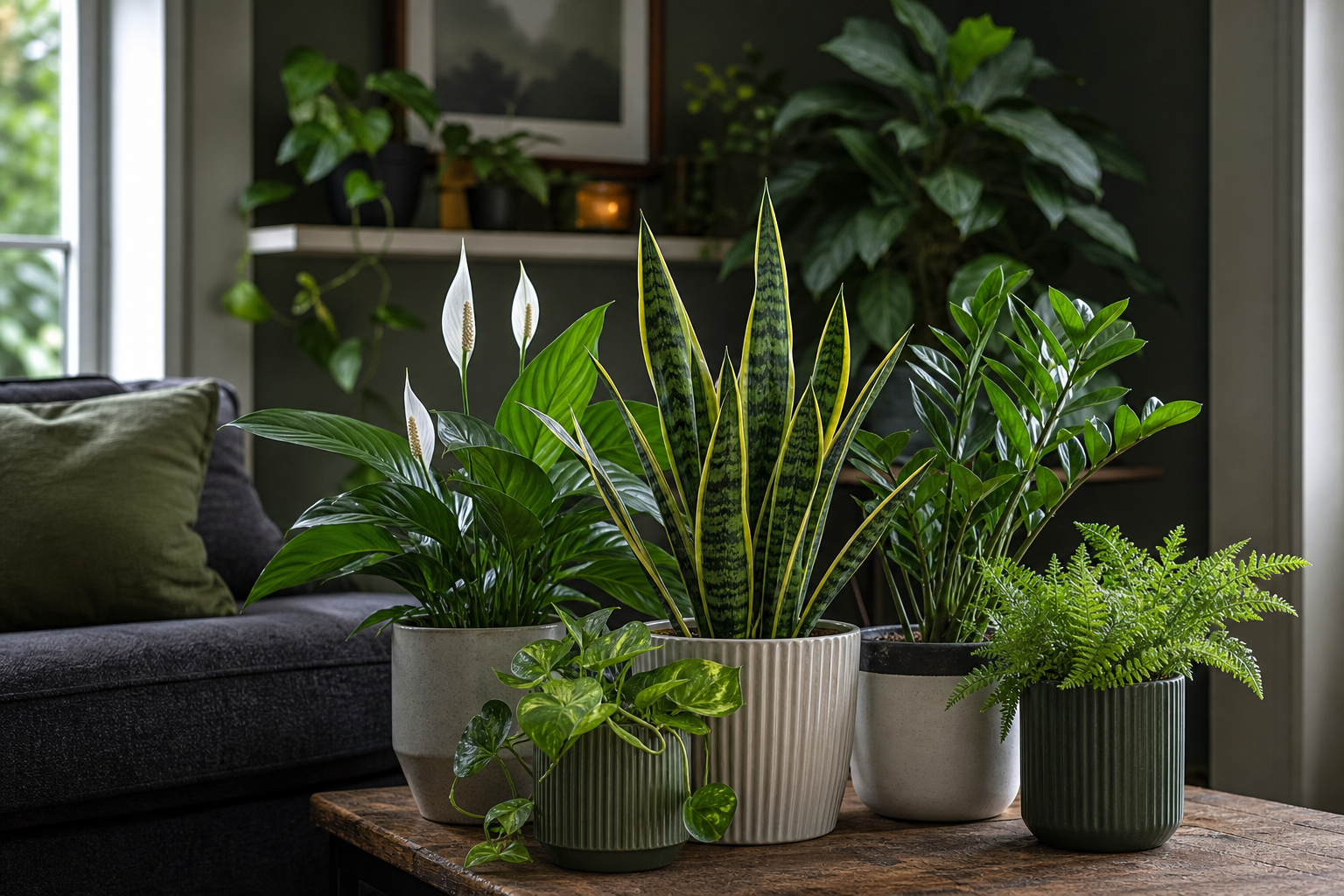
- ZZ plant: Glossy leaves, upright growth and strong tolerance of neglect make it suitable for offices and communal areas.
- Snake plant: Architectural leaves and minimal watering needs work well in reception spaces and meeting rooms.
- Pothos: A trailing plant that can soften shelves, cabinets or partitions with heart-shaped leaves.
- Peace lily: Dark green foliage and occasional white spathes suit calm, professional interiors.
- Cast iron plant: As the name suggests, it is tough, slow-growing and useful for shaded corners.
- Chinese evergreen: Attractive patterned leaves bring interest without needing bright sun.
- Heartleaf philodendron: A forgiving trailing or climbing plant for indirect light.
- Dracaena: Slim, upright forms can add height without taking much floor space.
- Parlour palm: A softer, classic choice for lounges, waiting rooms and quiet corners.
These plants will not grow as quickly in low light as they would in brighter indirect light. That is normal. In darker rooms, success is often measured by steady, healthy foliage rather than fast new growth.
Matching Plants to Different Business Spaces
Different commercial rooms have different practical needs. A plant that looks good on a boardroom sideboard may not suit a busy café walkway. The best low-light planting choices combine appearance, durability and ease of maintenance.
Offices and Desk Areas
Office plants need to tolerate mixed conditions. Heating, air conditioning and irregular watering can be more challenging than low light itself. ZZ plants, snake plants and pothos are useful here because they cope well with routine disruption.
For shared desks, compact plants are usually better than trailing varieties that may interfere with cables, paperwork or equipment. A small snake plant or Chinese evergreen can add greenery without cluttering a workstation. In open-plan offices, taller dracaena or grouped cast iron plants can help break up visual lines without blocking conversation.
Reception Areas and Meeting Rooms
Reception areas create a first impression, so plant choices should look smart even when growth is slow. Peace lilies, parlour palms and dracaena can provide a polished appearance in indirect light. They suit planters that match the wider interior scheme, from simple neutral containers to more formal finishes.
Meeting rooms often have blinds, screens and artificial lighting. Snake plants and ZZ plants are sensible here because they remain neat and upright. They also avoid the mess of leaf drop associated with more delicate species placed in unsuitable conditions.
Corridors, Washrooms and Breakout Spaces
Corridors may have limited daylight and fluctuating temperatures. Cast iron plants and ZZ plants are among the strongest options, especially where plants may be brushed past by people moving through the building.
Washrooms can be tricky. Some have humidity, which many plants enjoy, but others have little or no natural light. If there is a window or steady artificial light, peace lilies and pothos may cope. If there is no light at all, live plants should be rotated from brighter areas or replaced with a more suitable design choice.
Breakout spaces usually allow for more relaxed planting. Pothos, philodendron and parlour palm can create a softer feel, especially alongside comfortable seating and natural textures.
Care Tips for Low-Light Indoor Plants
Low-light plants are often described as easy, but they still need consistent care. The main risk in darker rooms is overwatering. Because plants use water more slowly when light is limited, compost stays damp for longer.
Good care habits include:
- Check soil before watering: Water only when the top layer feels dry, rather than following a rigid calendar.
- Avoid standing water: Empty saucers or decorative outer pots so roots do not sit in water.
- Rotate plants occasionally: Turning pots helps growth stay even when light comes from one direction.
- Dust leaves gently: Clean leaves can absorb available light more effectively.
- Watch for yellowing leaves: This may suggest overwatering, poor drainage or too little light.
- Keep plants away from heat blasts: Radiators and vents can dry leaves and stress roots.
- Use suitable containers: Drainage and stable planters matter in public or shared spaces.
Feeding should be moderate. In low light, plants do not need heavy feeding because they are growing more slowly. Overfeeding can cause weak growth or salt build-up in the compost. A light approach during the growing season is usually enough for most low-light tolerant houseplants.
Design Considerations for B2B Interiors
Planting in business settings is not only about survival. It is also about how greenery supports the function of a space. Low-light plants can guide movement, soften waiting areas, frame entrances or make meeting rooms feel less stark.
Scale matters. A tiny plant in a large lobby may look accidental, while an oversized planter in a narrow corridor may become an obstacle. Choose plants and containers that suit the room’s proportions. Upright plants are useful where floor space is limited. Trailing plants work better on shelves, cabinets or high planters where they will not be knocked.
Consistency is also important. A scattered mix of mismatched plants can look untidy in a professional setting. Repeating a small selection of reliable species often creates a calmer result. For example, snake plants in matching pots can suit a modern office, while parlour palms and peace lilies may feel more appropriate in hospitality or client-facing lounges.
Plant safety and maintenance should be considered too. Some common houseplants may be harmful if eaten, which matters in premises visited by children or pets. Busy businesses may also prefer species that shed little and do not need frequent pruning.
Common Mistakes to Avoid
Many low-light plant problems begin with unrealistic expectations. Shade-tolerant does not mean a plant will thrive in complete darkness. If a plant gradually leans, drops leaves or becomes pale, the room may be too dim.
Another common mistake is choosing plants for flowers rather than foliage. In low-light rooms, flowering is often reduced. Peace lilies may bloom occasionally, but their real value in darker interiors is their glossy green foliage.
Overwatering is the most frequent issue. A plant in a bright conservatory may need water often, while the same plant in a shaded office corner may need far less. Always judge by the plant and soil, not by habit.
Finally, avoid placing new plants directly beside heaters, draughty doors or cold windows. Low light is manageable for certain species, but combined stress makes success less likely.
Frequently Asked Questions
Can indoor plants survive in rooms with no windows?
Some plants may last for a time under strong artificial lighting, but no plant survives well in complete darkness. For windowless rooms, suitable grow lights or regular plant rotation are needed to keep living plants healthy.
What is the easiest low-light plant for an office?
The ZZ plant is often one of the easiest choices because it tolerates low light, infrequent watering and typical office conditions. Snake plants are another practical option for tidy, professional spaces.
Do low-light plants need less water?
Yes, they usually need less water because growth slows when light levels are lower. Always check the compost first, as consistently wet soil can damage roots and cause yellowing leaves.