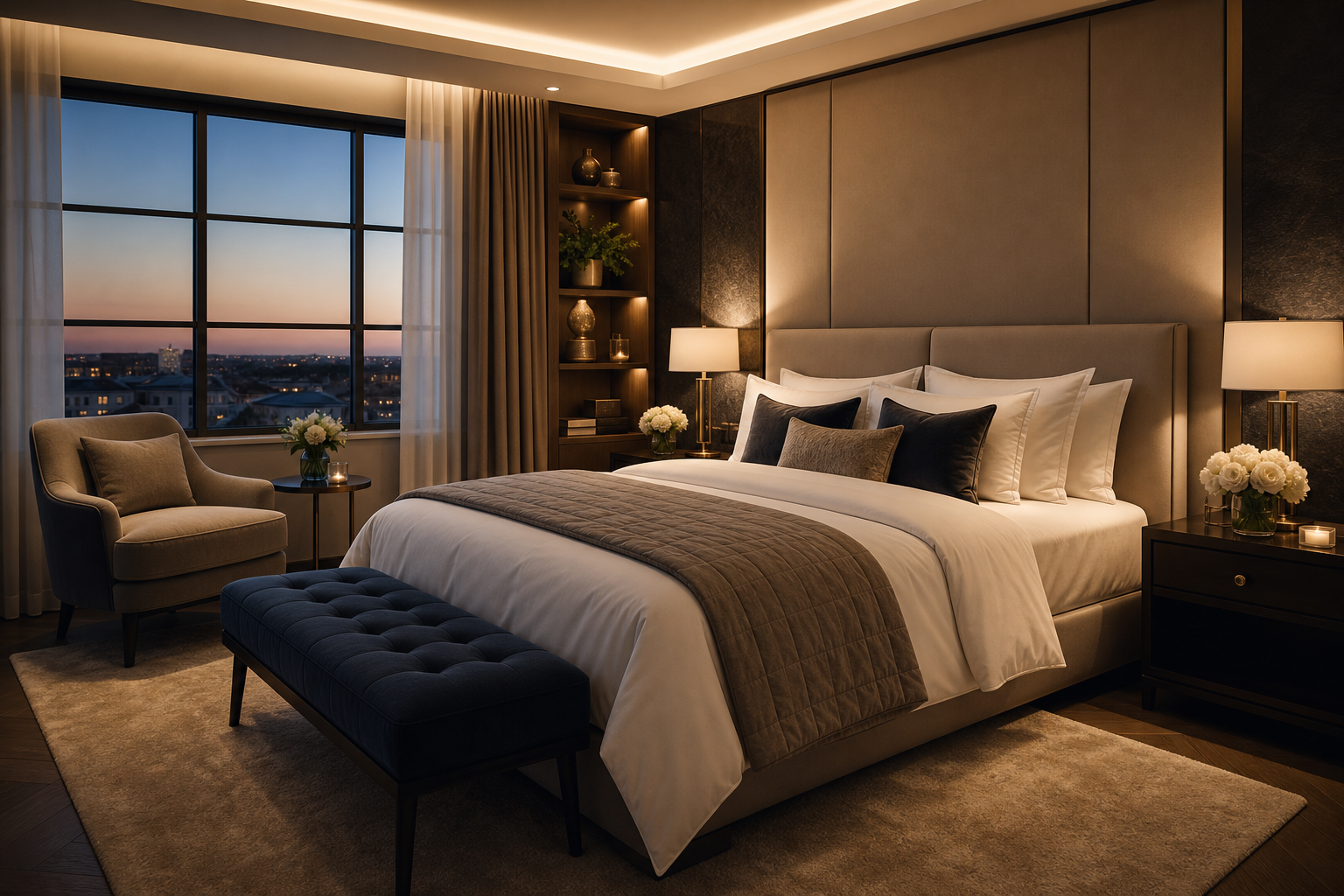

How Can You Make Your Bedroom Feel Like a Luxury Hotel? For UK property professionals, serviced accommodation operators, landlords and interior suppliers, the answer is not only about style. It is about creating calm, comfort and consistency. A hotel-inspired bedroom should feel considered from the moment someone enters, with a strong bed, layered lighting, refined textures and practical details that make daily use easier.
How Can You Make Your Bedroom Feel Like a Luxury Hotel? Start With the Bed
The bed is the centrepiece of any hotel-style bedroom. In commercial interiors, it also carries the greatest responsibility because it affects rest, guest satisfaction and the overall impression of quality. A luxury look begins with proportion. A headboard with height, width and softness gives the room a clear focal point, especially in larger bedrooms or premium rental settings.
Choose a supportive mattress suited to regular use, then build layers above it. Hotels rarely rely on one flat duvet and two pillows. They create depth through crisp sheets, a comfortable duvet, decorative cushions and a throw placed with care. White bedding remains popular because it signals cleanliness and allows other design elements to stand out.
For a more residential feel, warm neutrals can work well. Think ivory, stone, taupe, oatmeal and soft grey. These shades are easy to maintain visually, less trend-led than bold colours, and suitable across many property types.
Use Lighting to Create Atmosphere and Function
Luxury hotel bedrooms do not depend on a single ceiling light. They use layers, allowing the room to feel bright, soft or intimate depending on the time of day. This is especially important in B2B settings, where rooms may be used by guests, tenants, staff relocating for work, or clients staying for longer periods.
A balanced lighting plan usually includes ambient, task and accent lighting. Ambient light covers the whole room. Task lighting supports reading, dressing or working. Accent lighting adds warmth and highlights design features.
Useful lighting choices include:
- Bedside lamps or wall lights positioned for comfortable reading.
- Warm white bulbs to avoid a cold, clinical feel.
- Dimmer switches where appropriate, giving users more control.
- Subtle LED strips inside wardrobes or behind headboards.
- A statement pendant or ceiling fitting that suits the scale of the room.
Lighting should also be practical. Switches near the bed, clear access to sockets and simple controls all contribute to a hotel-level experience. A room can look beautiful, but if it is awkward to use, it will not feel luxurious.
Choose Materials That Feel Calm, Durable and Refined
Texture is one of the easiest ways to make a bedroom feel more expensive. In hotels, luxury often comes from touch rather than decoration alone. Smooth cotton sheets, a padded headboard, a thick rug, lined curtains and solid bedside tables all tell the user that the space has been planned carefully.
For commercial or semi-commercial bedrooms, durability matters as much as appearance. Materials should resist wear, clean well and age gracefully. That does not mean everything has to be plain. It means choosing finishes that combine beauty with practical performance.
Consider:
- Upholstered headboards in robust woven fabrics or faux suede.
- Full-length curtains with lining to improve privacy and darkness.
- Bedside tables with easy-clean tops and enough surface space.
- Rugs that add comfort underfoot while defining the bed area.
- Wardrobes and drawers with smooth runners and reliable handles.
Avoid filling the room with too many finishes. A luxury hotel bedroom normally feels edited. Two or three main materials, repeated with confidence, will look more polished than many competing textures.
Keep the Colour Palette Controlled
A hotel-style bedroom often feels relaxing because the palette is disciplined. This does not mean the room must be beige, but it should avoid visual noise. Soft neutrals, muted blues, warm greens and deep charcoals can all work well when used with restraint.
In B2B interiors, a controlled palette has another benefit: it appeals to a wider audience. Serviced apartments, guest rooms and rental properties need to feel welcoming to many different people. Highly personal colour choices can divide opinion, while a calm base makes the room easier to dress and refresh.
One effective approach is to use a neutral foundation, then add character through smaller elements. Cushions, artwork, lampshades and throws are easier to replace than flooring, fitted furniture or wall coverings. This keeps the room flexible over time.
For a boutique hotel feel, consider a single accent colour. Deep navy with brass, sage green with warm oak, or terracotta with cream can look sophisticated without feeling heavy. The key is repetition. A colour used once may feel accidental; used three times, it feels intentional.
Remove Clutter and Improve Storage
Luxury rarely feels crowded. Hotel rooms are designed to be simple to enter, understand and use. Bedrooms at home, in rental properties or in staff accommodation can borrow the same principle. Clear surfaces, hidden storage and good circulation make the room feel calmer immediately.
Storage does not need to dominate the design. Built-in wardrobes, under-bed drawers, ottomans and bedside cabinets can all reduce clutter while supporting daily routines. In smaller rooms, furniture should work hard. A slim console may double as a dressing table or desk. A bench at the end of the bed can offer seating and a place for luggage.
From an editorial point of view, this is where many hotel-inspired schemes succeed or fail. Decorative styling may catch attention, but storage determines whether the room stays attractive in real use. A luxury effect must be sustainable, not just ready for photography.
Add Hotel Details Without Overdoing It
The finishing touches are what make a bedroom feel cared for. However, the goal is not to copy a hotel room exactly. Too many props can feel artificial. The best details are attractive, useful and appropriate to the setting.
A neatly styled bedside table might include a lamp, a carafe, a small tray and a simple book. The bed could have two sleeping pillows per person, plus two decorative cushions and a textured throw. A mirror placed near natural light can make the room feel larger and more practical.
Scent can also contribute, but it should be subtle. Strong fragrance may not suit everyone, especially in shared, rented or guest environments. Fresh air, clean fabrics and well-maintained rooms matter more than heavy perfumes.
Artwork should suit the scale of the room. One larger piece often looks more expensive than several small, unrelated prints. Abstract landscapes, architectural studies or soft botanical pieces can provide interest without overwhelming the space.
Think Like a Hotelier, Not Just a Decorator
A luxury bedroom works because it anticipates needs. Hotels think about where someone will put a suitcase, charge a phone, hang a coat, read at night and move around in low light. These details translate well into B2B interiors, particularly where comfort and repeat use matter.
Practical touches can include accessible plug sockets, USB charging points where suitable, blackout window treatments, a full-length mirror and a stable surface for a laptop or personal items. Good acoustic comfort is also important. Thick curtains, rugs and upholstered furniture can help soften sound and create a more restful environment.
Maintenance should be part of the design decision. A bedroom that requires constant adjustment, delicate cleaning or frequent replacement may not suit a business setting. The most successful luxury look balances elegance with resilience.
Frequently Asked Questions
What bedding makes a bedroom feel most like a luxury hotel?
Layered bedding creates the strongest hotel effect. Use quality sheets, a well-filled duvet, supportive pillows and a neatly placed throw. White or warm neutral bedding usually feels clean, timeless and easy to coordinate.
How important is lighting in a hotel-style bedroom?
Lighting is essential because it shapes the mood and usability of the room. A mix of ceiling lighting, bedside lamps and softer accent lighting gives the space flexibility, comfort and a more premium atmosphere.
Can a small bedroom still feel like a luxury hotel room?
Yes, a small bedroom can feel luxurious if it is edited carefully. Choose fewer, better pieces, use layered lighting, keep surfaces clear, add soft textiles and make storage as discreet as possible.