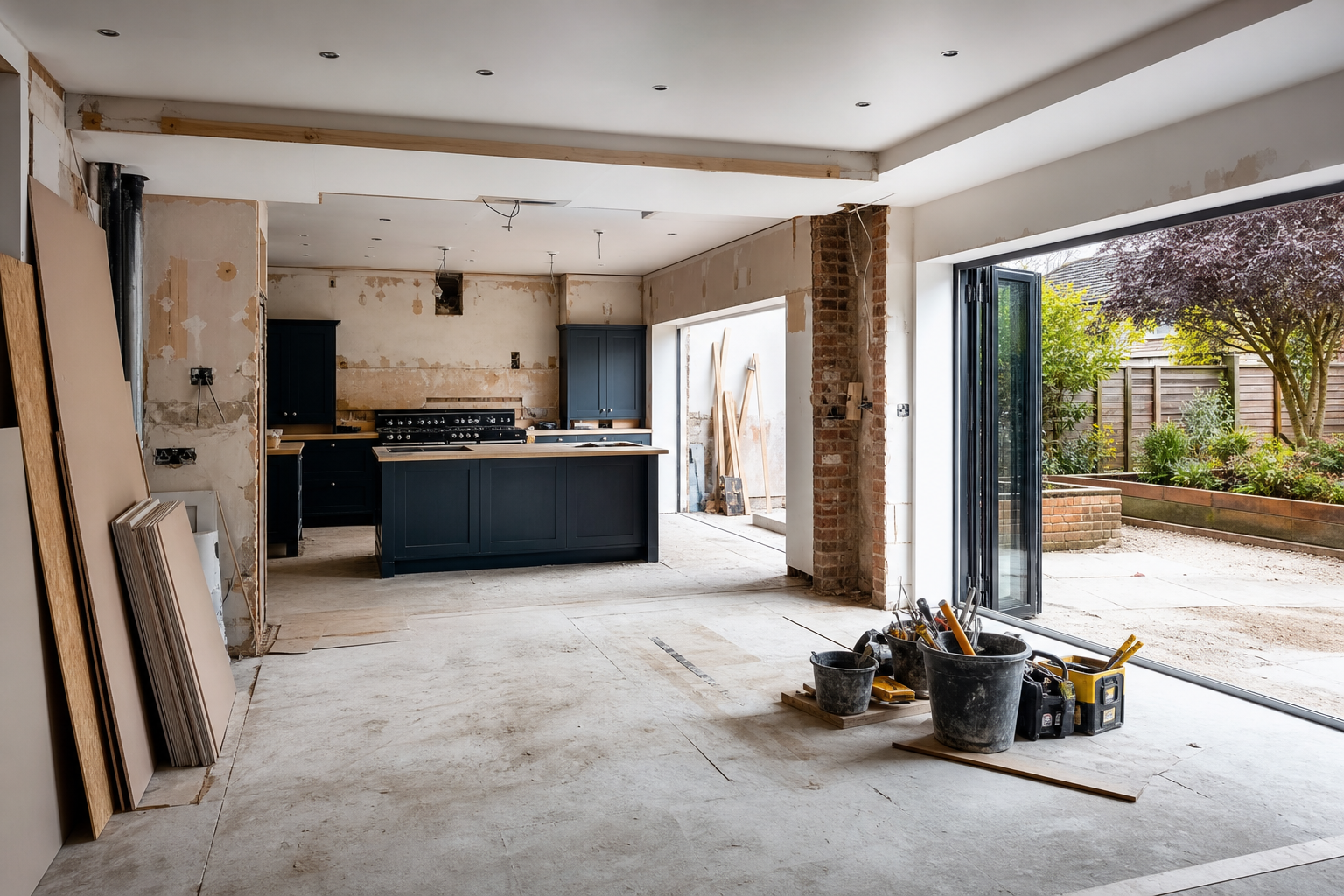

How Much Does a Complete Home Renovation Cost? For UK property professionals, the answer depends on the building’s condition, specification, location and intended commercial outcome. A cosmetic refresh for a rental portfolio is very different from a full structural refurbishment for resale or long-term asset improvement. This guide explains the main cost areas, typical budgeting bands and practical allowances to consider when assessing a whole-home renovation.
How Much Does a Complete Home Renovation Cost? Key Budget Ranges
A complete home renovation in the UK can range from a controlled refurbishment to a major rebuild behind the existing walls. As an editorial budgeting guide, many projects fall into broad cost bands based on scope and finish.
For a light whole-property renovation, where the layout remains largely unchanged, budgets may cover decoration, flooring, basic kitchen and bathroom replacement, minor repairs and compliance upgrades. A mid-range renovation usually includes better materials, improved services, new heating, upgraded electrics and more substantial joinery or plastering. A heavy renovation may involve structural work, damp treatment, roof repairs, extensions, full rewiring, new plumbing and significant energy-efficiency improvements.
For B2B decision-makers, the useful question is not only the total spend, but whether the spend protects margin, rental yield, resale value or long-term maintenance performance. A lower upfront figure can become expensive if it leads to repeated defects, tenant disruption or delayed completion.
What Is Included in a Complete Home Renovation?
A full renovation normally brings together several trades and work packages. The exact scope should be defined before pricing begins, because vague briefs produce unreliable estimates and disputes later.
Common inclusions are:
- Strip-out, waste removal and preparation of the existing property
- Structural repairs, wall alterations or opening formation where required
- Electrical rewiring, consumer unit upgrades and lighting installation
- Plumbing, drainage adjustments, heating systems and boiler replacement
- Kitchen fitting, bathroom installation, tiling and sanitaryware
- Plastering, internal joinery, doors, skirting and architraves
- Flooring, decorating, insulation and ventilation improvements
- External repairs, roofing, windows, doors, render or pointing
A “complete” renovation does not always mean an extension or loft conversion. It means the home is being refurbished as one coordinated project rather than as isolated upgrades.
Main Factors That Affect Renovation Costs
Property Condition and Age
Older UK homes often require more investigation before works can be priced with confidence. Victorian terraces, converted flats and period properties may hide damaged timbers, outdated wiring, poor ventilation or historic damp issues. These conditions can raise labour time and material costs.
Newer homes are not automatically cheaper to renovate, but defects are often easier to identify. For portfolio owners, condition surveys and measured schedules help compare assets consistently before allocating capital.
Size, Layout and Specification
Larger properties usually cost more overall, but small homes can have a higher cost per square metre because kitchens, bathrooms, scaffolding and professional fees do not reduce neatly with floor area.
Layout changes also affect the budget. Removing walls, moving soil pipes, relocating kitchens or altering staircases can add engineering, compliance and finishing costs. Specification then shapes the final figure. Contract-grade flooring, durable kitchens and neutral finishes may suit rental stock, while premium fittings may be justified for high-value resale projects.
Location and Site Access
Renovation costs vary across the UK. Labour availability, parking restrictions, waste access and local demand all influence pricing. Central urban sites can involve delivery limits, congestion, party wall considerations and higher preliminaries.
For blocks of flats or tight terraced streets, contractors may need more time for carrying materials, protecting shared areas and managing neighbours. These details matter in commercial budgeting because they affect programme length as well as direct cost.
Professional Fees, Compliance and Risk Allowances
A complete renovation budget should not focus only on visible building work. Professional input and statutory requirements can be essential, especially when structural alterations, conversions or higher-risk buildings are involved.
Possible allowances include building control charges, structural engineering, architectural drawings, party wall matters, planning advice, asbestos surveys, damp investigations and health and safety documentation. Not every project requires every item, but excluding them at feasibility stage can distort the business case.
A contingency is also important. Renovation work exposes hidden conditions after strip-out, particularly in older homes. Many commercial clients set aside a risk allowance rather than treating unforeseen issues as exceptional. The more invasive the project, the more important that allowance becomes.
Cost Planning for Landlords, Developers and Property Managers
For landlords, developers, housing providers and managing agents, renovation cost planning should connect building work with operational goals. A project that looks expensive on paper may be sensible if it reduces void periods, improves energy performance or prevents future maintenance calls. Conversely, an attractive specification may be commercially weak if the local market will not support the rent or sale price.
A practical commercial budget should separate:
- Essential compliance works, such as electrics, heating safety and ventilation
- Fabric repairs, including roofs, damp, windows and external envelope issues
- Revenue-enhancing improvements, such as kitchens, bathrooms and layout upgrades
- Durability choices, including flooring, ironmongery, paint systems and worktops
- Programme costs, including site setup, waste, protection, access and supervision
This structure helps stakeholders see which costs are unavoidable and which depend on investment strategy. It also supports clearer tender comparison, because each contractor is pricing the same scope.
Ways to Keep a Full Renovation Budget Under Control
Good cost control starts before work begins. Changing the brief after strip-out is one of the fastest ways to increase the final account, especially when multiple trades are scheduled closely together.
Useful controls include a detailed scope of works, a realistic programme, agreed material specifications and clear responsibility for procurement. If the client supplies kitchens, tiles or appliances, delays and missing parts can still affect labour costs.
Tendering should compare like with like. A lower quote may exclude scaffolding, decoration, waste removal or making good. For B2B clients, exclusions are just as important as the headline figure.
Quality control also protects the budget. Regular inspections, snagging records and staged sign-off reduce the risk of expensive rework. The aim is not to choose the cheapest route, but to achieve predictable delivery and an appropriate finish for the asset.
Frequently Asked Questions
How long does a complete home renovation usually take?
Timescales depend on size, access, structural work, approvals and material availability. A straightforward refurbishment may take weeks, while a heavy renovation can take several months, especially where hidden defects appear after strip-out.
Is it cheaper to renovate an empty property?
Usually, an empty property is easier and more efficient to renovate because trades can work safely, store materials and avoid daily protection of occupied rooms. It can also reduce disruption and help maintain a cleaner programme.
Should a renovation budget include VAT?
Yes, VAT treatment should be considered from the start because it can materially affect the total project cost. The correct position depends on the property type, work category and contractor arrangements, so it should not be left until invoices arrive.