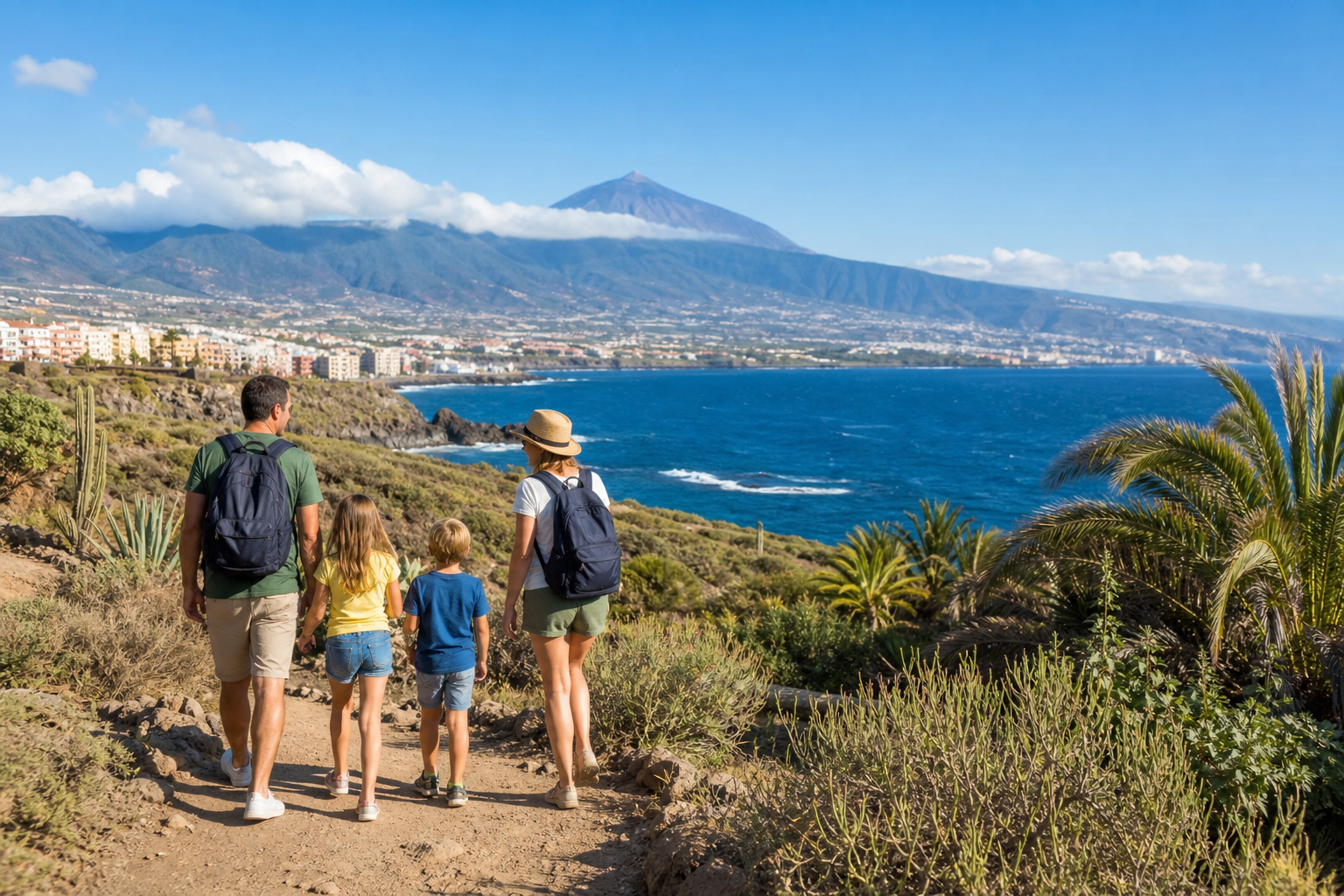

Sunny, varied and easy to understand for UK travellers, Tenerife remains a practical choice for multi-generation trips. When clients ask, “What can you do on a family holiday in Tenerife?”, the answer is broader than beaches. Families can mix gentle nature, water parks, volcanic landscapes, short coastal walks, relaxed dining and quieter cultural stops in one island itinerary. For travel businesses, that range matters: different ages can enjoy the same destination without every day feeling the same, and parents can balance active mornings with slower afternoons.
What can you do on a family holiday in Tenerife? Plan varied days
A strong family programme in Tenerife usually works best when it avoids long, packed days. The island is compact enough for variety, yet its mountain roads and warm weather reward realistic pacing. Travel planners can frame holidays around simple themes: coast, nature, adventure, food and local life. This helps families choose experiences by mood rather than by age alone.
For B2B content, this is useful because Tenerife can be positioned as more than a single-resort beach break. One family may want accessible promenades and hotel pools; another may prefer a hire car, viewpoints and village lunches. Both can be served without changing island.
Beaches, promenades and easy coastal time
Beaches are the familiar starting point. In the south, resort areas such as Costa Adeje, Los Cristianos and Playa de las Américas offer sheltered swimming spots, cafés, toilets and promenades, which are helpful for pushchairs and mixed-age groups. Playa del Duque feels polished, while Los Cristianos has a busy harbour atmosphere. In the north, Playa de Las Teresitas near Santa Cruz is known for its wide sandy bay and mountain backdrop.
Beach days need not be passive. Families can build in rock-pool spotting where conditions allow, short paddles, sand play, ice creams and sunset walks. For operators and agents, the practical message is clear: recommend beach bases by facilities, transfer time and evening atmosphere, not by sand alone.
Nature, volcanoes and gentle adventure
Teide National Park
Mount Teide gives Tenerife a dramatic centrepiece. Families can visit viewpoints, see lava landscapes and notice how quickly the scenery changes from coast to high altitude. Some routes and attractions may depend on weather, access and age suitability, so clear pre-trip guidance matters. For many children, the appeal is simple: the landscape looks unlike home.
Short walks and viewpoints
Tenerife also suits lighter outdoor activity. Anaga Rural Park, coastal paths and pine forest areas can add texture to a week without turning it into a trekking holiday. Short walks work well when paired with snacks, photo stops and plenty of shade. Businesses describing these options should avoid overpromising difficulty levels, as family fitness and confidence vary widely.
Water parks, wildlife and boat trips
For high-energy days, Tenerife has well-known water park and leisure options, especially around the south. These experiences often suit families with school-age children and teenagers who want slides, pools and a full day away from the beach. Clear information on height rules, queues, shaded areas and meal arrangements helps parents judge value and stamina.
Wildlife-focused outings can include managed animal attractions and boat trips from harbours such as Los Cristianos or Puerto Colón. Families interested in marine life may enjoy being out on the Atlantic as much as any sighting. Responsible messaging is important here: operators should describe what is possible, not guaranteed, and encourage respectful behaviour around animals and the sea.
Culture, food and slower family moments
Tenerife’s appeal grows when families step beyond pool and beach routines. Santa Cruz offers shopping streets, parks and city energy, while La Laguna brings historic streets and a different climate feel. Smaller towns can provide simple pleasures: a square, a bakery, a local lunch and a break from resort noise.
Food is a low-pressure way to add local colour. Children can often find familiar dishes, while adults try Canarian potatoes, grilled fish or simple tapas-style plates. For a family holiday in Tenerife, restaurant choice is less about novelty and more about timing, space, flexible menus and a relaxed welcome.
Practical planning for travel businesses
Families usually judge a destination by how easy the days feel. In Tenerife, the essentials are straightforward, but the best itineraries still account for heat, terrain, nap times and travel distances. When creating product copy or advising partners, practical detail can be more persuasive than broad adjectives.
- Match resort areas to family style, such as lively evenings, quieter beaches or easy promenade access.
- Explain transport choices, including transfers, local buses, taxis and car hire where appropriate.
- Build rest into suggested schedules, especially after water parks, mountain trips or late flights.
- Flag seasonal considerations without promising weather, because conditions vary by coast and altitude.
This level of clarity helps agents, tour operators and corporate travel teams present Tenerife as family-friendly without making the holiday sound generic. It also supports expectation management, which is central to repeat business and positive traveller feedback.
Frequently Asked Questions
Is Tenerife suitable for toddlers and grandparents together?
Yes. Short transfers in resort areas, promenades, beaches, pools and gentle outings make mixed-generation holidays manageable when plans include shade, rest and flexible meal times.
What is the best area for families in Tenerife?
There is no single best area. Costa Adeje, Los Cristianos and quieter coastal bases suit different budgets, routines and evening preferences.
Can families visit Mount Teide with children?
Yes, many families visit viewpoints and visitor areas, but altitude, road journeys, weather and age suitability should shape the day’s plan.
Are Tenerife beaches safe for children?
Many beaches are family-friendly, but sea conditions differ. Parents should follow local flags, choose lifeguarded areas where available and supervise children closely.
What can families do if the weather changes?
Weather can vary across the island, so families might swap beach time for museums, cafés, shopping streets, indoor hotel facilities, scenic drives or a meal in a different town. Plans remain easier when schedules are not crowded or overly fixed daily.