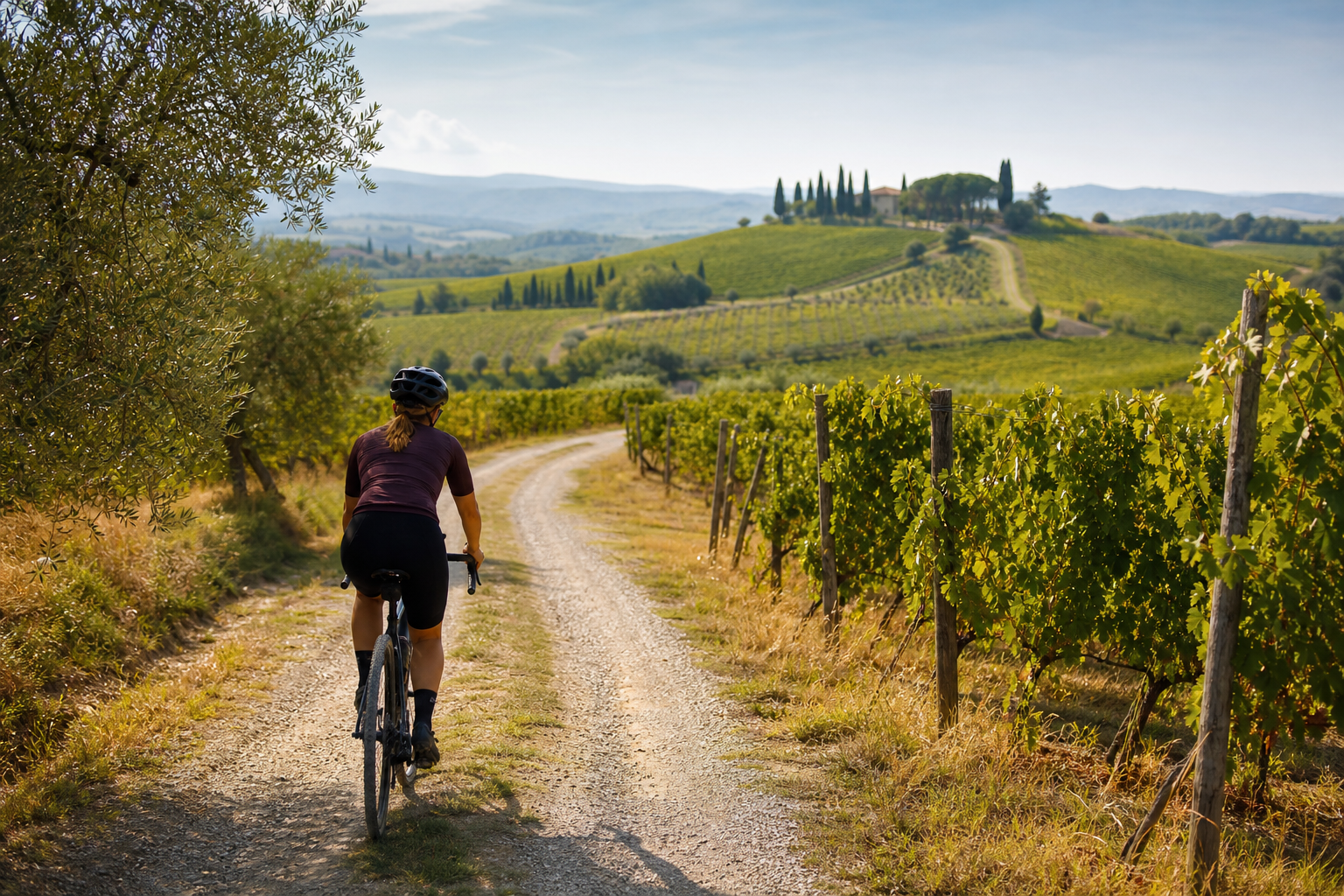

Exploring the vineyards of Tuscany by bicycle offers a slower, richer way to understand one of Italy’s most recognisable wine landscapes. For travel businesses, incentive planners, corporate retreat organisers and specialist operators, cycling through vineyard country can add depth to a programme without losing structure. It combines scenery, culture, food and movement in a format that feels active, sociable and highly memorable.
Why cycling works so well in Tuscan wine country
Tuscany is often associated with hilltop towns, cypress-lined lanes, olive groves and vine-covered slopes. Travelling by bicycle allows guests to experience these details at a human pace. The road between estates becomes part of the product, not simply a transfer.
For B2B audiences, this matters. A cycling-based wine experience can support several business goals: team bonding, client hospitality, staff reward, destination education or product development. It also encourages conversation. Riders share the same route, stop at viewpoints, compare impressions and arrive at tastings with a genuine sense of place.
The experience does not need to be extreme. Many vineyard routes can be designed around moderate distances, supported transfers and flexible pacing. E-bikes have also widened the appeal, helping mixed-ability groups enjoy hilly terrain with less pressure.
Exploring the vineyards of Tuscany by bicycle: what the experience includes
A well-planned cycling itinerary is more than a ride between wineries. It is a sequence of landscapes, tastings, meals and cultural pauses that together explain why Tuscany holds such strong appeal in the UK travel market.
The landscape and rhythm of the ride
Cycling through Tuscan vineyard areas usually involves rolling roads, open countryside and frequent changes in elevation. The pace is naturally varied. There may be steady climbs, easy descents, quiet village streets and short stops for photographs or refreshments.
This rhythm suits editorial storytelling and commercial product design alike. The journey has clear chapters: departure, countryside, wine estate, lunch, village visit, return. Each element gives operators and organisers something tangible to communicate, while guests feel they have earned the next part of the day.
Weather, light and season also shape the ride. Spring brings softer colours and comfortable cycling conditions. Summer can be beautiful but needs careful timing, shade and hydration. Autumn is especially atmospheric, with harvest activity and golden vineyard tones, though availability and local operations can vary.
Wine estates, food and local identity
Tuscany’s wine culture is closely tied to food, family ownership, farming traditions and local identity. A cycling itinerary may include tastings of regional wines, a cellar visit, an olive oil sample, or a simple lunch built around seasonal ingredients.
For business groups, these moments should be framed with care. A long technical tasting may suit wine trade professionals, while a lighter interpretation may work better for corporate guests or incentive travellers. The strongest programmes usually balance education with enjoyment.
It is also sensible to allow time between riding and tasting. Guests should not feel rushed from bicycle to glass. Clear scheduling helps maintain comfort, safety and a relaxed atmosphere.
Designing itineraries for business audiences
When creating or assessing a Tuscan cycling and wine product, the target audience should define the level of challenge, the tone of interpretation and the number of scheduled stops. A board-level incentive group, for example, may need a more polished format than an active travel familiarisation trip.
Useful planning considerations include:
- Group profile: fitness levels, cycling confidence, age range and expectations around comfort.
- Bike type: standard bikes may suit experienced riders, while e-bikes can make hills more accessible.
- Support model: guides, vehicle backup, luggage handling and mechanical assistance all affect the experience.
- Meal structure: light lunches often work better than heavy meals during riding days.
- Timing: early starts can help avoid heat and create calmer riding conditions.
- Content depth: wine education should match the knowledge level of the group.
From an editor’s perspective, the best itineraries have a clear narrative. They do not simply list places. They explain why a region matters, how the landscape shapes the wines, and what guests will feel and notice along the way.
Operational considerations for trade partners
Behind the charm of vineyard cycling sits a set of practical requirements. B2B buyers and suppliers need clarity on risk management, timings, accessibility and service standards. This is especially important when a cycling element forms part of a wider business event or multi-day programme.
Route selection should prioritise suitable roads, manageable gradients and realistic distances. Traffic conditions, local regulations and seasonal agricultural activity may influence route design. Professional guides can help manage pace, provide local context and respond to issues during the ride.
Wine tasting also needs careful handling. Responsible consumption should be built into the plan, particularly when guests are returning to bicycles afterwards. Smaller pours, food pairings, water breaks and transfer options can all help keep the experience safe and balanced.
Insurance, equipment quality and contingency planning should be checked before the programme is finalised. Weather changes, mechanical problems or tired participants should not derail the day. A strong operational plan makes the experience feel effortless to guests.
Positioning the experience for the UK B2B market
For UK-based businesses, Tuscany is a familiar and aspirational destination, yet cycling gives it a fresher angle. It appeals to growing interest in active travel, slower tourism and experiences that feel rooted in place.
The positioning should avoid clichés. Rather than promising a generic “dream escape”, stronger messaging focuses on tangible benefits: scenic riding, authentic wine culture, guided interpretation, shared achievement and time away from meeting rooms.
For tour operators, exploring the vineyards of Tuscany by bicycle can sit within several product categories. It may be part of a premium small-group journey, a corporate incentive, a specialist food and wine programme, or a soft-adventure itinerary for mature travellers. The same core idea can be adapted, provided the operational detail remains sound.
Sustainability is also relevant. Cycling reduces reliance on vehicles during the experience and encourages guests to notice the landscape more closely. However, claims should remain measured. Responsible travel is not created by cycling alone; it also depends on local partnerships, respectful group behaviour and thoughtful scheduling.
Frequently Asked Questions
Is vineyard cycling in Tuscany suitable for corporate groups?
Yes, it can be suitable when routes, bikes and support are matched to the group. E-bikes, guides and backup vehicles help make the experience accessible to mixed-ability participants.
When is the best time to plan a cycling wine itinerary?
Spring and autumn are often appealing because temperatures are generally more comfortable for cycling. Summer can work, but programmes usually need earlier starts and careful hydration planning.
Do guests need strong cycling experience?
Not always. Many itineraries can be designed for casual riders, especially with e-bikes. The key is honest route information, sensible distances and support throughout the day.
How should wine tasting be managed during a cycling day?
Tastings should be moderate, well timed and paired with food or water where possible. Safety, pacing and guest comfort need to remain central to the itinerary.
What makes this experience valuable for B2B travel planning?
It combines active participation, local culture, premium scenery and shared memories. For business audiences, that mix can support relationship building, reward travel and destination storytelling.