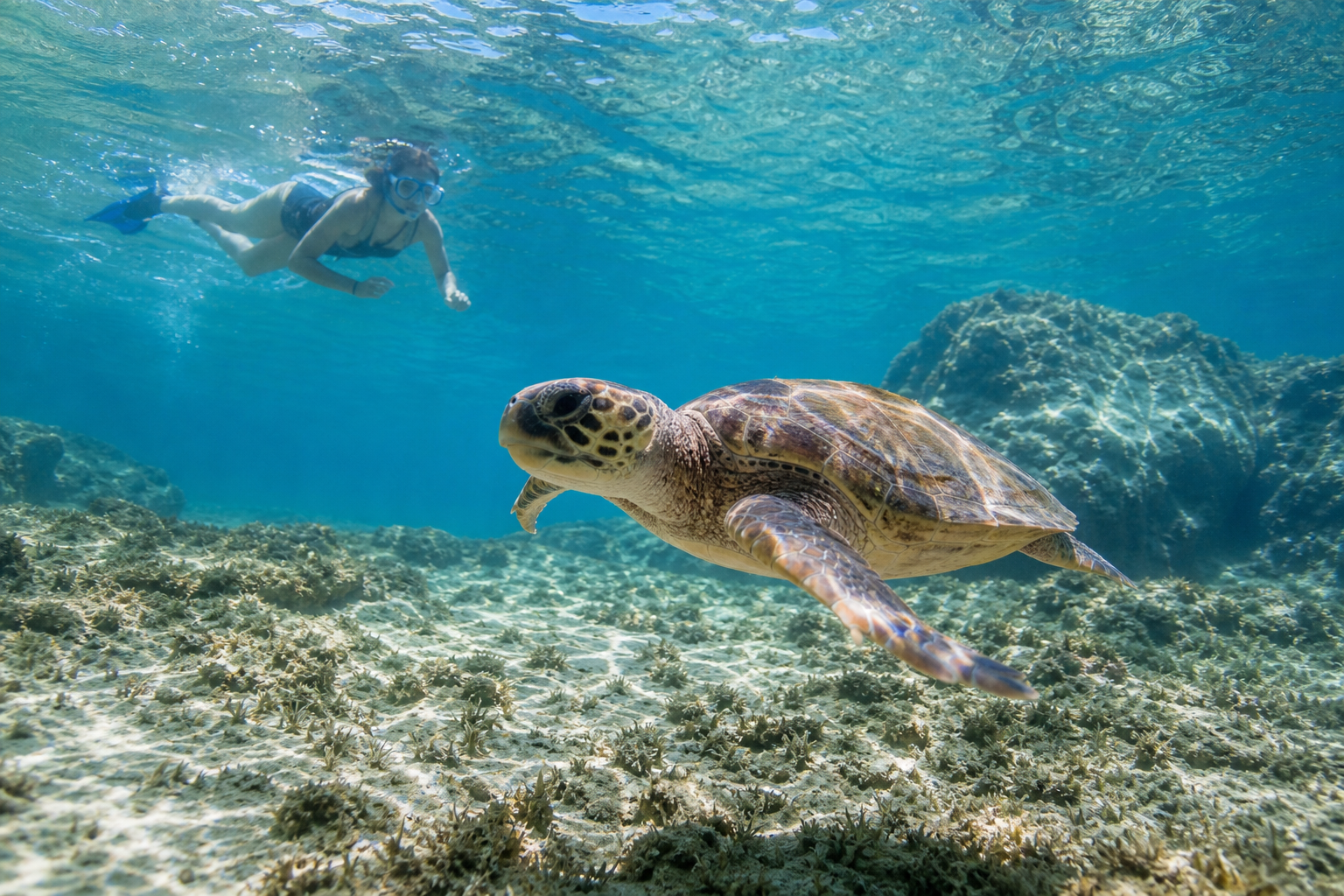

Where can you snorkel with sea turtles in Greece? For travel businesses shaping marine experiences, the most realistic answer is: in carefully managed coastal areas where loggerhead turtles are naturally present, especially around the Ionian Islands and selected southern mainland waters. Greece offers memorable turtle encounters, but they are never guaranteed and must be handled with care, respect and clear guest expectations.
Why Greece is Known for Sea Turtle Encounters
Greece is one of the Mediterranean’s important areas for loggerhead sea turtles, known scientifically as Caretta caretta. These turtles use warm Greek waters for feeding, resting and nesting, particularly during the summer season. Their presence has helped shape a strong conservation culture in several destinations, especially where nesting beaches sit close to popular holiday resorts.
For B2B travel planners, this matters commercially and operationally. Turtle experiences can add real value to coastal itineraries, but they also require responsible product design. Guests may imagine a guaranteed wildlife spectacle, while the reality is more subtle: calm snorkelling, patient observation and strict distance from protected animals. The best operators present turtle snorkelling as a nature-based possibility, not a staged attraction.
Where Can You Snorkel with Sea Turtles in Greece?
The phrase “Where can you snorkel with sea turtles in Greece?” often points to a few well-known regions. Each has different strengths, access considerations and conservation sensitivities.
Zakynthos and Laganas Bay
Zakynthos is the best-known Greek island for sea turtle awareness. Laganas Bay, in the south of the island, is strongly associated with loggerhead turtles and nesting beaches. Areas around Marathonisi, often called Turtle Island, are particularly familiar to visitors researching turtle sightings.
For travel companies, Zakynthos is also one of the most sensitive destinations to package responsibly. Boat traffic, beach use and guest behaviour all affect turtle welfare. Snorkelling may be possible in calm, shallow waters, but encounters should be framed as quiet observation from a respectful distance. Any itinerary involving this area should recognise that parts of the bay are protected and subject to local rules.
Kefalonia and the Argostoli Area
Kefalonia is another strong candidate, especially around Argostoli, where turtles are often associated with the harbour and nearby coastal waters. While harbours are not snorkelling sites in the usual leisure sense, the wider island offers coves and beaches where guests may enter clear Ionian water and potentially encounter marine life.
Kefalonia suits businesses looking for a softer wildlife angle rather than a single-purpose turtle excursion. It pairs well with walking, food, coastal touring and low-impact swimming. As with all wildlife experiences, any turtle sighting should be treated as a privilege rather than a promise.
Crete, Especially Southern and Western Coasts
Crete has several beaches linked with loggerhead nesting, including areas around Rethymno and Chania. The island’s long coastline provides many snorkelling settings, from sandy bays to rocky coves. Turtle sightings can occur, though they are generally less predictable than in the most famous Ionian hotspots.
For B2B itinerary design, Crete works well when turtle awareness is part of a broader marine and coastal interpretation. Guides can explain nesting behaviour, beach protection and local ecosystems while keeping the product flexible. This avoids disappointment if no turtle appears during a snorkelling session.
The Peloponnese and Mainland Coastal Areas
Parts of the Peloponnese also have links to loggerhead turtle nesting, particularly along sandy beaches in the western and southern regions. These areas may appeal to specialist operators building slower, nature-led programmes away from the busiest island resorts.
Snorkelling here is often less about high-volume marine tours and more about coastal immersion. For businesses serving repeat visitors to Greece, the mainland can offer a quieter alternative, provided the experience remains grounded in realistic expectations and responsible access.
Responsible Turtle Snorkelling for Travel Businesses
Sea turtles are protected wildlife, not interactive attractions. Good practice is essential for guest safety, brand reputation and animal welfare. Operators, hotels and destination management companies should make responsible behaviour part of the experience, not a small-print note.
Key guidance includes:
- Keep a clear distance from turtles, allowing them to swim, surface and feed naturally.
- Never touch, chase, surround or block a turtle’s route through the water.
- Avoid flash photography, loud behaviour and sudden movements near wildlife.
- Do not feed turtles or encourage guests to attract them with food.
- Follow local protected-area rules, seasonal restrictions and beach access guidance.
- Use small groups where possible, with a guide who can manage expectations.
- Brief guests before entering the water, not after a turtle has already appeared.
These points may seem simple, but they make a major difference. They also help staff handle enthusiastic guests who may not understand how easily a relaxed encounter can become stressful for an animal.
Planning Considerations for B2B Itineraries
For the UK market, turtle snorkelling in Greece is often attractive to families, couples, educational groups and responsible luxury travellers. However, the product should be described carefully. Words such as “possible”, “seasonal” and “wild” are more accurate than language that implies certainty.
Useful planning factors include:
- Seasonality: warmer months generally create better swimming conditions and more turtle interest, but rules around nesting areas may be stricter.
- Location choice: choose destinations with clear operating standards and suitable access to calm water.
- Guide quality: a knowledgeable guide can turn a brief sighting, or even no sighting, into a meaningful nature experience.
- Group management: smaller groups reduce pressure on wildlife and improve the guest experience.
- Weather flexibility: wind, visibility and sea state can affect whether snorkelling is suitable on the day.
For accommodation partners, simple guest information can be valuable. A short explanation of turtle etiquette, nesting beach rules and realistic sighting chances helps align expectations before an excursion begins.
Best Time to Snorkel with Sea Turtles in Greece
The main Greek holiday season, from late spring to early autumn, usually offers the most comfortable sea temperatures for snorkelling. This also overlaps with the period when turtle nesting activity is an important conservation concern in several areas. That combination makes timing both appealing and sensitive.
Early morning can provide calmer water and a quieter atmosphere in popular resorts. Late afternoon may also be pleasant, though local conditions vary. Businesses should avoid presenting a fixed “best hour” as a certainty, because weather, visibility, boat activity and turtle behaviour all influence the experience.
Frequently Asked Questions
Can you guarantee seeing sea turtles while snorkelling in Greece?
No. Sea turtles are wild animals, so sightings can never be guaranteed responsibly. Ethical operators should explain this clearly before guests enter the water.
Is Zakynthos the best place in Greece for turtle snorkelling?
Zakynthos is one of the best-known places, especially around Laganas Bay, but it is also highly sensitive and must be approached responsibly.
Are sea turtles in Greece dangerous to snorkellers?
Sea turtles are not aggressive attractions, but they are strong wild animals. Snorkellers should keep distance and avoid any attempt to touch them.
What should guests do if they see a turtle while snorkelling?
They should stay calm, keep space, float quietly and let the turtle choose its own direction without obstruction or pursuit.
Can children snorkel with sea turtles in Greece?
Children can enjoy turtle-aware snorkelling when conditions are safe, supervision is close and the experience is managed around wildlife respect.